Causes Acute Brain Damage with 98% Fatality Rate
Expert: "Prevention Is the Only Solution"
In China, a young child is in critical condition after contracting an extremely rare and fatal infectious disease shortly after visiting a hot spring. The pathogen responsible is the "Fowleri free-living amoeba," known for destroying brain tissue.
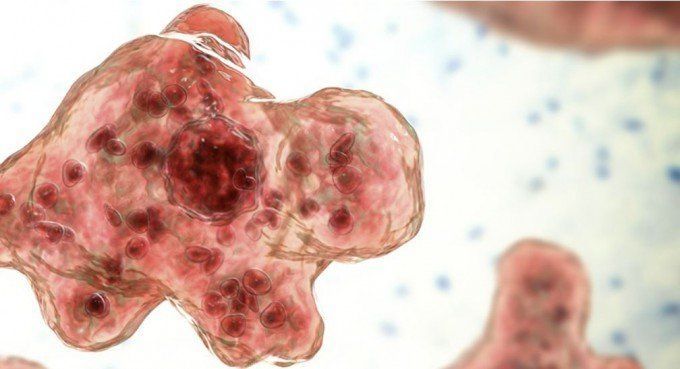 Fowleri free-living amoeba, better known by the chilling nickname "brain-eating amoeba." Centers for Disease Control and Prevention, USA
On July 5, Chinese local media reported that a five-year-old girl who visited a hot spring in the Xiamen area of Fujian Province was recently infected with this amoeba and is currently being treated in an intensive care unit. The child visited the hot spring twice last month with her family and enjoyed playing in the water. About a week later, she began experiencing symptoms such as headache, vomiting, and a mild fever.
Her condition rapidly deteriorated, and she fell into a coma within a day of being hospitalized. She is now dependent on a ventilator. Hospital officials confirmed the infection with Fowleri free-living amoeba through testing.
This protozoan enters the human body through the nose, then invades the brain and causes inflammation. It has earned the nickname "brain-eating amoeba." Most patients die within days of infection. This microorganism is so small that it can only be seen under a microscope. It is mainly found in warm freshwater environments and is especially likely to infect people during water activities in rivers, lakes, or hot springs in the summer.
The early symptoms in infected individuals resemble common viral illnesses, making diagnosis difficult. It starts with headache, nausea, and fever, but can quickly progress to decreased consciousness and coma, often developing into a severe condition in a short period. The fatality rate is as high as 98%, and even survivors are highly likely to remain in a vegetative state. However, it is known that the infection does not spread from person to person.
Cases of infection in China are extremely rare, but most reported patients have been children or adolescents. The infection progresses rapidly, leaving little time for the immune system to respond, making early diagnosis and treatment virtually impossible.
Wang Xinyu, deputy director of the Department of Infectious Diseases at Fudan University Hospital in China, emphasized, "Because the pathogen can reach the brain directly through the olfactory nerve, the possibility of recovery after symptoms appear is almost nonexistent," adding, "Prevention is the only defense."
To prevent infection, it is important to avoid getting water into the nose while swimming or playing in natural water outdoors. Experts recommend pinching your nose or using nose clips when entering the water and avoiding disturbing sediment at the bottom. Rinsing the nose with bottled or boiled water after water activities can also help. The Centers for Disease Control and Prevention (CDC) in the United States recommends wearing nose protection when diving or swimming in freshwater and using only sterile or boiled water for nasal rinsing. The amoeba cannot survive in chlorinated swimming pools or seawater.
Fowleri free-living amoeba was first discovered in the United States in 1937, and about 380 cases have been reported worldwide over several decades. In the United States, more than 160 people have been infected since 1962, with only four survivors.
In South Korea, there was a case in 2022 in which a man in his 50s died after being infected in Thailand and returning home. This was the first case in the country. Similar rare infections have also been confirmed in other Asian countries, including Japan, Taiwan, Thailand, and India.
© The Asia Business Daily(www.asiae.co.kr). All rights reserved.
![Clutching a Stolen Dior Bag, Saying "I Hate Being Poor but Real"... The Grotesque Con of a "Human Knockoff" [Slate]](https://cwcontent.asiae.co.kr/asiaresize/183/2026021902243444107_1771435474.jpg)
















