Noticeable Increase in SFTS Cases Since April
Half of Infected Patients Are Elderly Aged 70 or Older
Prevention Is Crucial Due to Lack of Treatment or Vaccine
Seek Immediate Medical Attention for High Fever or Muscle Pain After Outdoor Activities
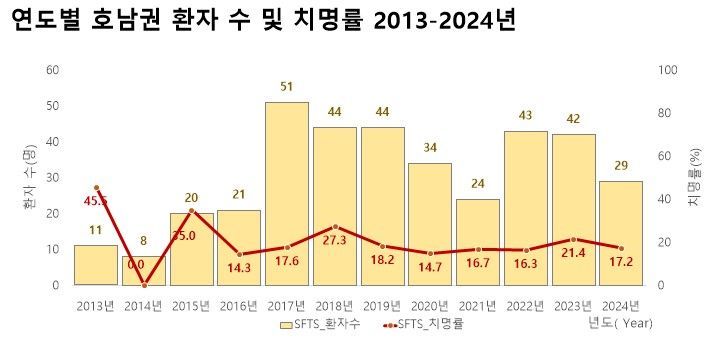
It has been analyzed that 1 out of every 5 deaths from Severe Fever with Thrombocytopenia Syndrome (SFTS) nationwide occurred in the Honam region. This is believed to be due to the region's characteristics, where industries such as agriculture are predominant.
According to the Honam Disease Response Center on July 5, a total of 2,065 SFTS cases have been reported nationwide from 2013, when SFTS was designated as a notifiable infectious disease, to 2024. Of these, 371 cases occurred in the Honam region (Gwangju, Jeonbuk, Jeonnam, and Jeju), accounting for approximately 18% of the national total. Notably, 74 of those infected in the Honam region died, resulting in a cumulative fatality rate of about 20%, which is higher than the national average of 18.5%.
SFTS develops after being bitten by a tick (Haemaphysalis longicornis) carrying the virus, with symptoms such as high fever, diarrhea, and muscle pain appearing after an incubation period of 5 to 14 days. If the disease progresses to a severe stage, the fatality rate can be as high as 12% to 47%. Cases are reported every year from April to November.
This year, the first SFTS case was reported in the Honam region in April. As of July 1, 14 cases have been reported, and the number of cases has increased significantly since May, resulting in a higher incidence compared to the same period last year. Recently, an elderly person in their 80s died in Jeonnam.
An analysis of infection risk factors for the 29 SFTS cases reported in the Honam region last year found that all had contact with environments with dense vegetation. The most common risk activities were agriculture, forestry, and livestock-related activities (23 cases, 79.3%), followed by weeding activities (including visiting graves and mowing) with 4 cases (13.8%). By age group, those aged 70 and older accounted for 58.6% of cases.
The Honam region has a large scale of agricultural activity, residential environments adjacent to grasslands and forests, and a high proportion of elderly population. Therefore, the risk of tick-borne infectious diseases such as SFTS is high in this area, and the following preventive measures should be observed during outdoor activities.
Yoon Junghwan, head of the Honam Disease Response Center, stated, "There is no treatment or vaccine for SFTS, so the best preventive measure is to avoid tick bites. Please strictly follow preventive guidelines when engaging in outdoor activities," adding, "If you experience high fever, gastrointestinal symptoms, or muscle pain within two weeks after outdoor activities such as farming, please visit a medical institution immediately."
© The Asia Business Daily(www.asiae.co.kr). All rights reserved.

















