Successful IVF After 18 Years of Infertility
First Case of Success Using the STAR System with AI
Some Experts Call for Further Validation
A couple who had struggled with infertility for 18 years due to azoospermia has made headlines after having a child with the help of artificial intelligence (AI) technology. The AI was able to find sperm that could not be detected under a microscope.
On July 4, Yonhap News, citing CNN, reported that an American couple struggling with infertility succeeded in having a child through in vitro fertilization this year after 18 years of trying to conceive. The couple is expected to give birth in December. Over the years, they visited infertility clinics around the world and underwent multiple attempts at in vitro fertilization. However, all attempts failed due to the husband's azoospermia. At infertility centers, they tried to find sperm under a microscope for in vitro fertilization, but no sperm could be found.
Eventually, the couple visited the infertility center at Columbia University. Over the past five years, this center has developed the 'STAR' (Sperm Tracking and Recovery) system, which incorporates AI technology. Using this system, three hidden sperm cells that had not been visible to the human eye or under a microscope were found in the husband's semen sample. The sperm were then injected into the wife's eggs through in vitro fertilization, resulting in a successful pregnancy.
This is the first successful case of the STAR system. The system works by placing a semen sample on a specially designed chip, then scanning the sample with a high-speed camera and high-powered imaging technology to find sperm. The AI analyzes more than eight million images based on data trained to recognize sperm cells. According to a representative from the infertility center, the cost of locating, isolating, and freezing sperm using this system is less than $3,000 (409,000 KRW).

Zev Williams, director of the Columbia University infertility center, explained, "It's like finding a needle scattered in a thousand haystacks," adding, "We can complete this process within an hour and use the sperm for fertilization without harmful lasers or contamination." He further emphasized that this technology is groundbreaking not because it replaces human expertise, but because it amplifies it, stating, "This is the future of infertility treatment." Currently, the system is only available at the Columbia University infertility center, but the STAR development team plans to share their research and development achievements with other infertility centers.
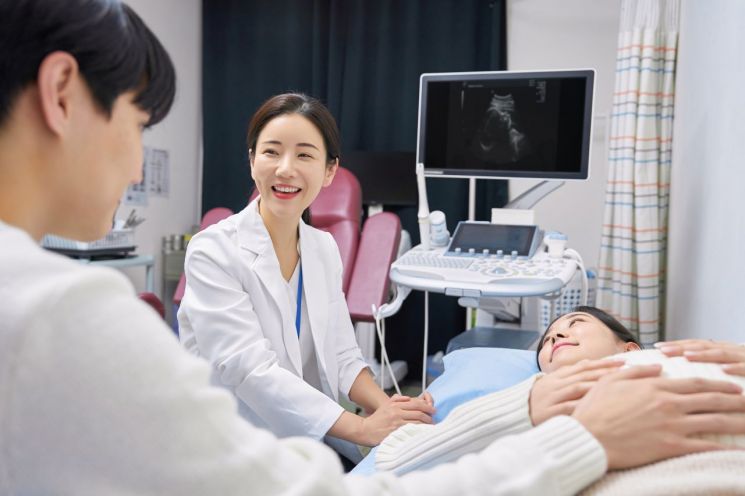
 Infertility Project Sketch - View of Cha Women's Medical Research Institute Seoul Station Infertility Center. Photo is not related to specific content of the article. Photo by Jo Yongjun
Meanwhile, some experts have raised concerns that rushing to apply AI to reproductive medicine could give patients false hope. Gianpiero Palermo, an infertility treatment specialist at Weill Cornell Medical College, pointed out that Columbia University's STAR approach still needs further validation. He said, "This approach is fundamentally flawed because some men simply have no sperm, and it doesn't matter whether their semen is screened by a person or a machine."
© The Asia Business Daily(www.asiae.co.kr). All rights reserved.
![Clutching a Stolen Dior Bag, Saying "I Hate Being Poor but Real"... The Grotesque Con of a "Human Knockoff" [Slate]](https://cwcontent.asiae.co.kr/asiaresize/183/2026021902243444107_1771435474.jpg)


















