Board of Audit and Inspection Identifies 16 Violations and Improper Practices,
Orders Corrective Actions
Korea District Heating Corporation was found to have purchased tablet PCs and distributed them to its executives and employees, even as it halted its business system improvement project citing budget cuts.
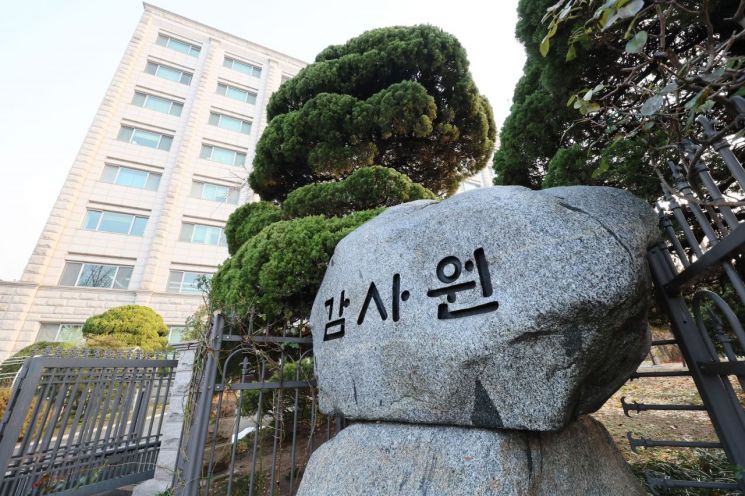
On July 3, the Board of Audit and Inspection announced the results of its regular audit of the corporation, revealing these findings and stating that it had identified 16 violations, improper practices, and areas in need of improvement, and had taken measures accordingly. In November 2022, the corporation was designated as a financially at-risk institution during the budget planning process. As a result, it claimed that budget cuts were necessary and reduced the 2.8 billion won budget for the urgently needed ‘integrated operation system reconstruction for heat supply’ project.
Nevertheless, immediately after cutting the system-related budget, the corporation allocated a 3 billion won budget in December 2022 for IT equipment purchases with unclear objectives. In October 2023, it spent 2.9 billion won to purchase 2,118 tablet PCs under the pretext of online training and distributed them to all executives and employees. Previously, in June 2020, the corporation had already provided all executives and employees with laptop PCs.
The audit found that most staff members were not using the distributed tablet PCs for their intended purpose of online training. The Board of Audit and Inspection warned the corporation that personal equipment should not be distributed without proper review, as this constitutes wasteful spending of the budget.
Additionally, the audit uncovered a case where the corporation failed to properly assess the economic feasibility of a new investment, resulting in losses exceeding 1 billion won. While pursuing a consulting project to establish a subsidiary for the Taebaek biomass power generation business, the corporation applied an unrealistic price for wood chips. As a result, the business was suspended less than a year after the subsidiary was established, leading to significant losses. The Board of Audit and Inspection instructed the corporation to discipline the team leader responsible for the project and to issue warnings to two supervisors.
The audit also found that the corporation’s heat supply system and operations lacked accuracy and economic efficiency, and called for improvements. For demand forecasting, the corporation used average outdoor temperatures from more distant locations rather than data specific to each branch’s location and time zone. It was also found that generator operation mode combinations were determined manually rather than by the system, and that optimal heat supply levels for branches connected to the Seoul metropolitan area were not properly calculated.
Furthermore, the audit revealed that the corporation operated generators on weekends, when electricity selling prices are lower, rather than on weekdays, increasing heat loss. It also arbitrarily changed the criteria for calculating error rates from branch-specific calculations to a total sum for all branches, resulting in underreporting of error rates.
© The Asia Business Daily(www.asiae.co.kr). All rights reserved.

















