"One Big Beautiful Bill" Passes Senate
Trump Shifts Stance After Lawmakers' Opposition to Repeal
Electric Vehicle Tax Credit to End Early in September
On July 1 (local time), the U.S. Senate passed the "One Big Beautiful Bill," which expands the tax credit rate for building semiconductor plants in the United States from the current 25% to 35%. This comprehensive bill, spanning 900 pages, reflects President Donald Trump's core economic agenda. It is scheduled to be voted on by the House of Representatives and aims for presidential approval on July 4.
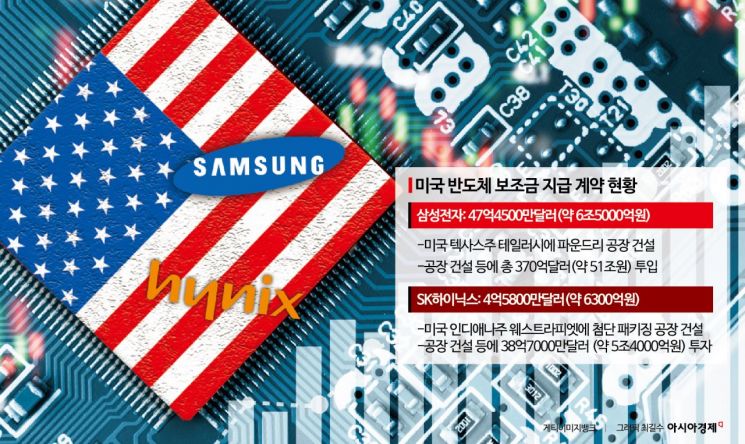
This measure strengthens a key provision of the "CHIPS and Science Act," enacted in 2022. The original act provided a 25% tax credit for semiconductor facilities that began operations after the end of 2022 or started construction by the end of 2026. The amendment raises this to 35%, exceeding the 30% initially proposed in the Republican draft.
In addition to the tax credit, the bill includes $39 billion in factory construction subsidies and up to $75 billion in loan support. To date, Intel, TSMC, Micron, Samsung Electronics, and SK Hynix have been confirmed as beneficiaries of these subsidies.
Initially, President Trump had called for the repeal of the semiconductor law. However, he decided to maintain it after lawmakers representing districts with planned facility investment projects strongly opposed the repeal.

The bill also includes a provision to end the electric vehicle tax credit, previously offered under the Inflation Reduction Act (IRA), earlier than planned?by the end of September. The IRA originally allowed a tax credit of up to $7,500 for new vehicle purchases or leases, and up to $4,000 for used vehicle purchases, through the end of 2032. This termination will now occur more than seven years ahead of schedule. As the removal of subsidies is expected to dampen demand for electric vehicles, Elon Musk, CEO of Tesla, criticized the bill, stating, "This bill severely undermines future industries while subsidizing outdated ones," and "It will destroy millions of jobs and cause enormous strategic damage to the country."
Additionally, eligibility for tax credits for solar and wind projects will be expanded. Previously, the standard was projects that began operations before 2026; now, it will include projects that start construction before 2026.
The Information Technology and Innovation Foundation (ITIF) has emphasized that raising the tax credit rate to 35% could create hundreds of thousands of semiconductor-related jobs and attract significant investment within the United States. Immediately after the bill passed, the Philadelphia Semiconductor Index partially recovered its losses, and shares of TSMC, Micron, and Intel also showed signs of recovery.
© The Asia Business Daily(www.asiae.co.kr). All rights reserved.


















