QR Orders Offer Relief from High Kiosk Costs for Small Business Owners
Startups Draw Attention as QR Systems Save Millions of Won
At a restaurant in Mapo-gu, Seoul, a graduate student in her 30s, identified as Ms. Ahn, scanned the QR code attached next to the table with her smartphone as soon as she sat down with a friend. After each person selected their menu items and completed payment, the order was finished without any assistance from the staff. Ms. Ahn said, "With table orders, one person has to pay for everyone and settle up later, which is inconvenient, but with QR orders, each person can pay separately, so it's much more convenient." She added, "There are restaurants where you can participate in events through QR codes, so if I win a drink coupon, I sometimes go back on purpose."
The small QR code on the corner of the table is changing the landscape of restaurants. Recently, smart order systems using kiosks or tablets have been actively introduced in restaurants and cafes, but high initial installation costs and maintenance burdens have been cited as drawbacks. In this context, QR order systems, which can be operated without additional cost burdens, are emerging as a practical alternative.
According to industry sources on July 2, QR order systems require a low installation cost of around 10,000 won, and can provide barrier-free features such as adjustable font size and voice guidance depending on the customer's smartphone settings. In the future, restaurants that plan to install new kiosks will be required to adopt products with barrier-free features, but by introducing QR order systems instead of kiosks that cost several million won, they can enjoy similar benefits without being subject to regulations.
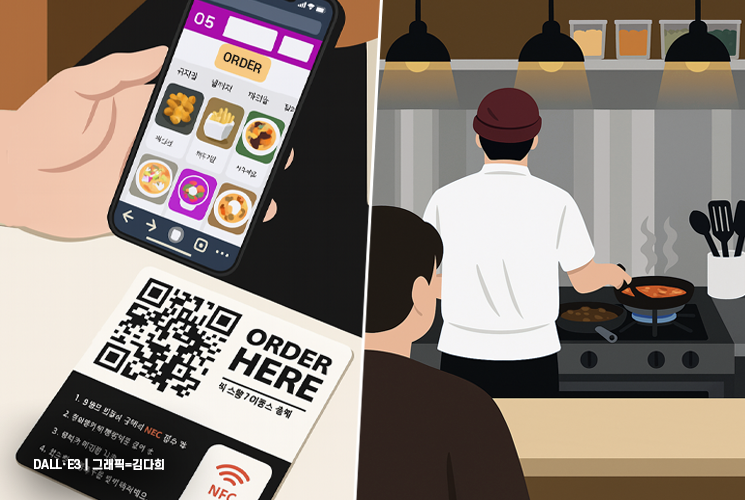
As interest in QR order systems grows due to cost reduction and regulatory relief, related startups are also accelerating their efforts. A representative example is MocoPlex's table order service 'QRO.' With QRO, scanning the QR code at the table with a smartphone opens a mobile order page, and at the same time, voice guidance is provided for digitally vulnerable groups. QRO is also equipped with an artificial intelligence (AI)-based marketing solution that offers features such as point accumulation and review event registration. A MocoPlex representative explained, "Due to issues such as barrier-free accessibility, the number of stores adopting QRO increased by 62% in the first half of this year alone."
At tourist destinations, QR order systems have also become a tool for serving foreign customers. ArchiSeoul's mobile menu ordering service 'HandOrder' provides QR-based multilingual menus at 400 major restaurants in Seoul. HiKFood is also achieving results in attracting foreign tourists by offering its QR menu service 'K-PL'?which supports 20 languages?at restaurants in Jecheon and Danyang, North Chungcheong Province.
© The Asia Business Daily(www.asiae.co.kr). All rights reserved.

















