Monthly Average Household Food Expenses Reach 877,000 Won in Q1, Up 2.4% Year-on-Year
Real Purchasing Power Stagnates Amid Ongoing High Inflation
In the first quarter of this year, monthly household food expenses nearly reached 900,000 won, setting an all-time high. However, due to the significant increase in prices, actual purchasing power has declined.
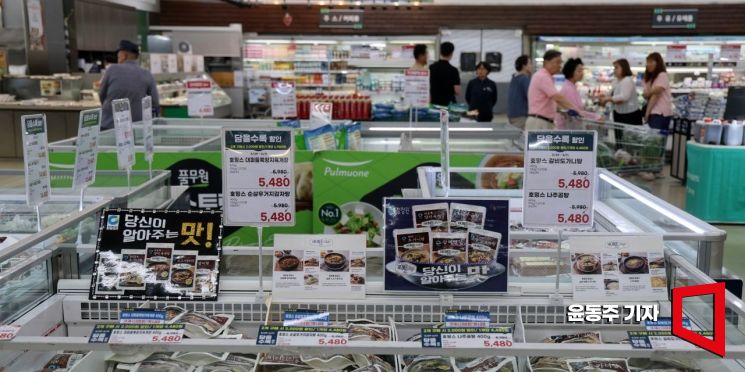
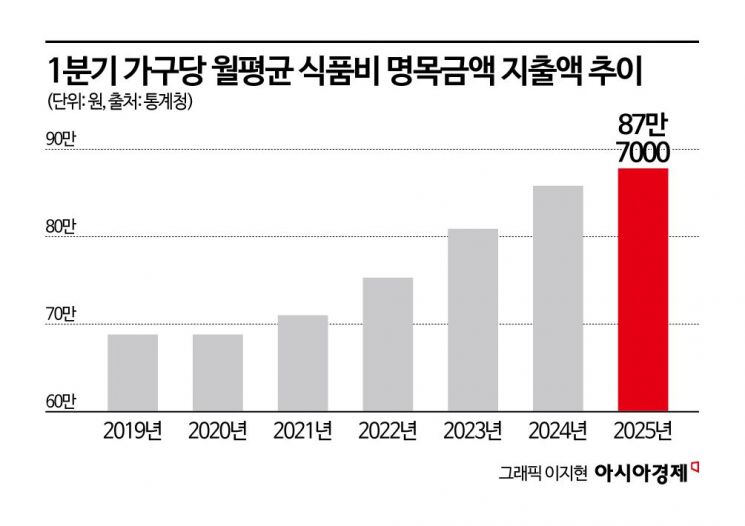
According to Statistics Korea on July 2, the average monthly household expenditure on food, which includes groceries, beverages, alcoholic drinks, and dining out, was 877,000 won in the first quarter of this year. This represents a 2.4% increase compared to the same period last year (857,000 won). While food expenses stagnated in 2020 due to the COVID-19 pandemic, they have risen each year since 2021. Compared to the first quarter of 2019, before the pandemic, this year’s first-quarter expenditure is up by 27.7% over six years.
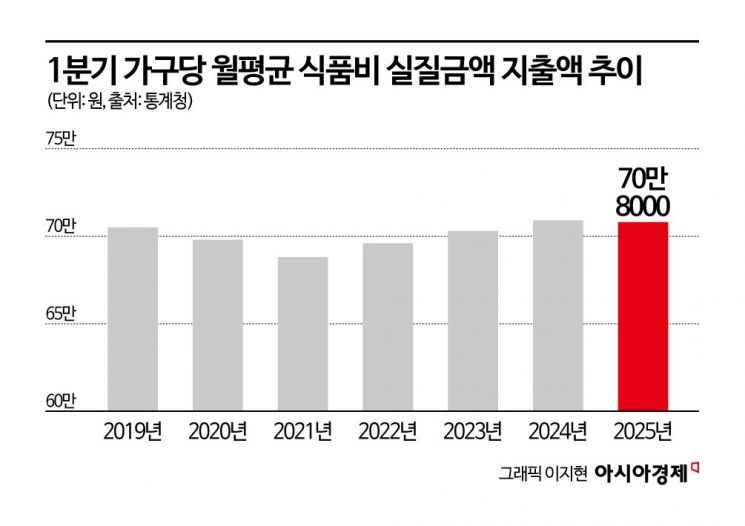
Although monthly food expenses have climbed to nearly 900,000 won, actual purchasing power has remained stagnant when adjusted for inflation. When nominal average monthly food spending is converted into real terms using the consumer price index by expenditure purpose, the real monthly average food expense in the first quarter was 708,000 won. This is an increase of 1.5?3.0% compared to the first quarters of 2020?2022, which were during the COVID-19 period, but it is a 0.1% decrease compared to the same period last year (709,000 won).
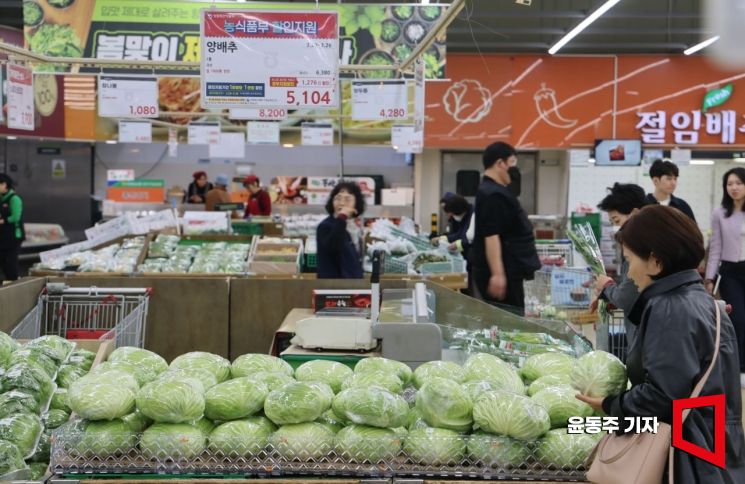
By category, spending on fresh food was 198,000 won and on processed food was 263,000 won, each up 2.3% from the same period last year. Dining out expenses were 417,000 won, a 2.5% increase year-on-year. The share of each category in total average monthly household food expenses was 22.5% for fresh food, 30.0% for processed food, and 47.5% for dining out, the same proportions as in the first quarter of last year. However, compared to 2019, before the pandemic, the shares of processed food and dining out each increased by 0.5 percentage points, while the share for fresh food decreased by 1.0 percentage point.
The increase in food expenses has placed a greater burden on low-income households. The bottom 20% income group (first quintile) spent an average of 450,000 won per month on food, a 41.2% increase compared to 2019, far exceeding the average expenditure growth rate of 27.7% during this period. In contrast, the top 20% income group (fifth quintile) spent about 1,373,000 won in the first quarter, more than three times the amount spent by the first quintile. However, their expenditure growth rate since 2019 was relatively lower at 26.3%.
By age of the household head, households headed by those in their 40s, who typically have more dependents, had the highest monthly average food expenditure at 1,090,000 won, followed by those in their 50s at 1,046,000 won. In contrast, households headed by those under 40 or over 60, which have a higher proportion of single-person households, had relatively lower expenditures at 813,000 won and 712,000 won, respectively.
Among processed foods, spending was highest on bread and rice cake products at 317,000 won, followed by health supplements at 295,000 won, and sweets and confectionery at 288,000 won. Spending on coffee and tea increased by 6.3% from the first quarter of last year, surpassing 100,000 won for the first time. On the other hand, spending on alcoholic beverages was 163,000 won, a 4.1% decrease.
© The Asia Business Daily(www.asiae.co.kr). All rights reserved.
![Clutching a Stolen Dior Bag, Saying "I Hate Being Poor but Real"... The Grotesque Con of a "Human Knockoff" [Slate]](https://cwcontent.asiae.co.kr/asiaresize/183/2026021902243444107_1771435474.jpg)


















