Rubio Expected to Visit South Korea for Two Days Starting July 8
Possibility of Discussing Specifics of a South Korea-U.S. Summit
"Tariff Negotiations" and "Defense Spending Increase" Likely on the Agenda
Office of the President: "Coordinating Schedule Based on Mutual Understanding of the Need for a Meeting"
As U.S. Secretary of State Marco Rubio is considering a visit to South Korea for a two-day, one-night stay starting July 8, coinciding with his attendance at the ASEAN Regional Forum (ARF) in Malaysia, attention is focused on whether a summit between President Lee Jaemyung and U.S. President Donald Trump?previously unachieved at multilateral meetings?will finally be arranged. Some observers speculate that the two leaders could meet as early as the end of July.
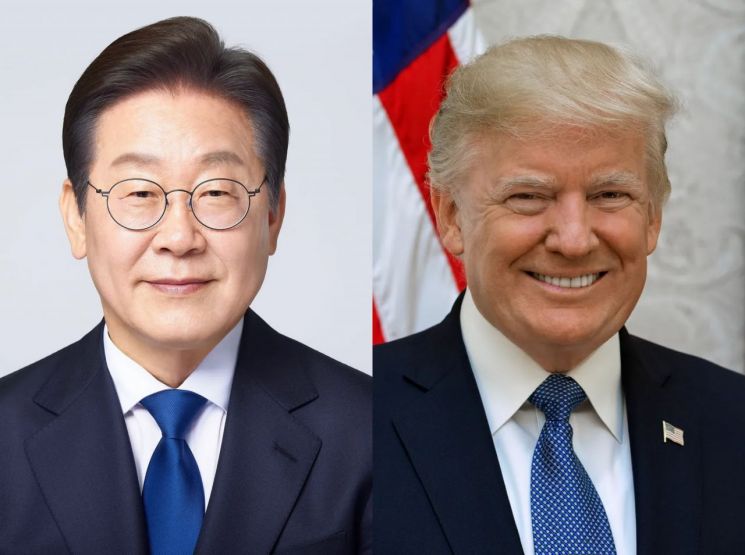
The Office of the President has avoided making direct comments, stating that no schedule has been set yet. However, with the expiration of the U.S. reciprocal tariff grace period on July 8 and the need to produce tangible results, as well as the growing likelihood that South Korea will have to respond to U.S. demands to increase defense spending, similar to NATO countries, the urgency of bilateral issues is clear. Given these circumstances, analysts believe it is highly likely that a South Korea-U.S. summit will be held in the form of President Lee visiting the United States in late July or early August. However, Kang Yujeong, spokesperson for the Office of the President, told reporters, "My understanding is that the timing of the South Korea-U.S. summit is still being coordinated based on mutual understanding of its necessity," adding, "The end of July is not a date that has been announced by the Office of the President."
President Lee, who made his debut on the multilateral diplomatic stage at the Group of Seven (G7) summit in Canada on June 17?just about two weeks after his inauguration?had sought to hold a summit with President Trump, but the meeting fell through when President Trump returned early to the U.S. due to the Israel-Iran issue. At the NATO summit in The Hague, Netherlands, on June 25, all leaders from the Indo-Pacific Four (IP4)?South Korea, Japan, Australia, and India?who had been invited, were absent. Representing South Korea, National Security Advisor Wi Seongrak attended in place of President Lee and met with Secretary Rubio. Therefore, if Secretary Rubio visits South Korea this time, it is highly likely that he will meet with his counterpart, Advisor Wi, to discuss the specifics of a South Korea-U.S. summit.
If the summit takes place, tariff negotiations and the increase of defense spending are expected to be on the table. The grace period for U.S.-imposed reciprocal tariffs expires on July 8. While Treasury Secretary Scott Besant has suggested that the grace period could be extended, President Trump stated on Fox News that he would "send letters to all countries" before the expiration, further increasing uncertainty. President Trump plans to impose tariffs of 25%, 35%, or 50% on countries with significant trade imbalances, while some countries will only be subject to a basic tariff of 10%. During the G7 summit, President Lee told reporters regarding the tariff negotiations, "Our goal is not to be put in a more disadvantageous position than other countries."
The growing burden of increasing defense spending in response to U.S. demands, particularly among NATO countries, is also a concern. The U.S. intends to ask not only NATO members but also Asian allies to raise their defense budgets to around 5% of their GDP. This 5% consists of 3.5% for direct security costs and 1.5% for indirect security costs (infrastructure and defense industry). Furthermore, South Korea faces the additional challenge of negotiating an increase in its share of the cost for U.S. Forces Korea, making the situation even more complex. Spokesperson Kang stated, "If the timing is coordinated in any way, we will notify the media of the results."
© The Asia Business Daily(www.asiae.co.kr). All rights reserved.

















