Fraud Compounds Numbering 53
Victims Detained and Forced to Commit Scams
A report has drawn attention to the existence of around 50 so-called "criminal compounds" in Cambodia. These criminal compounds are large-scale fraud workshops where people are forcibly detained. Criminal organizations are reported to use victims in these places to carry out various online scams, including voice phishing.
On June 27 (local time), the human rights organization Amnesty International published a report detailing the current state of 53 large-scale fraud workshops in Cambodia. The report includes not only the harsh realities faced by victims inside these fraud workshops but also lists suspected locations that have been identified.
According to foreign media outlets such as AFP, which cited the report, these large-scale fraud workshops, known as "criminal compounds," lure victims with fake job offers and then force them to commit various scams, including online fraud and voice phishing.
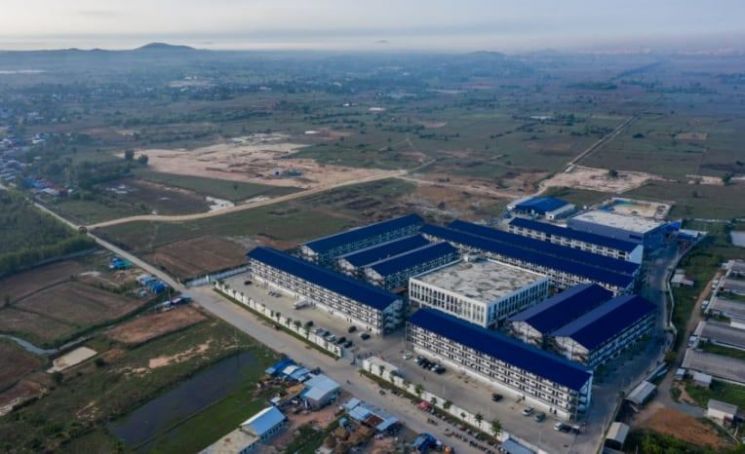 The estimated appearance of the 'fraud workshop' in Cambodia by Amnesty International. Amnesty International
The criminal compounds are protected by multiple layers of security, including barbed wire fences with high-voltage electricity, armed guards, and surveillance cameras. Workers are effectively held in illegal detention. One survivor from Thailand reported being forced to use deepfake video technology to lure Thai women and steal their money, and said that after a year, he managed to escape by jumping out of a window at the compound.
These criminal compounds are said to be operated by Cambodian crime syndicates. The criminal organizations lure victims to Cambodia with job offers, then kidnap them, confiscate their passports, and detain them.
Inside the workshops, victims are forced to work more than 12 hours a day under harsh conditions. If they are caught trying to escape, they can be subjected not only to beatings but also to severe torture. The interior of the workshops is reportedly designed to resemble a prison, and there are even rooms dedicated to torture.
Another survivor who testified to Amnesty International said, "I witnessed a manager beating a Vietnamese person continuously for 25 minutes," adding, "He beat him until his body turned purple." The survivor also reported hearing the manager say, "I will wait until another workshop buys this Vietnamese person."
According to Amnesty International, the number of criminal compounds surged before and after the COVID-19 pandemic. Criminal organizations purchased hotels and casinos, which had been left empty due to a lack of tourists caused by infection control measures, at low prices and converted them into criminal compounds. The United Nations Office of the High Commissioner for Human Rights estimated that up to 100,000 people could be detained in criminal compounds across Cambodia, and that the industry could be worth as much as $12.5 billion per year.
© The Asia Business Daily(www.asiae.co.kr). All rights reserved.

















