Kim Deokhyun Marks Third Anniversary as County Governor
Metropolitan Subway Line 1 and National Road No. 3 Opened, National Yeoncheon Memorial Cemetery Breaks Ground
Secured Gyeonggi Provincial Assembly Training Institute and Gyeonggi-do Fire Academy Northern Campus
Accelerating Start of Seoul?Yeoncheon Expressway and Laying the Foundation for Yeoncheon's Future Growth
"We will accelerate the expansion of infrastructure and the steady implementation of major projects to ensure Yeoncheon grows into a self-sufficient city and secures future sources of livelihood."
On June 30, Kim Deokhyun, Governor of Yeoncheon County, marked the third anniversary of the 8th popularly elected administration and stated, "Reflecting on our achievements so far, we will establish a bridgehead for regional development so that Yeoncheon can leap forward as a self-sufficient city in the era of the intelligence-driven Fourth Industrial Revolution, including artificial intelligence (AI)."
Launched with the vision of "Bold Challenge, New Yeoncheon," the 8th popularly elected Yeoncheon County administration has, over the past three years, laid the foundation for regional development through major achievements such as the opening of the Metropolitan Subway Line 1 and National Road No. 3 bypass, the groundbreaking of the National Yeoncheon Memorial Cemetery, the successful bid for the Gyeonggi Provincial Assembly Training Institute, and the securing of the Gyeonggi-do Fire Academy Northern Campus.
Governor Kim Deokhyun emphasized, "The past three years have been a time to prepare for Yeoncheon's future based on communication with residents," and added, "In the time remaining, we will accelerate key projects in Yeoncheon and deliver tangible results that residents can truly feel."
Q. What have been the major achievements of the 8th popularly elected administration over the past three years?
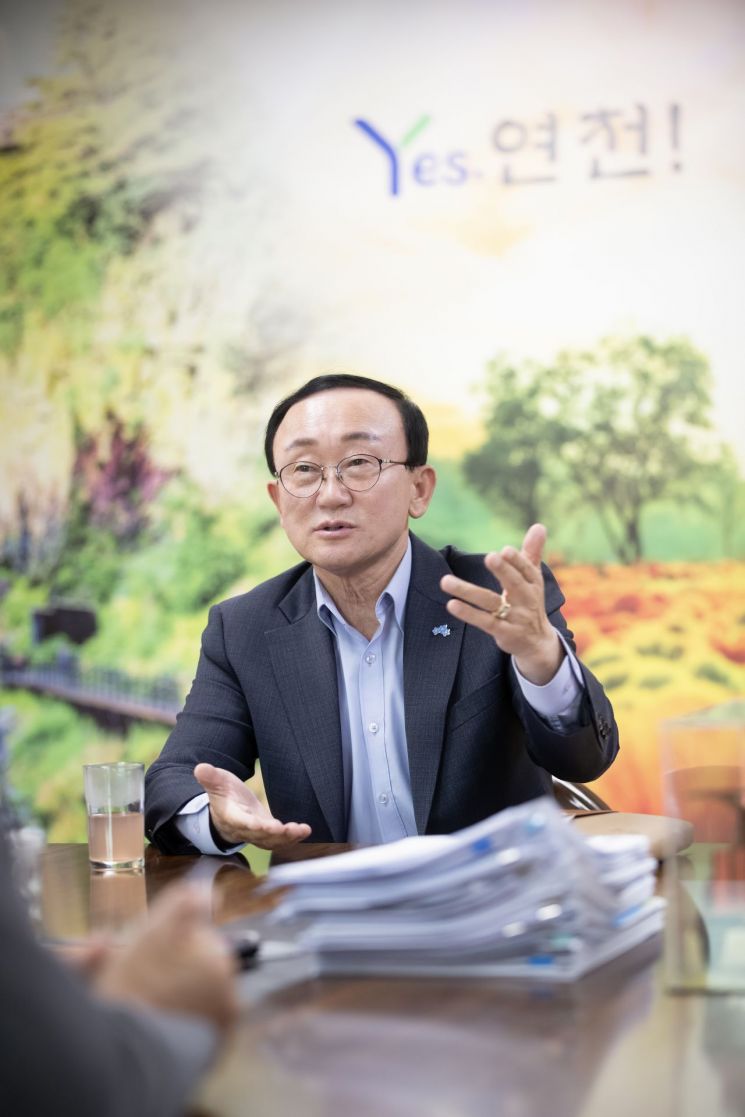
A. The major achievements of the 8th popularly elected administration over the past three years include the opening of the Metropolitan Subway Line 1 and the National Road No. 3 bypass, the groundbreaking of the National Yeoncheon Memorial Cemetery, the successful bid for the Gyeonggi-do Fire Academy Northern Campus, the Imjingang Pet Theme Park development project, and the successful bid for the Gyeonggi Provincial Assembly Training Institute. In particular, the expansion of the transportation network, a long-standing wish of Yeoncheon County, stands out as the most significant achievement. The Metropolitan Subway Line 1 opened in December 2023, dramatically improving the transportation network surrounding Yeoncheon County. Now, residents can travel directly from Yeoncheon to Seoul by subway.
The synergy between the Sangpae~Cheongsan section of the National Road No. 3 bypass, which opened before the subway, and Line 1 has invigorated the local economy. The National Road No. 3 bypass is an expressway connecting the Seoul border to Uijeongbu, Yangju, Dongducheon, and finally Yeoncheon, spanning approximately 36.7 kilometers from north to south. With the opening of the bypass, travel time from Yeoncheon to the Seoul border has been reduced to about 40 to 50 minutes by car, further improving the transportation network. We expect the number of visitors to Yeoncheon to increase every year thanks to this expanded network.
Q. The National Yeoncheon Memorial Cemetery broke ground this April. What can you tell us about it?
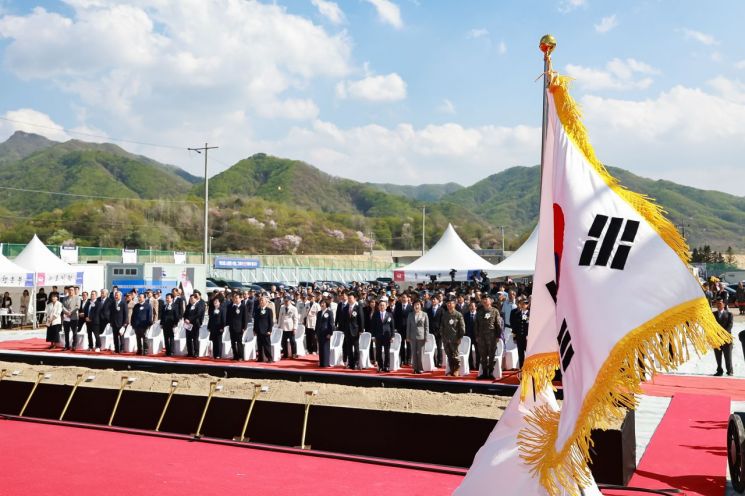
A. The National Yeoncheon Memorial Cemetery, the third of its kind after those in Seoul and Daejeon, broke ground on April 24, 2025. The cemetery is scheduled for completion in 2027 and will be built on a site of approximately 957,000 square meters (about 290,000 pyeong) in Daegwang-ri, Sinseo-myeon, Yeoncheon County. This large-scale project, with a budget of about 129.8 billion KRW, will include a columbarium for 25,000 remains and a natural burial ground for 5,000, accommodating a total of 50,000 remains.
The construction of the National Yeoncheon Memorial Cemetery will be carried out in an environmentally friendly manner, minimizing deforestation and focusing on existing farmland. We will do our utmost to preserve Yeoncheon County's pristine natural environment?boasting the UNESCO-designated Imjingang and Hantangang rivers?while creating a national cemetery that harmonizes with nature.
Q. Yeoncheon was recently selected as the site for the Gyeonggi Provincial Assembly Training Institute. What does this mean for the county?
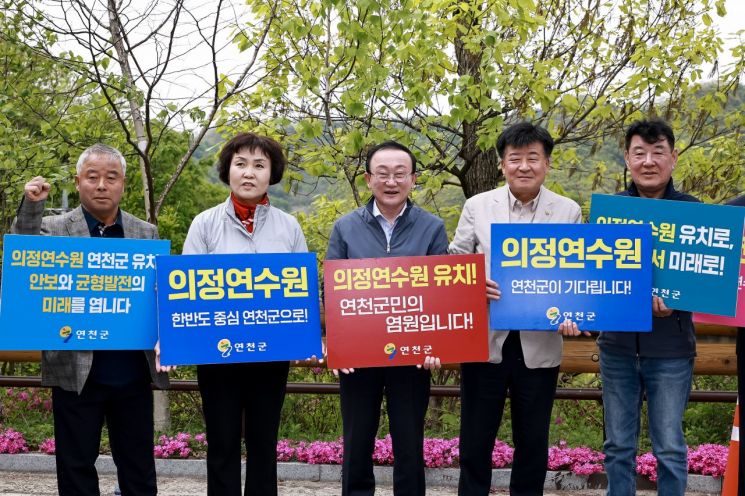
A. Yeoncheon County was ultimately selected as the site for the Gyeonggi Provincial Assembly Training Institute. Our county received high marks for site suitability, transportation accessibility, and expansion potential. The training institute will be built as a complex facility?including educational and accommodation facilities?on a site of about 280,000 square meters in the Daegwang-ri area. The basic plan and feasibility study will be completed by October 2025, after which budget allocation and design preparation will follow, with the aim of completing construction by 2030.
Once completed, the institute is expected to bring thousands of trainees annually, boosting the local economy and expanding cultural and tourism content, among other ripple effects. As the successful bid was achieved through the efforts of Yeoncheon's 41,000 residents, we will continue to actively reflect residents' voices going forward.
Q. You have expressed a strong commitment to the early commencement of the Seoul~Yeoncheon Expressway. Why is this important?
A. The Seoul~Yeoncheon Expressway is an essential piece of infrastructure to prepare for inter-Korean exchange and cooperation and to achieve balanced national development. The expressway was originally planned to extend only from Seoul to Yangju, but thanks to Yeoncheon County's efforts, funding for a preliminary study on the Yangju~Yeoncheon section was secured. This was the result of persistent communication with central government ministries and the National Assembly, continuously conveying the voice of Yeoncheon?a border area facing population decline.
President Lee Jaemyung has consistently emphasized, since his candidacy, that "special sacrifices deserve special compensation." He has argued that compensation is needed for border regions that have suffered discrimination and neglect for over 70 years since the 1953 Armistice Agreement. This year, our county independently launched a strategic response study for the Seoul~Yeoncheon Expressway. The expressway should not be approached solely from an economic perspective, but rather as "special compensation for special sacrifice" for Yeoncheon County, which has endured as an underdeveloped area for over 70 years, and as a measure to overcome the crisis of regional extinction.
Q. The Gyeonggi-do Fire Academy Northern Campus has been secured. What are the future plans?
A. The Gyeonggi-do Fire Academy Northern Campus will be built by 2029 on a 212,541 square meter site in Tonggu-ri, Baekhak-myeon. The campus will consist of four main buildings: a welfare center, a safety camp for residents, a northern-specialized education and training center, and a basic education and training center. Each building will be equipped with amenities such as dormitories, cafeterias, lounges, open safety education spaces, outdoor specialized training grounds, camping facilities, a healing forest, an advanced integrated tactical training ground, specialized rescue and emergency practice facilities, a fire vehicle driving practice area, a fire training tower, and fire facility practice areas.
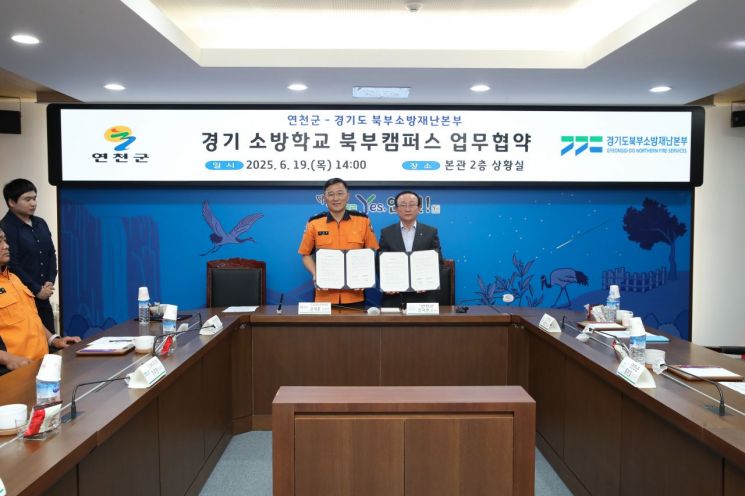
With the creation of local jobs and the expected annual influx of at least 50,000 firefighters and related personnel, the campus is expected to significantly boost the local economy. The successful bid for the Gyeonggi-do Fire Academy Northern Campus will establish Yeoncheon County as the center for fire training and education in northern Gyeonggi. In the future, we plan to link local attractions such as Jaein Falls and Paleolithic sites with safety education programs to further vitalize the tourism industry.
Q. What is the status of the pet theme park project being pursued with the Seoul Metropolitan Government?
A. In cooperation with the Seoul Metropolitan Government, we plan to establish the largest pet theme park and memorial hall in the metropolitan area by 2027 in Samgeori and Seongok-ri, Gunnam-myeon. The pet theme park, covering about 120,000 square meters, will feature a variety of facilities for pets and their owners, including caravans, glamping and auto camping sites, a swimming pool for dogs, playgrounds and training centers for dogs, and pet grooming salons. The pet memorial hall, covering about 40,000 square meters, will include a crematorium or drying facility and a columbarium for pets. We will maintain close communication with the Seoul Metropolitan Government to ensure the success of the pet theme park and memorial hall project.
Q. What is the vision for the Yeoncheon BIX Green Bio Cluster project?
A. In December 2023, after signing a business agreement for the Northern Gyeonggi Green Bio Cluster with Gyeonggi Province, the Gyeonggi Institute of Science & Technology Promotion, the Korea Institute of Science and Technology, Dongguk University, Hanmi Pharm Co., Ltd., Wooree Technology Co., Ltd., CTC Bio Co., Ltd., T&L Co., Ltd., Korea Genetic Biopharm Co., Ltd., and Neoken Bio Co., Ltd., we formed a working-level task force to advance the project.
This year, through MOUs with universities such as Dongguk University, Dankook University, and CHA University, we are promoting research and development and workforce training in the green bio field. Rather than a simple local government-company partnership, we are realizing an industry-academia-research-government cluster model. The green bio industry is an emerging sector that creates high added value across the entire agricultural value chain by utilizing biological resource technology.
The government aims to grow the domestic green bio industry to 10 trillion KRW and exports to 5 trillion KRW by 2027, as well as nurture global companies in this field. Our county intends to leverage the strengths of its pristine natural environment and the DMZ area to make Yeoncheon BIX the hub of a sustainable, resource-based, high value-added industry. In the long term, our goal is to attract more than 50 bio-material specialized companies, create over 1,000 bio-related jobs, and bring in internationally accredited certification and testing institutions, ultimately developing Yeoncheon County into Korea's leading green bio-specialized zone.
© The Asia Business Daily(www.asiae.co.kr). All rights reserved.



















