"Smooth Landing Disrupted by U.S. Tariff Policy"
High Market Volatility Attributed to Trump’s Tariffs
"Excessive Sensitivity... Concerns Over Persistent Inflation"
The Bank for International Settlements (BIS) recently criticized in its report that U.S. President Donald Trump's trade policies have elevated global economic uncertainty to a "crisis" level. The report also warned that the risk of U.S.-driven inflation resurging has increased.
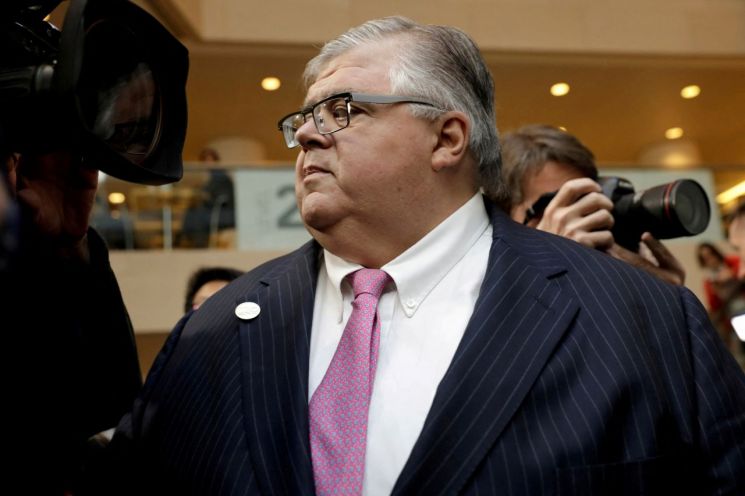
According to Bloomberg News on the 29th (local time), Agustin Carstens, Secretary General of the BIS, released the "2025 Economic Report" and stated, "We were planning for a soft landing and everything was going smoothly, but with the sudden threat of tariffs, the markets have fallen into high volatility."
He added, "In some countries, reaching the 2% inflation target has become even more difficult."
The report released that day stated that due to U.S. tariff policies, growth prospects have weakened, while risks related to consumer price stability, national finances, and the financial system have increased.
Secretary General Carstens advised that, in this situation, central banks must focus on their core mandates to maintain credibility and maximize policy effectiveness. He particularly pointed out that the U.S. Federal Reserve (Fed) could face a challenging environment.
He noted, "In the United States, it is possible to see a situation where economic growth slows while inflation expectations rise, which is the most difficult scenario for central banks to respond to."
Shin Hyun Song, BIS Economic Adviser, explained, "Once prices rise significantly, everyone becomes sensitive to subsequent changes," and added, "There is fear that this price increase may not be temporary, but could lead to sustained inflation."
He also identified the unprecedented level of national debt as a risk factor. For countries in the Organisation for Economic Co-operation and Development (OECD), the cost of government bond interest has reached about 4% of gross domestic product (GDP).
However, when asked about President Trump's criticism of Chairman Jerome Powell, Secretary General Carstens avoided a direct answer. He said, "At certain points, friction between the government and the central bank can be expected," adding, "It is almost as if it was designed that way."
© The Asia Business Daily(www.asiae.co.kr). All rights reserved.

















