Financial Services Commission to Amend Subordinate Regulations of the Mutual Savings Banks Act
Support for Expanding Savings Banks' Loans to Low-Income Individuals and the Self-Employed
Amendments Expected to Be Completed in the Third Quarter
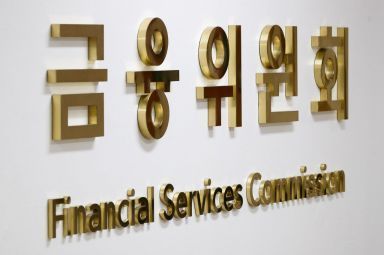
The Financial Services Commission announced that it will begin full-scale support to expand the role of savings banks, including strengthening support for low-income individuals and self-employed people, and increasing lending in non-metropolitan areas.
On June 30, the Commission stated that it would give advance notice of legislation and regulatory changes for the amendments to the Enforcement Decree of the Mutual Savings Banks Act, the Supervisory Regulations for Mutual Savings Banks, and the Detailed Enforcement Rules for the Supervision of Mutual Savings Banks. These amendments are intended to improve systems related to the "Measures to Enhance the Role of Savings Banks" announced on March 20, as well as to revise other relevant regulations.
To expand support for low-income individuals and self-employed people, the weighting for policy financial products such as Sunshine Loans will be increased from the previous 100% to 150% when calculating the ratio of loans within the business area. Savings banks are required to provide a certain percentage of their total loans (50% for metropolitan areas, 40% for non-metropolitan areas, etc.) to individuals and small- and medium-sized enterprises within their business area. The increased weighting will allow more loans to be provided to these groups. In addition, the weighting for loans backed by credit guarantee securities issued by regional credit guarantee foundations for small- and medium-sized enterprises, which previously received a 130% weighting, will also be raised to 150%.
To address the excessive concentration of loans by savings banks in metropolitan areas, for savings banks with multiple business areas that include both non-metropolitan and metropolitan regions, the weighting will be differentiated: loans in metropolitan areas will be weighted at 90%, while loans in non-metropolitan areas will be weighted at 110% when calculating the ratio of loans within the business area. A one-year grace period will be provided so that these savings banks can expand their lending in non-metropolitan areas and comply with the new requirements.
Incentives will also be provided for mid-interest rate loans to encourage savings banks to focus more on their core role of supplying financial services to low-income individuals. To this end, when calculating the loan-to-deposit ratio, 10% of private-sector mid-interest rate loans will be excluded from the loan amount, thereby increasing the capacity to supply such loans.
Additionally, when a financial holding company is the largest shareholder of a savings bank, it will be exempt from the regular eligibility review for major shareholders. This is because, under the Financial Holding Company Act, there are already institutional mechanisms in place to ensure sound management of the entire group. Other considerations include the ability of the holding company to fulfill its role as a reliable major shareholder through supervision of subsidiaries and financial support, as well as the fact that the establishment of subsidiaries or acquisition of shares by a financial holding company is already recognized as meeting the requirements for major shareholders.
Certain unreasonable criteria for asset soundness classification will also be improved. Even if a client holds loans classified as substandard or below, loans secured by deposits or installment savings, or loans guaranteed by financial institutions that are highly likely to be repaid in principal and interest, will be allowed to be classified as normal within the total loans.
The advance notice period for these subordinate regulation amendments and regulatory changes will run until August 11. Afterward, the amendments are scheduled to be finalized within the third quarter of this year, following reviews by the Regulatory and Legislative Review Office, resolutions by the Financial Services Commission and the Cabinet, and other required procedures. A Commission official stated, "We expect that these legal amendments will strengthen the ability of savings banks to provide financial services to local communities and low-income individuals," adding, "The government will continue to pursue institutional improvements to further enhance the competitiveness of savings banks."
© The Asia Business Daily(www.asiae.co.kr). All rights reserved.

















