Large Swarms of Lovebugs Invade Gyeyangsan Mountain
Over 100 Civil Complaints Filed in Incheon in a Single Day
The sudden surge of Lovebugs in the area around Gyeyangsan Mountain in Gyeyang-gu, Incheon, is causing increasing inconvenience for hikers.
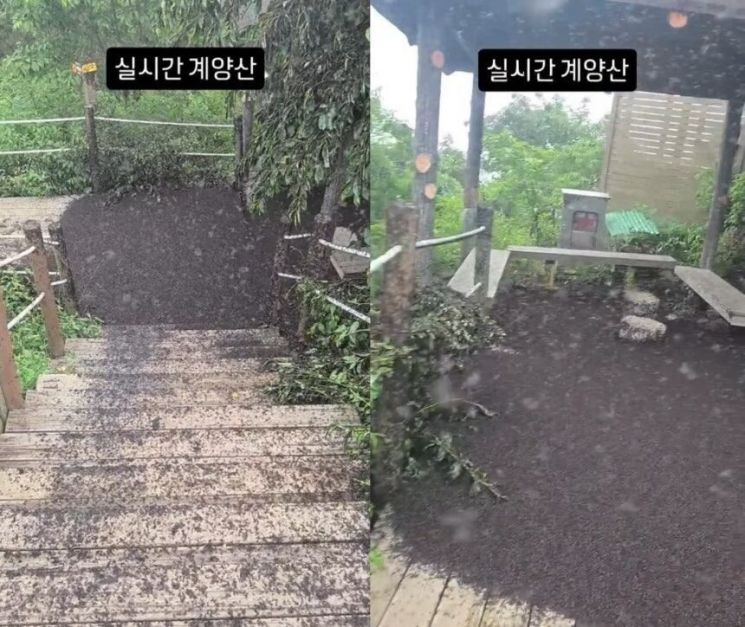
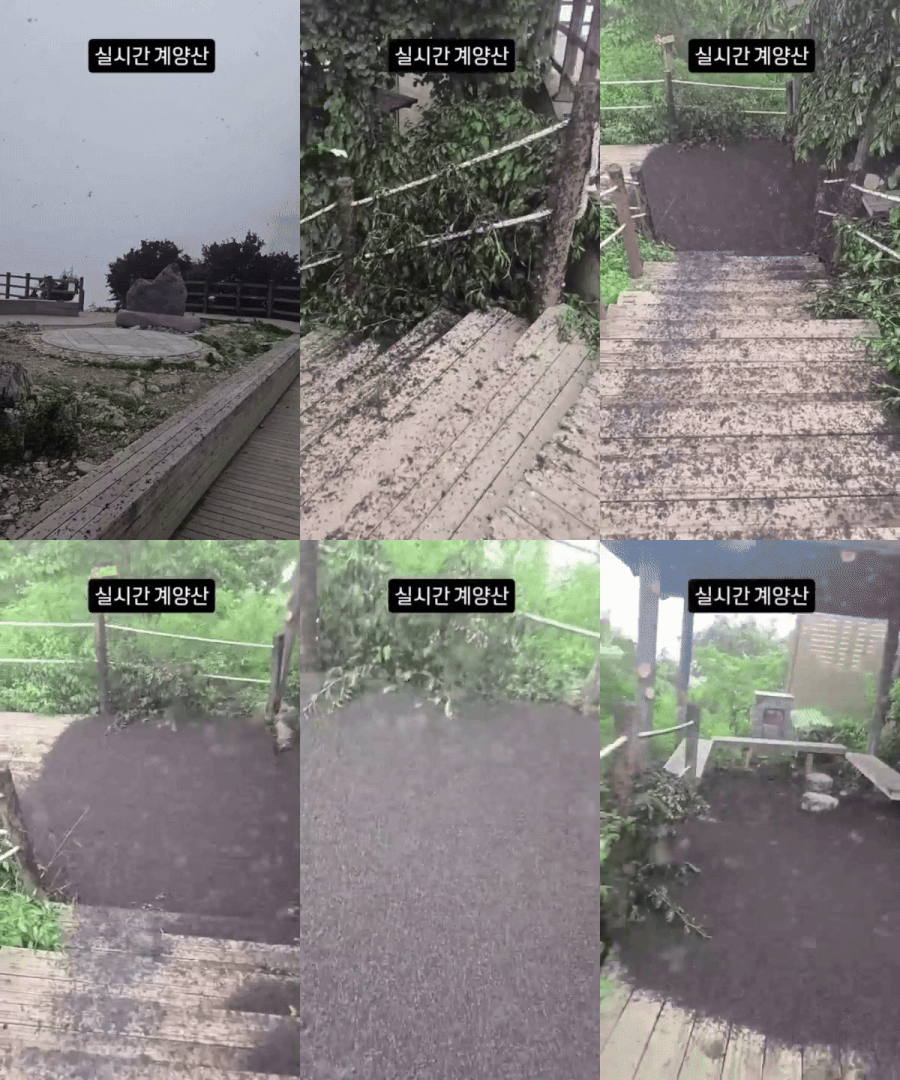
On June 29, numerous photos and videos were shared on various online communities and social networking services (SNS), showing swarms of red lovebugs, commonly known as "Lovebugs," virtually taking over Gyeyangsan Mountain. In videos capturing the current situation on the mountain, swarms of Lovebugs were seen flying thick enough to obscure visibility. The person filming the video described it as a "Lovebug invasion," adding, "Anyone who dislikes bugs might faint after climbing the mountain. The mixture of dead and living bugs has formed a thick carpet." He also posted videos of himself trying to catch Lovebugs with an electric fly swatter and clean up the dead bugs with a dustpan, but all attempts failed. He commented, "Human resistance was meaningless," and explained, "The electric fly swatter didn't work, and the small dustpan was far too weak."
A blogger who filmed the summit of Gyeyangsan also stated, "Lovebugs have occupied the mountain peak," emphasizing that "it's almost at the level of a disaster." In the photos, the ground was covered so densely with dead Lovebugs that it could be mistaken for an asphalt-paved road.
Incheon is one of the regions where civil complaints have surged this year due to the explosion in the Lovebug population. By early July last year, there had been a total of about 150 requests for Lovebug control at the 10 district health centers in Incheon, but this year, it is reported that over 100 complaint calls have been received in a single day.
The red Lovebug was originally native to southeastern China and Okinawa, Japan, but since 2022, it has been found in large numbers, especially in the Seoul metropolitan area. It is believed that Lovebugs have migrated to Korea after losing their primary habitats due to the climate crisis. Initially, they were mainly found in northwestern parts of the metropolitan area, such as Eunpyeong-gu in Seoul and Goyang in Gyeonggi Province, but recently, sightings have become common throughout Seoul and the surrounding Gyeonggi area. In particular, the number of civil complaints about Lovebugs in Seoul more than doubled last year, reaching 9,296 cases compared to 4,418 cases the previous year.
Lovebugs are not toxic and do not bite humans or transmit diseases. They thrive in hot and humid weather with continuous rain and heat. They live as larvae in the soil and, when moisture is supplied, emerge as adults. The larvae actually help decompose fallen leaves and enrich the soil, while the adults assist in pollination of flowers like bees, making them beneficial insects. However, because they are relatively large and tend to stick to people, they cause discomfort among citizens, leading to an increase in related complaints. As a result, they are classified as sudden nuisance insects and household nuisance insects that affect living environments. However, experts warn that spraying insecticides for control could kill not only Lovebugs but also their natural predators, such as mantises and spiders, and could also be harmful to humans. Therefore, experts emphasize that coexistence strategies should be considered rather than aggressive control measures.
Experts predict that the Lovebug population will decrease sharply around mid-July, as their activity drops significantly after exposure to sunlight, leading to a rapid decline in numbers within one to two weeks.
Preventive measures for dealing with Lovebugs at home or outdoors include: minimizing brightness of outdoor lights at night, checking and repairing window screens, wearing dark-colored clothing when going outside, washing vehicles frequently to prevent corrosion, installing sticky traps, and spraying water to drive away bugs attached to walls or windows.
© The Asia Business Daily(www.asiae.co.kr). All rights reserved.


















