A plant suspected to be Giant Hogweed found growing on Hokkaido University campus
Highly toxic sap poses serious danger... No cases reported in South Korea
A plant suspected to be a highly toxic invasive species has been found growing on a Japanese university campus, prompting authorities to launch an investigation.
On June 25, Hokkaido University announced on its website that "an Apiaceae plant similar to Giant Hogweed has been identified on the Sapporo campus, and experts are conducting a detailed examination," adding that "access to the area has been restricted as a precautionary measure."
The university stated that, a day earlier, it had received a report from a local resident about a plant resembling Giant Hogweed growing along a roadside near the campus. Based on this report, the university requested an expert evaluation. The plant in question had grown to about 3 meters in height and was reported to exhibit some of the distinctive features of Giant Hogweed.
The area where the plant was discovered is frequented not only by students but also by external visitors. The university has blocked access to the vicinity and repeatedly urged people to "never approach or touch the plant under any circumstances."
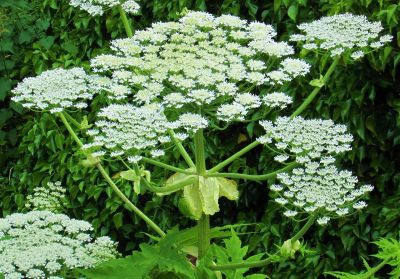
Giant Hogweed is a harmful invasive species belonging to the Apiaceae family. It has green stems marked with purple or dark red blotches, a surface covered in fine hairs, and can grow up to 5.4 meters tall. Notably, from late spring to summer, this plant produces umbrella-shaped clusters of white flowers and can disperse thousands of seeds at a time.
This plant is considered one of the most dangerous in Europe and North America due to its potent toxicity. The sap secreted from its stems, leaves, flowers, seeds, and roots is phototoxic, meaning that contact with skin can cause severe blistering similar to burns when exposed to sunlight. In some cases, wounds may take weeks to heal or leave scars, and if the sap enters the eyes, it can lead to the risk of blindness.
Due to its phototoxic nature, areas of skin exposed to the sap must be kept out of sunlight for several days, and if the sap gets into the eyes, immediate rinsing with running water is necessary to minimize harm.
Giant Hogweed originates from the Caucasus region and was imported to the United States and Europe in the early 20th century for botanical garden exhibitions. In some areas, it has since established itself as a wild species and become a problematic plant.
If the plant is confirmed to be Giant Hogweed, this would mark the first official discovery of the species in Japan. Accordingly, the university stated that it will work with local authorities to discuss removal measures and monitor for further spread.
To date, there have been no reported cases of Giant Hogweed growing wild in South Korea.
© The Asia Business Daily(www.asiae.co.kr). All rights reserved.
![Clutching a Stolen Dior Bag, Saying "I Hate Being Poor but Real"... The Grotesque Con of a "Human Knockoff" [Slate]](https://cwcontent.asiae.co.kr/asiaresize/183/2026021902243444107_1771435474.jpg)
















