Investing 10.5 Billion Won in Four Projects Including Organic Ecological Villages
Focusing on Establishing a Sustainable Growth Model
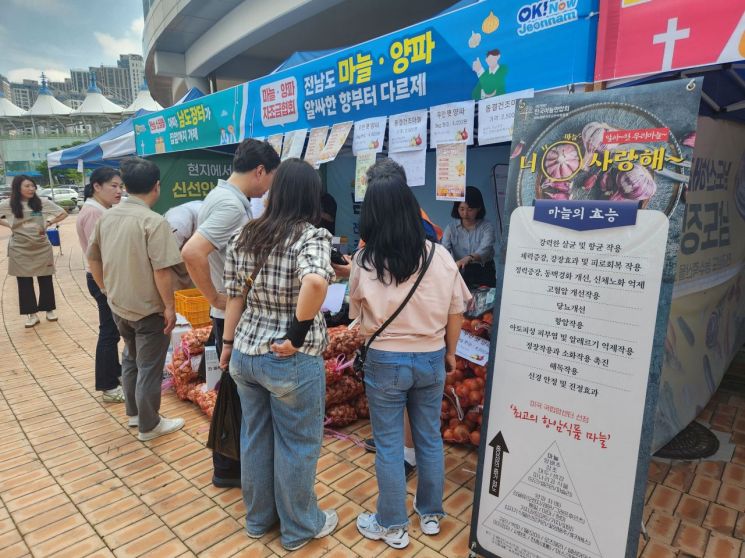 Jeollanam-do is undertaking infrastructure development to promote eco-friendly rural convergence industry encompassing production, processing, distribution, and experiential tourism. Photo by Jeonnam Province.
On June 29, Jeollanam-do announced that it will invest 10.5 billion won (8.3 billion won in subsidies and 2.2 billion won in local matching funds) in four projects, including the creation of organic ecological villages and the development of eco-friendly agricultural product infrastructure, to promote eco-friendly rural convergence industry encompassing production, processing, distribution, and experiential tourism.
The province plans to focus on revitalizing the rural economy through the sixth industrialization of eco-friendly agriculture and on establishing a model that guarantees the sustainability of eco-friendly farming.
The four key projects to be promoted this year include the construction of infrastructure for the production and distribution of eco-friendly agricultural products, as well as the development and activation of organic ecological villages.
The infrastructure construction project for eco-friendly agricultural products aims to support producer organizations in establishing the foundation for production, distribution, and processing of eco-friendly products. This year, 500 million won each will be provided to Suncheon Nonghyup and Boseong Jangyang Agricultural Cooperative Corporation.
The organic ecological village project, first launched by Jeollanam-do in 2010 as the nation’s first such initiative by a local government, seeks to create living rural ecosystems as organic farming experience centers. Currently, 71 villages have been designated and are operating as organic ecological villages.
Jeollanam-do supports these organic ecological villages by providing facilities, equipment, and program development and operation related to eco-friendly agricultural production, processing, distribution, and experiential activities. This year, a total of 1.2 billion won will be invested in seven villages, including Jibuk Village in Jangheung and Yuchon Village in Damyang.
Among the organic ecological villages, Gyeryang Village in Naju has become a model case by generating village income through the operation of a kimchi processing plant and by offering experiential events such as ecological farming harvests, supported by the 2024 organic ecological village development project.
Park Hyunsik, Director of the Agriculture, Livestock, and Food Bureau of Jeollanam-do, said, "Based on the foundation of 34,000 hectares of eco-friendly farming?half of the nation’s total 68,000 hectares of certified eco-friendly agricultural land?we will foster rural convergence industries specializing in organic farming and open up the future of agriculture."
© The Asia Business Daily(www.asiae.co.kr). All rights reserved.
![Clutching a Stolen Dior Bag, Saying "I Hate Being Poor but Real"... The Grotesque Con of a "Human Knockoff" [Slate]](https://cwcontent.asiae.co.kr/asiaresize/183/2026021902243444107_1771435474.jpg)
















