Congressional Approval Required for Trump’s Military Actions Fails to Pass
Democrats Claim Violation of Constitutional Authority, Republicans Stress Commander-in-Chief Powers
After Rejection, Trump Gains Political Leeway for Future Military Decisions
The U.S. Senate has rejected the 'War Powers Resolution' aimed at curbing President Donald Trump's ability to launch attacks on Iran. As a result, President Trump will, for the time being, retain the ability to take military action without congressional approval.
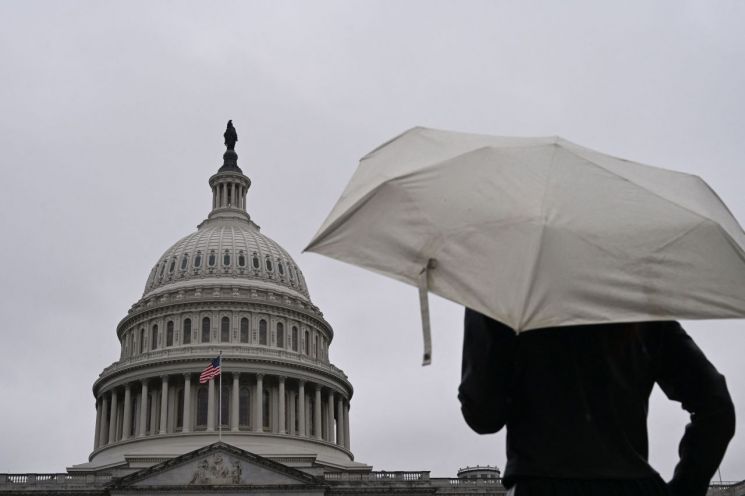
On June 27 (local time), the Senate voted down the resolution, which was introduced by Democratic Senator Tim Kaine, with 47 votes in favor and 53 against. The resolution failed to reach the majority required for passage. In this vote, Democratic Senator John Fetterman and Republican Senator Rand Paul broke ranks with their respective parties and cast dissenting votes.
The resolution stipulated that President Trump must obtain prior congressional approval before taking military action against Iran. It was introduced specifically in response to President Trump's airstrikes on three Iranian nuclear facilities on June 21, which were carried out without congressional approval.
The Democratic Party argued, "Iran did not pose an immediate threat to the United States, and a unilateral attack infringes upon Congress's constitutional authority." Ahead of the vote, Senator Kaine criticized, "War is not a matter that can be decided based on someone's mood, whim, or how they feel that day."
In contrast, the Republican Party maintained its opposition, emphasizing the president's authority as commander-in-chief. Senator William Hagerty stated, "A resolution that blocks the president's decisions to protect national interests, allies, and the military is unacceptable."
Previously, House Speaker Mike Johnson also argued that the resolution could be unconstitutional, as it infringes upon the president's authority.
With the rejection of this resolution, President Trump has secured political leeway to make relatively unrestricted military decisions in future confrontations with Iran. However, discussions on imposing checks on long-term foreign military interventions are expected to continue.
© The Asia Business Daily(www.asiae.co.kr). All rights reserved.
![Clutching a Stolen Dior Bag, Saying "I Hate Being Poor but Real"... The Grotesque Con of a "Human Knockoff" [Slate]](https://cwcontent.asiae.co.kr/asiaresize/183/2026021902243444107_1771435474.jpg)
















