Majority of Member States Will Accept Even If Unbalanced
Macron: "Cannot Accept"
With the deadline for the mutual tariffs set for July 8 approaching, Ursula von der Leyen, President of the European Commission, announced on June 26 (local time) that she had received a new proposal from the United States regarding tariffs.
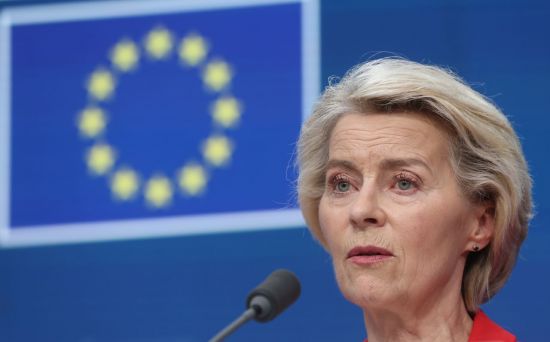
At a press conference that day, President von der Leyen stated, "Today, I received the latest (proposal) document from the United States regarding future negotiations," and explained that she had shared this information with the member states.
She added, "We are currently assessing the contents, and our message is clear. We are ready to conclude negotiations, but at the same time, we are preparing for the possibility that we may not reach a satisfactory agreement," emphasizing that all options are being considered.
It was reported that on this day, many member states argued that even if the U.S. proposal is somewhat unbalanced, an agreement should be reached within the negotiation deadline. This reflects concerns that, as was warned by the Donald Trump administration, if mutual tariffs are implemented, a new trade war could erupt between the U.S. and the EU.
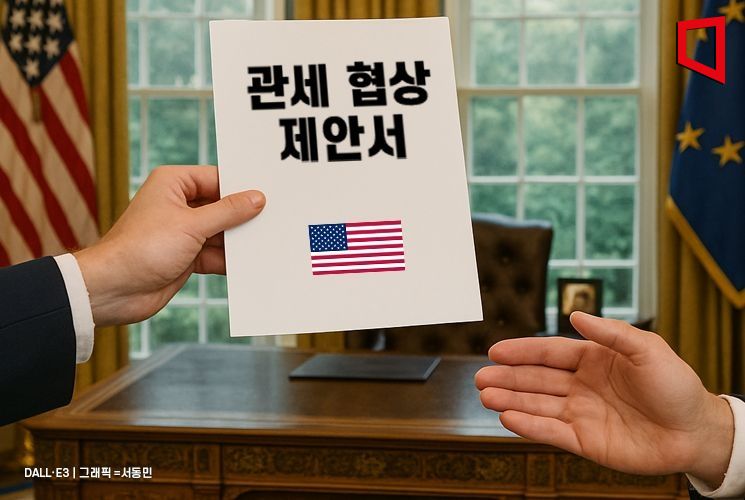
German Chancellor Friedrich Merz also met with reporters after the summit and said, "There are less than two weeks left until the negotiation deadline of July 9, and it is difficult to achieve a sophisticated trade agreement within that time frame," adding, "It is better to act quickly and simply than in a slow and complicated manner." He continued, "Everyone at the summit agreed on this point, and there were no objections."
The Commission's basic goal is to conclude a broad basic agreement by July 8 to avoid the 50% tariffs, and then continue negotiations on tariffs for sensitive items such as steel and automobiles.
There are also dissenting voices. French President Emmanuel Macron stated at a separate press conference, "I want to conclude a swift and practical trade agreement with the United States, but France will not accept unbalanced conditions."
The European Commission holds full authority over the trade policy of the EU member states, which form an economic community. The Commission also leads negotiations with the United States.
Previously, U.S. President Donald Trump expressed dissatisfaction last month with the slow pace of negotiations with the EU and pressured by threatening to impose a 50% tariff on all European products. When the EU responded by promising to speed up negotiations, he withdrew the threat within two days and postponed the tariff imposition deadline to July 9.
© The Asia Business Daily(www.asiae.co.kr). All rights reserved.
![Clutching a Stolen Dior Bag, Saying "I Hate Being Poor but Real"... The Grotesque Con of a "Human Knockoff" [Slate]](https://cwcontent.asiae.co.kr/asiaresize/183/2026021902243444107_1771435474.jpg)

















