Criticism That Benefits Flow to Corporations and the Wealthy
Proposal to Consider Differentiated Support for Low-Income Households
Budget Office Suggests Expanding Recipients by Adjusting Rebate Rate
There are growing calls within the political sphere for improvements to the 'High-Efficiency Home Appliance Rebate Program' included in the supplementary budget. Critics argue that this program, which offers a 10% rebate (up to 300,000 won) on the purchase of high-efficiency home appliances, disproportionately benefits large corporations such as appliance manufacturers and only certain segments of the population.
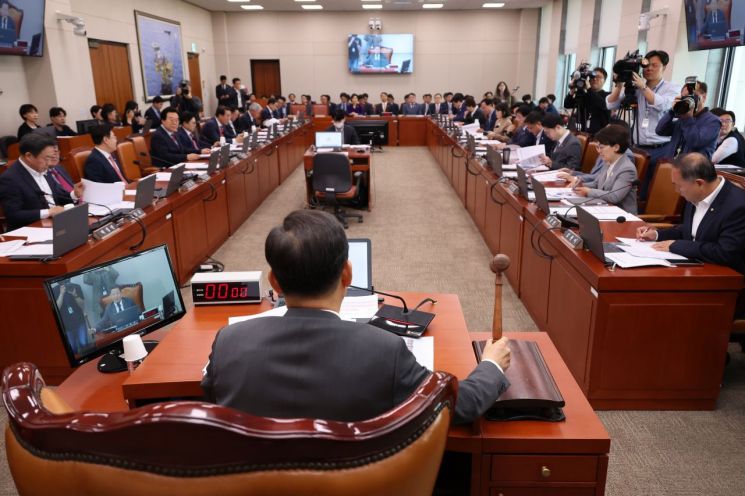
On June 26, during a meeting of the National Assembly's Industry, Trade, and Small and Medium Venture Business Committee, concerns were raised regarding the appropriateness of allocating 326.1 billion won from the supplementary budget to this program.
The High-Efficiency Home Appliance Rebate Program provides partial reimbursement through the Korea Energy Agency when consumers purchase top-rated products in categories such as refrigerators, kimchi refrigerators, electric rice cookers, air conditioners, air purifiers, washing machines, TVs, dehumidifiers, water dispensers, vacuum cleaners, and clothes dryers. For example, if a consumer purchases a top-rated air conditioner for 3 million won, they would receive a 300,000 won rebate. Similar programs were previously implemented in 2016, 2019, and 2020.
According to a report from the National Assembly Budget Office, "In the 2020 program, appliance manufacturers recorded approximately 3 trillion won in sales, and from an energy efficiency perspective, the program resulted in annual savings of 126,920 MWh, which is equivalent to the yearly electricity consumption of about 33,800 four-person households." The report also noted that the sales effect extended to component suppliers and other related industries, generating broader industrial ripple effects.
However, there is more skepticism among politicians regarding the program. Kwak Sangon, a member of the Democratic Party of Korea, told Asia Economy, "This program costs over 300 billion won, but ultimately the money flows to corporations, and the people purchasing the highest-spec products are likely to be wealthy individuals." Lee Cheolkyu, a member of the People Power Party and chair of the committee, also commented the previous day, "If the support is directed at people who can already afford to buy appliances, doesn't that contradict the purpose of a livelihood-focused budget?" He added, "We need to consider those who cannot purchase appliances due to financial constraints." Some lawmakers are suggesting that differentiated support measures for low-income households should be considered.
Additionally, the Budget Office pointed out that the program's funds have often been depleted early and proposed adjusting the rebate rate. Lowering the rebate rate to around 8%, for example, could increase the number of beneficiaries.
© The Asia Business Daily(www.asiae.co.kr). All rights reserved.

















