First TPU Production Facility in Asia Established in Changhua, Taiwan
North America-Asia Production Network Linked... Global Supply Enhanced
Features Include Biocompatibility, Chemical Resistance, and Transparency
German advanced materials company Covestro has begun production of thermoplastic polyurethane (TPU) materials for medical devices at its Changhua manufacturing site in Taiwan. This is the first medical TPU production base operating in Asia, and with this facility, Covestro has secured its second medical production site following its New Martinsville plant in North America.
Covestro announced on the 25th that it has established a production base for the medical TPU material 'Desmopan® Rx' in Changhua, Taiwan. The company explained that with this new facility, customers in the Asia region will benefit from faster delivery times and a more stable supply, and that Covestro will also be able to respond more quickly to changes in demand within the regional medical device market.
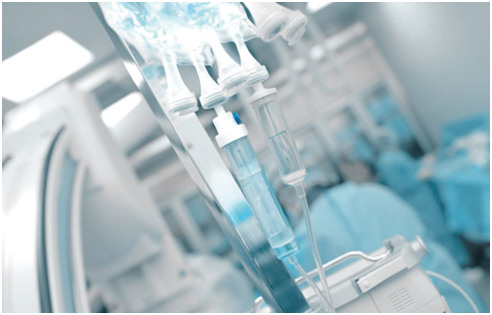 Covestro announced on the 25th that it has established a production base for the medical TPU material 'Desmopan® Rx' in Changhua, Taiwan. The photo shows medical tubing equipment applied with Desmopan Rx. Covestro Korea
 Photo by Covestro Korea
Kevin Ho, Head of TPU Sales and Market Development for Asia Pacific at Covestro, stated, "Globally, demand for medical materials is surging due to improvements in healthcare standards and population aging. With the new Changhua plant, we can now reliably supply high-performance materials that meet international standards."
The medical TPU material now in production complies with Good Manufacturing Practice (GMP) standards and has obtained certification under the international biocompatibility standard 'ISO 10993' as well as China's medical device material standard 'YY/T1557-2017'. It does not use harmful plasticizers for the human body and maintains stable physical properties even in sterilized environments. It is also compatible with various disinfection methods.
This material is designed for use in a wide range of components such as thin and flexible medical tubes, catheters, connectors, endoscope parts, and wearable devices. It meets the required performance standards for practical use environments such as operating rooms and intensive care units, including kink resistance for tubing, high transparency, chemical resistance, and abrasion resistance.
Additionally, it is compatible with the melt-blown process, which involves blowing molten polymer with air, allowing it to be applied to medical nonwoven products such as surgical covers, wound dressings, and sterile packaging materials. The material also meets environmental standards for disposal, addressing safety concerns related to medical waste management.
© The Asia Business Daily(www.asiae.co.kr). All rights reserved.

















