A Century of Korean Modern and Contemporary Art at the National Museum of Modern and Contemporary Art, Gwacheon
Featuring 110 Major Works, Including 17 Pieces from the Lee Kun Hee Collection
The permanent exhibition "Korean Modern and Contemporary Art II," which offers an in-depth look at 100 years of Korean modern and contemporary art, is being held at the National Museum of Modern and Contemporary Art in Gwacheon. Through the works of more than 70 artists, including Kim Hwan Ki, Park Saeng Kwang, and Park Seo Bo, the exhibition explores the history of Korean modern and contemporary art during the turbulent periods of industrialization and democratization following the Korean War. It features more than 110 major works from the 1950s to the 1990s, including 17 pieces from the Lee Kun Hee Collection.
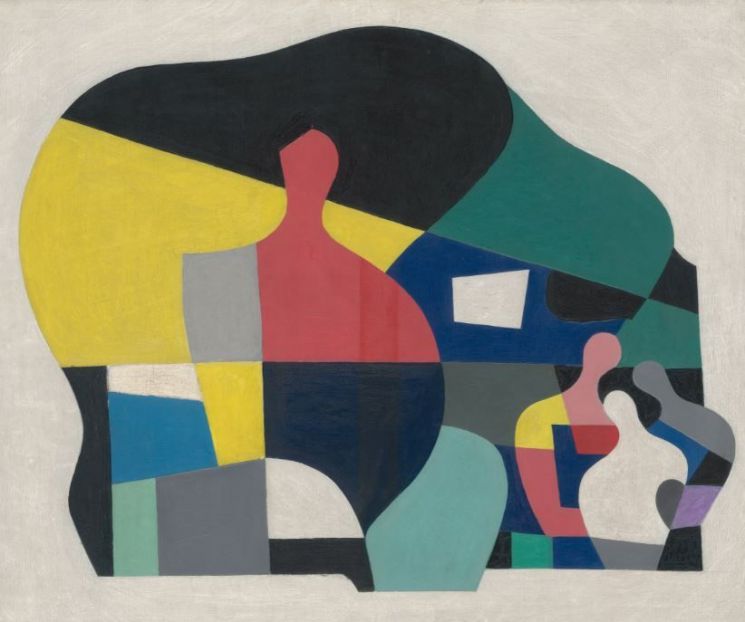
The exhibition is organized into 11 sub-themes, including two "Artist Rooms" that focus on Kim Hwan Ki and Yun Hyong Keun. The Artist Room dedicated to Kim Hwan Ki, a pioneer of Korean abstract art, examines his artistic world by era. It introduces abstract paintings such as "Rondo" (1938), designated as a National Registered Cultural Heritage for its musical rhythm and formal experimentation, and "Mountain and Moon" (1958), which captures Korean sensibility through the simple combination of lines. A specially created spatial fragrance, inspired by Kim Hwan Ki's work and produced in collaboration with Sutome Apothecary, is also presented.
Works by Yun Hyong Keun, who developed a painting style characterized by silence and restraint amid Korea's tumultuous modern history, are also displayed in the Artist Room. The exhibition presents "69-E8" (1969), which explores the possibilities of geometric abstraction, and the "Blue and Brown" (1976-1977) series, which expresses the essence of existence and human suffering by blending and layering blue and dark brown paint.
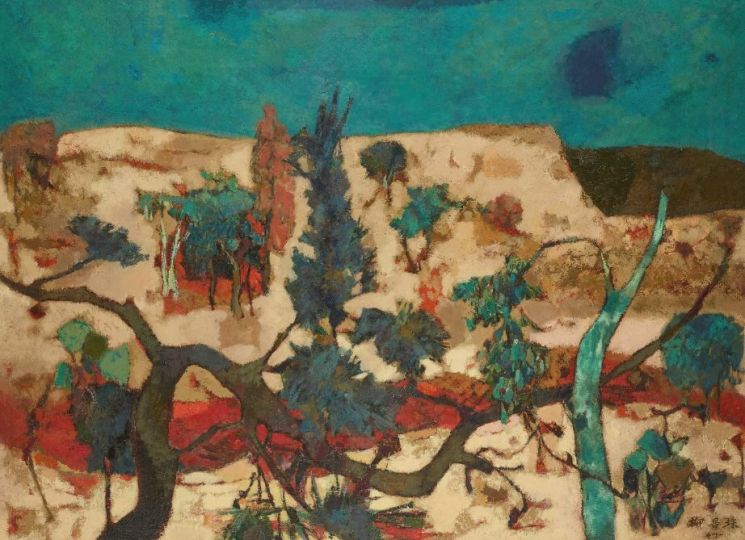
The 11 sub-themes cover the period from post-liberation to contemporary art after the 1990s. Beginning with works such as Ryu Kyungchae's "Near the Abandoned Forest" (1949), Ahn Sangcheol's "Blue Day" (1959, Lee Kun Hee Collection), and Kim Hyungkeun's "Target" (1970), the exhibition examines various trends in the art system and art world, focusing on prize-winning works from the National Art Exhibition of Korea, which was promoted by the state after liberation.
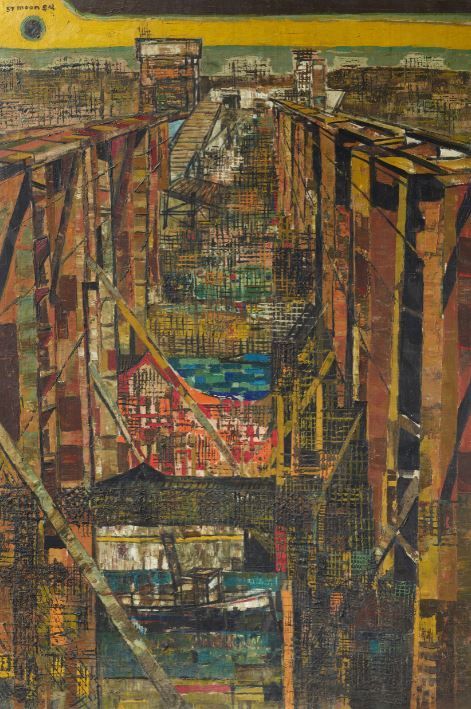
The exhibition then highlights the rise of modernist painting in the late 1950s with works such as Moonsik Moon's "Seeker for the Nameless Bridge" (1957) and Lee Bongsang's "Blue Woman" (1959). It also explores the development of abstract art as a major trend into the 1970s through works like Park Seo Bo's "Protoplasm 1-62" (1962) and Lee Seungjo's "Nucleus No. G-99" (1968).
The exhibition also re-examines modernist women artists who were marginalized in the history of Korean abstract art. Through works such as Lee Seungja's "The Road to the Pole, November 1983" (1983, Lee Kun Hee Collection), Bang Hyeja's "Vital Energy" (1969), Choi Wookkyung's "Ecstasy" (1977), and Kim Jung Sook's "Flight" (1985, Lee Kun Hee Collection), the exhibition looks into symbolic abstract worlds built around themes of nature, life, and emotion.
In addition, the exhibition features works by artists such as Lee Seungtaek, Kwak Inshik, and Lee Kun Yong, who led experimental avant-garde art in the 1960s and 1970s with themes of the body, action, objects, and nature. It also focuses on the establishment of a uniquely Korean abstract art centered on monochrome painting in the 1970s.
From the 1980s onward, the exhibition explores new transitions in painting that transcend the dichotomy between tradition and modernity, and between ink and color. It examines the pursuit of figuration that emerged as artists moved away from the abstract-dominated trends of the 1980s. Furthermore, the exhibition looks at how Korean contemporary art since the 1990s has reflected the era's shift toward contemporary art amid democratization and globalization. Lee Bul's representative work "Sternbau No. 23" (2009), which has drawn international attention for its combination of technology and the body, is being unveiled for the first time as a new acquisition.
Kim Sunghee, director of the National Museum of Modern and Contemporary Art, stated, "Together with Part I, which opened earlier, I hope this permanent exhibition, which looks back on 100 years of Korean modern and contemporary art, will convey the history and value of Korean art to visitors from home and abroad, and provide an opportunity to explore the roots of contemporary Korean art, which is gaining global attention."
© The Asia Business Daily(www.asiae.co.kr). All rights reserved.



















