Emergency General Assembly of Major Training Hospital Residents Scheduled for June 26
Some Resigned Residents Reach Out to Political Leaders Including Park Jumin
Discussions on Forming a New Emergency Committee Accelerate This Week
With Park Dan, the emergency committee chair of the Korean Intern Resident Association (KIRA), stepping down after leading collective resignations and protests against last year’s increase in medical school admissions, observers expect a new phase in the prolonged conflict between the medical community and the government, which has lasted for more than 16 months. Some of the residents who resigned are now hoping to return to their training, and concerns are mounting among medical students over the so-called "tripling"?where students from the classes of 2024, 2025, and 2026 will attend classes together?making it necessary to come up with countermeasures.
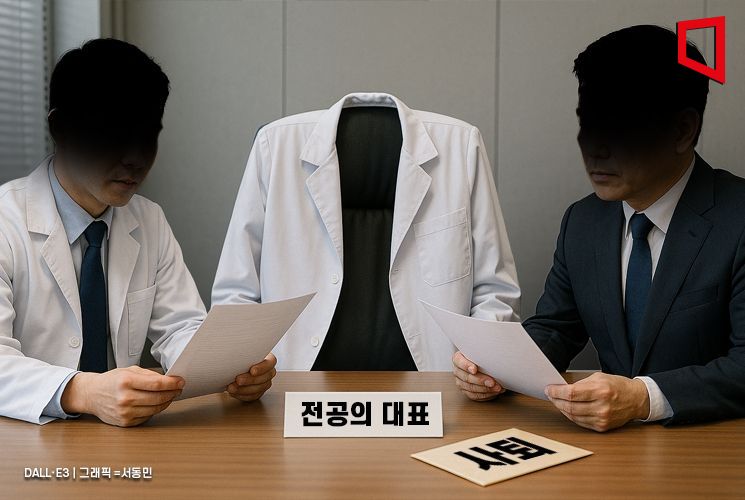
According to the medical community on June 25, following Park’s announcement of his resignation the previous day, there is growing support within KIRA for forming a new executive team to urgently address key issues such as resolving the conflict with the government and facilitating the return of residents.
One resident who resigned commented, "Even after the inauguration of the Lee Jaemyung administration, Park maintained the same stance, refusing to actively communicate or negotiate with the government or political circles, and gave up all opportunities for negotiation." The resident added, "He did not share plans or strategies for the struggle, insisted on unconditional hardline responses, and in effect blocked residents from returning, which led to a loss of trust among residents."
Some residents who resigned have already taken independent actions, such as conducting surveys on impeaching Park and their willingness to return, as well as reaching out to political figures. On June 22, Kim Chankyu and other residents and medical students who had resigned met with Kim Yongtae, the emergency committee chair of the People Power Party, and on June 24, they reportedly held a closed-door meeting with Park Jumin, chair of the National Assembly’s Health and Welfare Committee, to discuss possible ways to return. Kim stated, "Until now, there was no structure for residents who wanted to return to speak up," and added, "Park’s resignation will be a major turning point in uniting the medical community’s opinions."

The representatives of residents at major training hospitals also immediately began forming a new emergency committee. In a statement, the representatives from Korea University Medical Center, Seoul National University Hospital, Asan Medical Center, and Severance Hospital said, "We believe that the current emergency committee system cannot bring about meaningful change in a timely manner," and announced, "We will hold an emergency general assembly to form a new committee." An online emergency general assembly is scheduled for 9 p.m. on June 26, followed by an offline assembly on June 28 at 5 p.m. to discuss the same agenda. They asserted, "With the new administration in place, now is the right time to prevent further dysfunction and restore the medical system," and emphasized, "Since there is not much time left, a new start is needed for practical and effective negotiations."
The broader medical community is also preparing in earnest for this shift in attitude among residents. The Korean Hospital Doctors Association, a group of doctors working at hospital-level institutions such as university hospitals, has launched a survey among medical students and residents to gauge their willingness to return and the conditions for resuming medical education. The collected opinions are expected to serve as justification for restoring the education and training system in negotiations with the government.
In this atmosphere, if the KIRA leadership is replaced, it appears likely that residents will prioritize negotiation over confrontation in future talks with the government. There is a strong expectation that they will engage in practical discussions on concrete conditions for returning, such as guarantees for continuous training after returning, solutions to military service obligations, and flexibility in board examinations.
However, since the appointments of the Minister and Vice Minister of Health and Welfare and the Minister and Vice Minister of Education are currently delayed, substantial discussions can only begin after the new administration appoints officials responsible for resolving the conflict between the medical community and the government. According to the Ministry of Health and Welfare, there are currently 2,532 residents in training nationwide, which is only 18.7% of the level before the conflict began.
© The Asia Business Daily(www.asiae.co.kr). All rights reserved.


















