Sanitation Workers and Incinerator Operator Intensify Dispute Over Responsibility
County Plans to Invest 60 Billion Won in New Incinerator
"Reducing Waste and Thorough Management Must Come First"
Wando County in South Jeolla Province, known for its pristine waters, is facing a serious household waste management crisis. The incinerator at the Wando Resource Management Center, the region's key waste processing facility, has reached full capacity, making normal operations difficult. In addition, suspicions have been raised that some waste has been disposed of illegally.
According to Wando County on June 25, the Wando Resource Management Center was completed in June 2011 on a 112,000-square-meter site in Mangseok-ri, Wando-eup, at a cost of 26.8 billion won. The facility is equipped with an incinerator capable of processing 25 tons per day and a landfill spanning 82,125 square meters. It was developed as a private investment project (BTO), with Byucksan ENG responsible for investment, design, construction, and operation. The county has entrusted management and operation to the Wando Resource Management Center, a subsidiary of Byucksan ENG, under the condition of paying an annual commission fee of approximately 4 billion won until 2026.
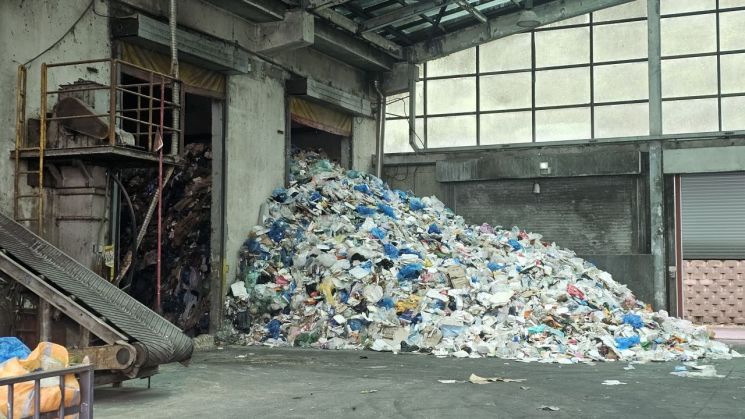 The incinerator at Wando Resource Management Center is reaching full capacity, making normal operation difficult and causing headaches. Photo by Lee Jungkyung
However, there have been recent claims that the incinerator has exceeded its processing capacity. Although it is supposed to handle all household waste generated within the county, it is already saturated, resulting in waste not being properly incinerated. In particular, controversy is growing as allegations have surfaced that food waste was illegally landfilled in the past.
In this process, there is also a dispute over responsibility between sanitation workers and the incinerator operator. A representative from the Wando Resource Management Center stated, "There are many cases where sanitation workers mix separately collected waste at the site before bringing it in, and some leave work early without completing their shifts, which makes operations challenging."
In response, some sanitation workers refuted these claims, saying, "It is not true that we intentionally mix waste, given that the incinerator itself is already at full capacity." One sanitation worker said, "The amount of waste generated each day is so large that it is difficult to handle everything on site," and criticized, "Both the incinerator and Wando County are aware of the problem but have yet to come up with any fundamental solutions."
However, Wando County maintains that waste processing is currently being carried out normally. A county official explained, "The Wando incinerator is a sufficient facility capable of processing 25 tons of household waste per day. In cases of temporary processing difficulties, we outsource to waste processing companies in other regions." The official added, "Just last month, we sent 25 tons of household waste to Jangseong County. Food waste is sent to Hwasun for proper processing on an annual basis."
The county plans to invest 50 to 60 billion won to build a new incinerator ahead of the current operator contract's expiration in April next year. The new incinerator will be funded 30% by the national government and 70% by the local government. The plan is to demolish the existing incinerator and entrust the operation of the new facility to an external operator.
However, some residents express concerns that simply expanding facilities will not solve the waste problem. One resident commented, "Practical measures to reduce waste and thorough management must come first," and emphasized, "Building a new incinerator should not be seen as the only solution."
© The Asia Business Daily(www.asiae.co.kr). All rights reserved.

















