Court Orders Four-Year Prison Sentence and 40 Hours of Rehabilitation Program Completion
A man in his 20s who was put on trial for driving under the influence of narcotics and crashing his vehicle into a building's flower bed has been sentenced to prison.
On June 24, Yonhap News reported that the Busan District Court Criminal Division 6 (Presiding Judge Kim Yonggyun) sentenced Mr. A to four years in prison for violating the Act on the Aggravated Punishment of Specific Crimes (Narcotics), among other charges. The court also ordered Mr. A to complete a 40-hour drug addiction rehabilitation program.
Mr. A was charged with injecting ketamine, a narcotic, at around 8:00 p.m. on March 5 last year, and then driving his car while unable to operate it normally, crashing into a tree in the flower bed of a building in Busanjin-gu, Busan. At the time, 34.86 grams of ketamine and one ecstasy pill were found in the vehicle.
In addition, Mr. A used ketamine in Hadong, Gyeongnam; Gangnam, Seoul; and Busan before and after the accident. Mr. A denied the charges, claiming that he had simply fallen asleep and accidentally driven, and that he had never used ketamine. However, the court did not accept his claims.
Presiding Judge Kim stated, "The defendant not only possessed a considerable amount of narcotics, but also used them on multiple occasions, and after using ketamine, drove a vehicle and caused property damage. The nature of the crime is therefore serious."
Meanwhile, according to statistics from the Supreme Prosecutors' Office, the proportion of drug offenders in their 20s has steadily increased, rising from 21.9% in 2019 to 32% (7,515 out of 23,022 total offenders) in 2024.
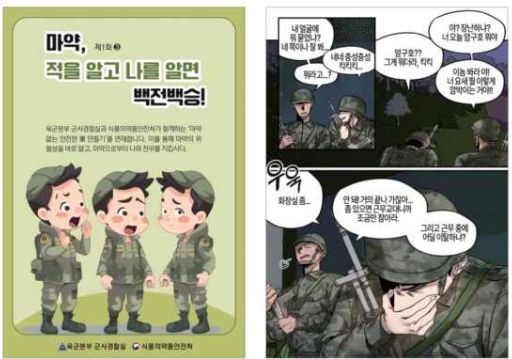
In response, the Ministry of Food and Drug Safety and the Army Headquarters are sharing the seriousness of drug addiction among young people in their 20s and the importance of prevention, and will actively cooperate on drug prevention education and addiction rehabilitation programs for soldiers. The main points of the memorandum of understanding include: ▲ developing educational content for soldiers on drug addiction, misuse prevention, and rehabilitation; ▲ operating on-site education and counseling programs; ▲ running a program to train military police investigators; and ▲ cooperating on publicity and campaign events.
© The Asia Business Daily(www.asiae.co.kr). All rights reserved.


















