Publication of "New Order, New Growth" Booklet
Participation of Experts in Economics and Japan Studies
Systematic Industrialization of K-Food and K-Culture
The Korea Chamber of Commerce and Industry has officially delivered policy proposals to the new government aimed at creating a new growth model for the Korean economy. The organization argues that Korea should pursue economic alliances with other countries such as Japan and increase the productive population by attracting overseas talent from third countries.
On the 25th, the Korea Chamber of Commerce and Industry announced that it had delivered the booklet titled "New Order, New Growth" to the government, National Assembly, and the Presidential Office, and had also submitted these proposals through the National Policy Planning Committee's "Public Communication Platform." Thirteen experts participated in the research and writing, including Lim Jin, Senior Research Fellow at the Korea Institute of Finance, Lee Jipyung, Professor at the Department of Japanese Regional Studies at Hankuk University of Foreign Studies, and Cho Hongjong, Professor of Economics at Dankook University.
Choi Tae-won, Chairman of the Korea Chamber of Commerce and Industry, stated in the booklet, "This is a time when growth is more necessary than ever," adding, "The global landscape has changed dramatically compared to the past, and the Korean economy has failed to create lasting changes, facing concerns of zero growth." He continued, "We must work with the new government to create the sources of future growth for the Korean economy," and emphasized, "We need to find practical ways to reduce high costs by partnering with global partners."
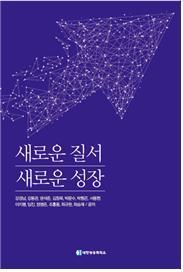 The Korea Chamber of Commerce and Industry delivered the booklet titled "New Order, New Growth" to the government, National Assembly, and the Presidential Office on the 25th. Korea Chamber of Commerce and Industry.
The Korea Chamber of Commerce and Industry pointed out the limitations of the "manufacturing-centered growth model" as the reason a new growth model is needed. While Korea has grown primarily through export-oriented manufacturing, the organization argued that recent rapid changes in the international order, such as the rise of protectionism, require complementary strategies. It specifically noted, "Profitability in manufacturing (profit relative to cost) has also deteriorated. Thirty years ago, a company would earn 830 won for every 10,000 won in sales (in 1995), but now, only 320 won remains (in 2024)."
The Korea Chamber of Commerce and Industry proposed three main strategies: a global economic alliance, attracting five million overseas talents, and strengthening strategic overseas investment.
First, the organization suggested forming an alliance with Japan, which faces similar economic challenges such as a manufacturing-centered economy and low growth, as well as social issues like low birth rates and an aging population. The logic is that by combining the two markets, they could form the world's fourth-largest economic bloc with a total GDP of $6 trillion, enabling a shift to a rule-setting role. The organization also highlighted the potential for a low-cost structure, such as increased bargaining power if the world’s second- and third-largest LNG (liquefied natural gas) importers jointly purchase LNG.
Previously, Chairman Choi directly proposed an economic alliance with Japan to President Lee Jaemyung during the "Meeting of Five Economic Organizations" on May 8, when Lee was a presidential candidate. At the time, President Lee also expressed agreement on joint responses with Japan regarding U.S. trade policy and other issues.
The organization also suggested that attracting populations from overseas, such as from Vietnam, Indonesia, and Malaysia, could increase the productive population and generate consumption and tax revenue. Furthermore, it proposed attracting large overseas semiconductor fabs (factories) to Korea as a way to bring in a significant number of highly skilled workers.
Additionally, it emphasized the need to industrialize K-food and K-culture to target the service and primary income sectors, and to strengthen strategic overseas investment to generate investment income. The Korea Chamber of Commerce and Industry stated, "Until now, we have focused only on exporting food products themselves, but now we should pioneer 'global blue ocean' markets through systematic industrialization, such as K-recipes, cooking classes, kitchenware, and interior design."
As one of the implementation models for realizing the new growth model, the organization proposed the "Mega Sandbox." The Mega Sandbox is an expanded version of the regulatory sandbox that grants temporary regulatory exemptions to innovators, applied on a metropolitan scale. The organization explained that this would allow for various combinations of regional comparative advantages in technology, industry, and concepts. It added that this would require bold regulatory innovation within the sandbox, aggressive incentives desired by the private sector, global talent matching, and global living conditions.
Park Il-jun, Executive Vice Chairman of the Korea Chamber of Commerce and Industry, stated, "Although it may be difficult to immediately adopt the new growth and implementation models proposed in the policy recommendations, the discussion itself must not be delayed." He added, "There are deep concerns in the business community about low growth and changes in the global trade order, and there is a sense of urgency that if we do not change now, we may fall behind. Therefore, we hope that with the new government, various policy stakeholders and the business community will come together to begin discussions."
The Korea Chamber of Commerce and Industry plans to collect additional public suggestions by creating topic-specific communication spaces within the "Gyoyangyi Research Institute" on its communication platform.
© The Asia Business Daily(www.asiae.co.kr). All rights reserved.
















