Guaam-dong Ancient Tombs On-site Briefing
Tombs No. 100 and No. 102 Raided
Traces of tomb raiding have been discovered at the Guaam-dong ancient tomb cluster in Buk-gu, Daegu, where tombs from the Silla period are concentrated.
On June 24, Yonhap News reported that these findings were revealed during an on-site briefing held by Buk-gu, Daegu, and the Daedong Cultural Heritage Research Institute at the Guaam-dong tomb cluster on the same day. The tomb raiding occurred in tombs No. 100 and No. 102, which are the largest within the cluster.
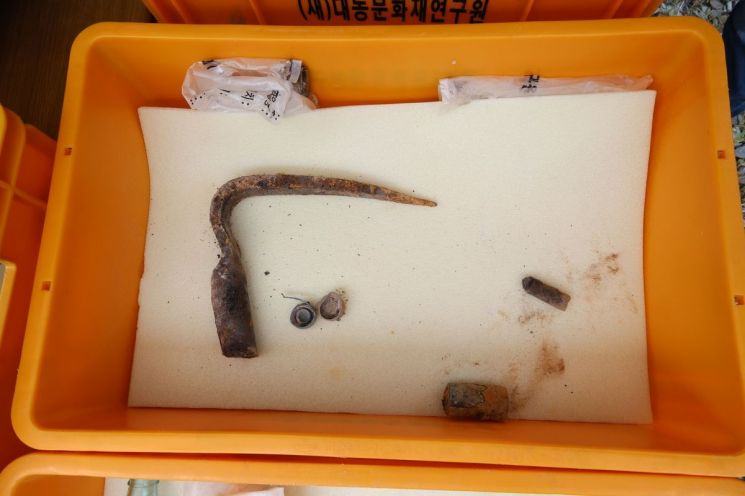
In the photos released by the research institute to show evidence of the tomb raiding, several large, hollowed-out holes can be seen on top of the tombs. Candles and pickaxes, suspected to have been used in the tomb raiding, were also unearthed.
The Daedong Cultural Heritage Research Institute explained that it is difficult to estimate the original shape of the tombs due to the tomb raiding. This is because the artifacts have been scattered, making it challenging to understand past burial customs or the construction methods of the tombs.
A representative from the research institute told Yonhap News, "Usually, artifacts are placed in specific positions such as above the head or below the feet of the deceased, according to burial customs at the time," and added, "Because the positions of the artifacts are scattered, it is difficult to identify the unique characteristics of these tombs."
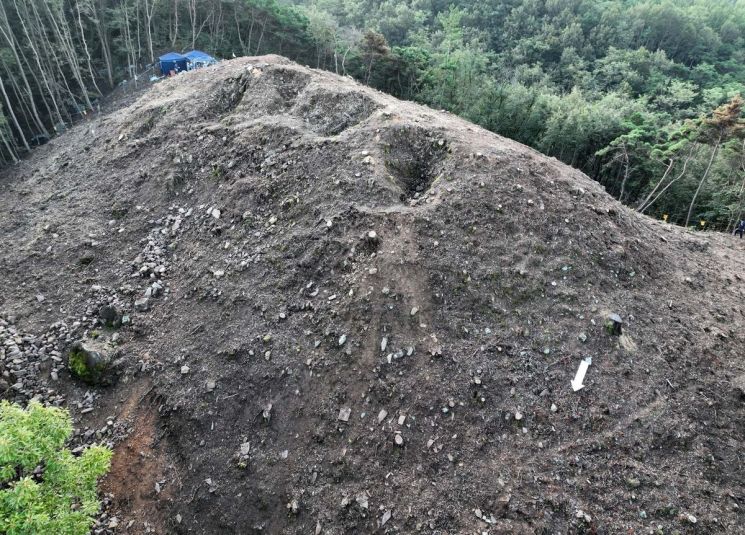 A hollowed-out hole in the tomb caused by grave robbing. Provided by Daedong Cultural Research Institute
The representative continued, "It is also difficult to obtain complete information about the civil engineering techniques used in constructing the tombs," and explained, "Normally, if the tomb remains intact, we investigate it by following the reverse order of its construction."
During the briefing, 136 artifacts were unveiled, including pottery, iron swords, and ornaments. Although all burial chambers were raided, significant artifacts such as a single gilt-bronze earring and beads presumed to have been used for a necklace were also discovered.
Based on the characteristics and shapes of the excavated artifacts, the tombs are estimated to have been constructed between the late 5th century and the early 6th century during the Three Kingdoms period.
© The Asia Business Daily(www.asiae.co.kr). All rights reserved.


















