Over Ten Missiles Fired at U.S. Bases in Qatar and Iraq
NYT: "Iran Gave Advance Notice to U.S., Prepared an Exit Strategy"
In retaliation for U.S. airstrikes on three of its nuclear facilities, Iran launched missile attacks on U.S. military bases located in Qatar and Iraq on the afternoon of June 23 (local time). However, it is reported that Iran notified the U.S. government of its attack plans in advance, thereby minimizing damage. This move is interpreted as an attempt to avoid a full-scale confrontation with the United States or further escalation of tensions.
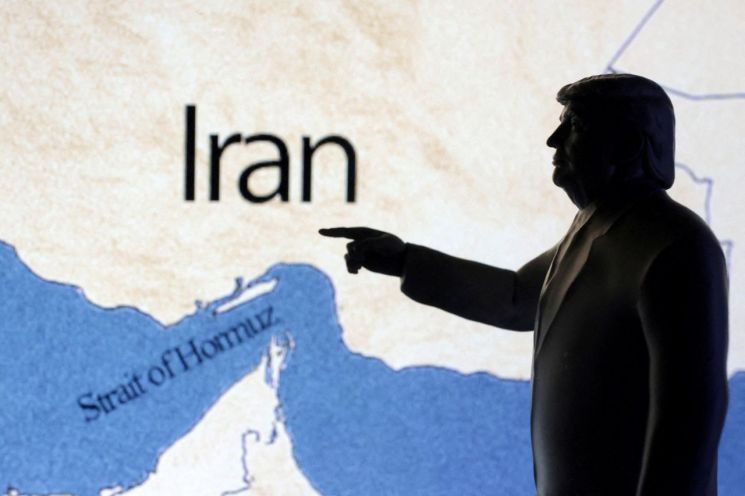
According to reports from international media outlets such as Reuters and Axios, Iran fired more than ten missiles at U.S. military bases near Doha, the capital of Qatar, and in Iraq on the same day.
This attack was a retaliatory measure for the U.S. airstrikes on June 21 against three major Iranian nuclear facilities in Fordow, Natanz, and Isfahan.
The Islamic Revolutionary Guard Corps (IRGC) of Iran announced in a statement that it launched retaliatory missiles targeting the Al Udeid U.S. Air Base in Qatar.
The IRGC warned, "This is the largest strategic asset of the American terrorist forces stationed in the Middle East," and added, "Iran will not tolerate any infringement on its territorial integrity, sovereignty, or national security."
The White House stated that it was aware of the attacks and is closely monitoring the situation. U.S. President Donald Trump convened an emergency response meeting in the White House Situation Room with the Secretary of Defense, the Chairman of the Joint Chiefs of Staff, and other officials.
In fact, it is reported that Qatar temporarily closed its airspace and issued an evacuation order just before Iran's attack. The country stated that its air defense systems intercepted the Iranian missiles and that there were no casualties. The U.S. Department of Defense also confirmed that, as of now, there have been no reported U.S. casualties resulting from Iran's attack.
The New York Times (NYT), citing multiple senior Iranian officials, reported, "Iran provided information just before the attack to minimize casualties," and added, "A symbolic level of retaliation against the United States was necessary, but at the same time, the attack had to be carried out in a way that left an exit open for both sides."
This approach is similar to the method Iran used in 2020, when it notified the U.S. in advance before striking U.S. military bases in Iraq in response to the assassination of Qasem Soleimani, then commander of the IRGC Quds Force.
Accordingly, it is interpreted that Iran carried out its retaliation in a way that did not cross the U.S. "red line," signaling that it does not wish to further escalate tensions.
© The Asia Business Daily(www.asiae.co.kr). All rights reserved.

















