President Lee Focuses on Domestic Issues Amid Rising Oil Prices and Financial Market Instability
Following U.S. Airstrikes, Israel Launches Additional Attacks on Iran... Iran Vows Retaliation
Japan Considers Sending Minister-Level Official, Following South Korea and Australia
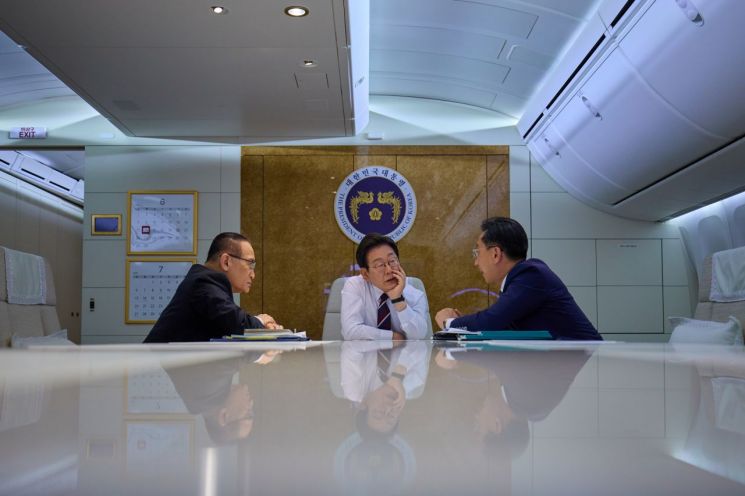
Wi Seongrak, Director of the National Security Office, will attend the North Atlantic Treaty Organization (NATO) summit held in The Hague, Netherlands, from June 24 to 25 (local time), in place of President Lee Jaemyung. President Lee reportedly deliberated until the last minute about attending the NATO summit, but ultimately decided not to participate, judging that the core agenda of the summit would not yield practical benefits for South Korea after the United States joined the Israel-Iran conflict. President Lee has decided to focus on domestic issues, such as rising oil prices and financial market instability caused by unrest in the Middle East.
Tensions in the Middle East remain at their highest level as the armed conflict between Israel and Iran shows signs of escalating. According to AFP and other sources on June 23, Israel launched a large-scale airstrike targeting Iran's Evin Prison in Tehran, the Fordow nuclear enrichment facility, and the Islamic Revolutionary Guard Corps (IRGC) headquarters. Previously, the United States had targeted three Iranian nuclear facilities?Natanz, Fordow, and Isfahan?using B-2 strategic bombers and cruise missiles under the operation name "Midnight Hammer." Iran immediately declared its intent to retaliate with missiles and drones. There is even talk of the potential closure of the Strait of Hormuz, and international oil prices have surged by 7 to 10 percent, while global financial markets are experiencing volatility. Russia and China strongly condemned the latest airstrikes at the United Nations Security Council, stating that "Pandora's box has been opened."
Regarding Director Wi's attendance, a presidential office official explained, "While presence on the diplomatic stage is important, the most urgent task is ensuring the safety of our people and the stability of the national economy." The presidential office also stated that, in consultation with NATO, it was decided that Director Wi would attend the summit.
The situation for the other Indo-Pacific Four (IP4) countries invited to the NATO summit has also changed rapidly. South Korea, Japan, Australia, and New Zealand were invited to the summit, but Australia has already decided to send a minister-level official, and Japan is also likely to send a minister-level representative. Australia, which was the first to announce non-attendance at the head-of-state level, plans to send Deputy Prime Minister and Defense Minister Richard Marles. On June 23, Japan abruptly shifted its stance and is now considering sending Foreign Minister Iwaya Takeshi. Some speculate that U.S. President Donald Trump may also partially scale back or alter his schedule for the summit due to the Middle East crisis.
Director Wi is expected to convey South Korea's position through a series of meetings with minister-level representatives from major countries, including the NATO Secretary General. In particular, during the NATO?Indo-Pacific Four (IP4) session, discussions may cover responses to the Middle East crisis, Indo-Pacific security, global supply chain stabilization, and measures to address rapid changes in financial and energy markets. Diplomatic circles predict that this summit will serve less as a political event and more as a venue for practical crisis response and coordination of strategies on supply chains, energy, and the safety of overseas nationals.
In response, the People Power Party criticized the decision as a self-imposed diplomatic isolation that sacrifices both security and economic interests. Kim Gun, opposition secretary of the National Assembly Foreign Affairs and Unification Committee, said in a phone call, "The more unstable the situation in the Middle East becomes, the more crucial close cooperation with allies and partner countries is. It is hard to understand what domestic issues are so urgent as to forgo such an important diplomatic stage." Lim Jongdeuk, a member of the National Assembly National Defense Committee from the People Power Party, stated in a phone call, "There are pressing issues such as the Russia-Ukraine war, troop deployments to North Korea, and defense cost-sharing. Multilateral meetings are the best venue to discuss these matters in advance, but this opportunity has been rejected."
© The Asia Business Daily(www.asiae.co.kr). All rights reserved.
![Clutching a Stolen Dior Bag, Saying "I Hate Being Poor but Real"... The Grotesque Con of a "Human Knockoff" [Slate]](https://cwcontent.asiae.co.kr/asiaresize/183/2026021902243444107_1771435474.jpg)
















