Securing National Funding for Mobility AX Demonstration Lab and Urban Rail Line 2
Expanding Support for Gwangju Win-Win Card to Stabilize the Local Economy
Kang Gijung: "We Welcome the Livelihood Supplementary Budget... Advancing Together with the New Administration"
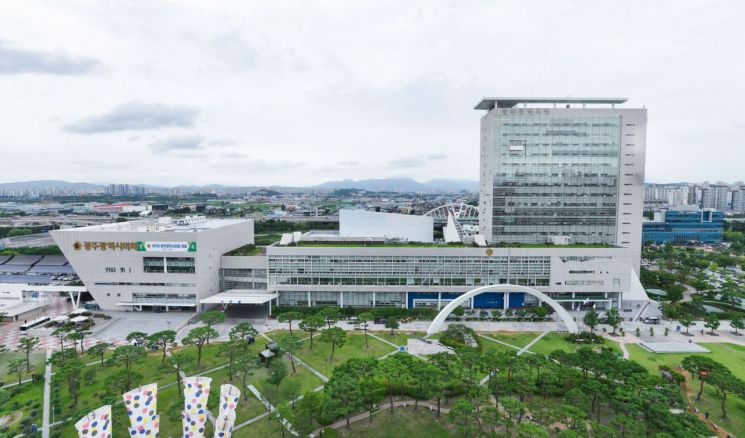
Key project funding that will serve as a catalyst for Gwangju's development has been included in the second supplementary budget for this year under the Lee Jaemyung administration.
According to Gwangju City on June 23, several core regional projects were reflected in the "2025 Second Government Supplementary Budget Plan" (the new government's supplementary budget), which passed the Cabinet meeting on June 19. This supplementary budget is the first of its kind since the new administration took office and aims to stimulate the economy and stabilize people's livelihoods.
The supplementary budget proposal submitted to the National Assembly includes five major projects for the Gwangju area, totaling 78.6 billion won. These are: 2 billion won for the establishment of the Mobility AX Demonstration Lab, 1.1 billion won for building the integrated wireless network (LTE-R) for Urban Rail Line 1, 71.5 billion won for the construction of Urban Rail Line 2, 1 billion won for next-generation solar cell demonstration (R&D), and 3 billion won for the Super-Gap Startup 1000+ program.
In particular, the Mobility AX Demonstration Lab received additional funding on top of the 15.3 billion won previously secured for the Artificial Intelligence (AI) strategic project in the first supplementary budget. This is expected to accelerate the establishment of demonstration equipment for the second phase of the AI project. With "AI Leading City Gwangju" explicitly stated in the new government's policy planning guide, the city plans to fully launch the second phase of the project under government support, including exemption from preliminary feasibility studies. Based on this, Gwangju aims to lead not only in the "manufacturing AI industry" but also in securing Korea's own "Sovereign AI."
The foundation for fostering future new industries has also been strengthened. National funding has been allocated to R&D and startup support projects such as next-generation solar cell demonstration and super-gap startups, which is expected to contribute to the growth of local innovative companies and the creation of an industrial ecosystem.
In line with the supplementary budget's goal of boosting the construction sector, 71.5 billion won has been allocated to the construction of Gwangju Urban Rail Line 2, which is expected to accelerate the project and invigorate the local construction industry. The Urban Rail Line 1 LTE-R integrated wireless network project also secured an additional 1.1 billion won in the second supplementary budget, following the first, enabling enhanced safety in railway operations.
In addition, 3.36 billion won in national funding has been additionally secured for the Gwangju Youth Monthly Rent Temporary Special Support program to help stabilize housing and promote independence among young people. With a significant increase in national funding for local currency, including 10.3 trillion won for livelihood recovery consumption coupons and 600 billion won to support the issuance of local love gift certificates, a stable operating foundation is expected to be established for the "Gwangju Win-Win Card," which has received strong support from citizens.
During the special 10% discount period in January and February, the Gwangju Win-Win Card recorded a total usage of 132.6 billion won, achieving a 42% increase in consumption compared to the second half of the previous year and driving the recovery of the local economy.
With the additional national funding reflected in this supplementary budget, the city will be able to further support the continued operation and discount policies of the Gwangju Win-Win Card, which has proven effective in increasing sales for small businesses and protecting neighborhood commercial districts. Moving forward, the city plans to strengthen the stability and sustainability of local currency through higher national funding ratios and institutional improvements.
The city has strategically focused on securing national funding for key regional issues such as artificial intelligence (AI), local currency, and urban rail construction, in line with the new government's goal of restoring the livelihood economy at a critical juncture.
In particular, Mayor Kang Gijung responded swiftly by holding a meeting with local National Assembly members on June 10, immediately after the launch of the Lee Jaemyung administration, to request the inclusion of regional policy tasks and support for the supplementary budget in the National Assembly. The city has also proactively established the "Presidential Election Pledge Seoul Situation Room" and the "Neighborhood Economy Situation Room" to promote the implementation of presidential election pledges as national policy tasks and to revitalize the local economy. Going forward, the city plans to continue expanding tangible outcomes that citizens can feel through strategic efforts to secure national funding and livelihood-focused policies.
Mayor Kang Gijung stated, "We welcome the prompt supplementary budget by the new government for stabilizing people's livelihoods," and emphasized, "By reflecting Gwangju's future industries and livelihood issues in national policy tasks, we will make great strides forward together with the Lee Jaemyung administration."
© The Asia Business Daily(www.asiae.co.kr). All rights reserved.
![Clutching a Stolen Dior Bag, Saying "I Hate Being Poor but Real"... The Grotesque Con of a "Human Knockoff" [Slate]](https://cwcontent.asiae.co.kr/asiaresize/183/2026021902243444107_1771435474.jpg)
















