Attendance Was Actively Considered, but Domestic Issues and Middle East Situation Were Weighed
Decision Made During a Diplomatically Sensitive Period
People Power Party Points Out "Missed Opportunity"
President Lee Jaemyung's decision not to attend the North Atlantic Treaty Organization (NATO) summit, scheduled to be held in The Hague, Netherlands, from June 24 to 25 (local time), is the result of careful consideration focused on 'national interest and pragmatic diplomacy.' According to the presidential office, there had been active internal discussions about President Lee's attendance at the NATO summit. However, the office explained that, given domestic issues and uncertainties arising from the Middle East situation, it was determined that direct attendance was not possible.
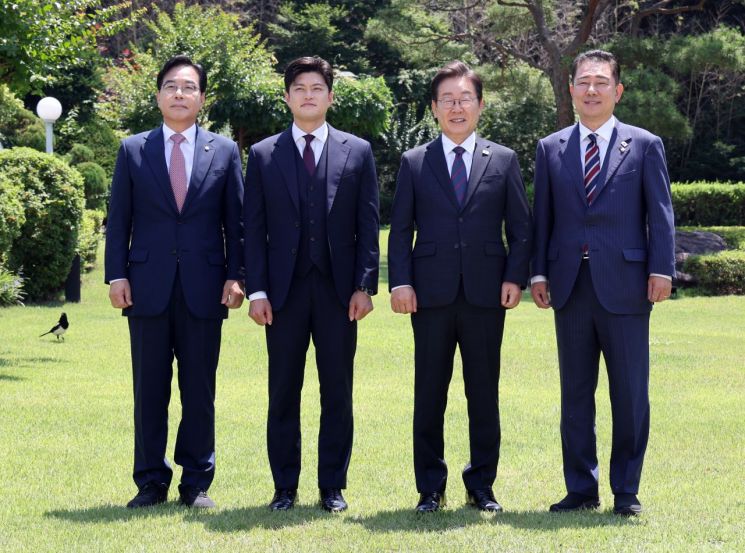
This decision is closely related to the increasingly complex international situation, particularly after the United States effectively 'entered the conflict' by launching airstrikes on Iran's nuclear facilities amid the ongoing clashes between Israel and Iran. On June 22, presidential spokesperson Kang Yujeong stated in a written briefing, "After considering various domestic issues and uncertainties stemming from the Middle East situation, it was determined that it is simply not possible for the president to attend in person." On the same day, National Security Advisor Wi Sunglak had initially scheduled a briefing at 3 p.m. regarding the summit, suggesting that attendance at the NATO meeting was still under consideration. However, as the time for the announcement approached, the briefing was canceled. Later, at around 6:20 p.m., a written briefing was released confirming the decision not to attend the summit.
In diplomatic circles, concerns have been raised that NATO may use this summit as an opportunity to become more actively involved in Middle Eastern issues, which could put Korea, as an invited country, in an uncomfortable position. NATO consists of 32 member states, and these countries have consistently expressed the view that they must jointly contain not only Russia, but also China and North Korea.
For Korea, the need to strengthen its negotiating position on trade issues such as the 'July package' (comprehensive tariff agreement) was also likely a factor. Since the beginning of his term, President Lee has repeatedly emphasized his commitment to focusing on domestic issues. The presidential office recently set public welfare and economic recovery as the highest priorities for state affairs, and it appears that internal opinions were taken into account that overseas engagements could distract from this focus. Following President Lee's decision not to attend, the presidential office plans to send an appropriate representative in consultation with NATO. Through this, Korea aims to maintain its cooperation and role in the international community and to continue delivering its messages globally.
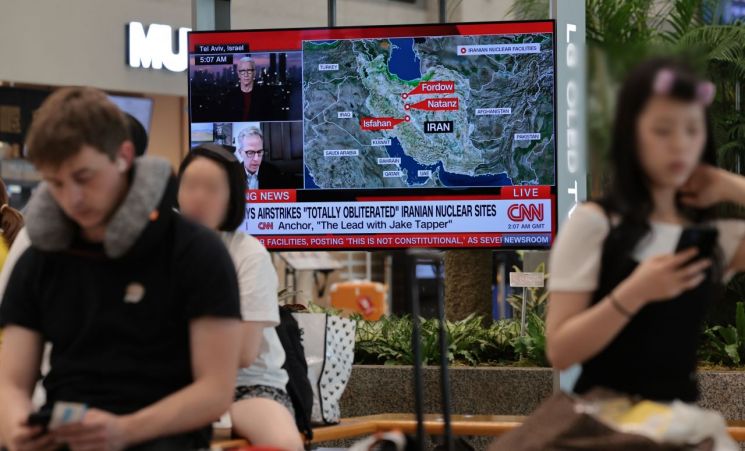
However, there is a possibility that this decision may be interpreted by Western allies as a negative signal regarding Korea's willingness to cooperate internationally. In particular, as NATO has recently been strengthening its cooperation with Asian countries, some point out that Korea's decision not to attend could lead to misunderstandings within the international community. There are concerns that this could be seen as a 'conspicuous absence.' Going forward, it will be important for Korea to minimize any diplomatic vacuum through consultations with NATO and to maintain trust within the international community.
Kim Geon, a member of the National Assembly's Foreign Affairs and Unification Committee from the People Power Party, commented in a phone interview, "As U.S. and Korean officials are beginning to negotiate tariffs in earnest, we have missed an opportunity to gauge the intentions of U.S. President Donald Trump in advance and use that information in negotiations." Lim Jongdeuk, a member of the National Assembly's Defense Committee from the People Power Party, also expressed regret in a phone interview, saying, "Multilateral meetings are the best venue to discuss pressing issues in advance, such as the Russia-Ukraine war, North Korean troop deployments, and defense cost-sharing."
Meanwhile, on the morning of June 23, President Lee held his first phone call since taking office with Malaysian Prime Minister Anwar Ibrahim. The two leaders agreed to work toward expanding mutually beneficial and substantive cooperation across various fields.
© The Asia Business Daily(www.asiae.co.kr). All rights reserved.
![Clutching a Stolen Dior Bag, Saying "I Hate Being Poor but Real"... The Grotesque Con of a "Human Knockoff" [Slate]](https://cwcontent.asiae.co.kr/asiaresize/183/2026021902243444107_1771435474.jpg)

















