Impact on the Korean Peninsula
As the United States has launched airstrikes against Iranian nuclear facilities, marking a direct intervention in the Israel-Iran conflict, there is growing attention on how this situation might impact the security landscape on the Korean Peninsula.
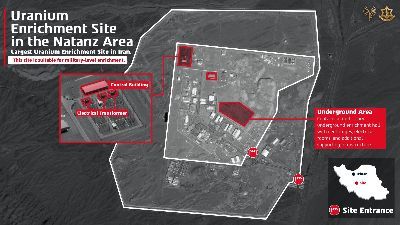
Some observers predict that, since the United States has made it clear through these airstrikes that it will not tolerate Iran's development of nuclear weapons, North Korea could be the next target. Previously, both the Bill Clinton administration and the first Donald Trump administration considered preemptive strikes against North Korea as part of efforts to resolve the North Korean nuclear issue.
However, there are concerns that such a scenario is unlikely to materialize, given the stark differences between the situations in North Korea and Iran. While Iran does not possess nuclear weapons, North Korea is believed to have succeeded in developing nuclear arms and is estimated to possess around 50 nuclear warheads. North Korea has also made significant progress in developing delivery systems, with the US Defense Intelligence Agency (DIA) recently assessing that North Korea possesses about 10 intercontinental ballistic missiles (ICBMs). Unlike Iran, which does not pose a tangible threat to Israel, North Korea has the capability to retaliate against South Korea, Japan, and even US territories such as Guam, depending on the circumstances.
There are also significant differences in both domestic and external conditions. While Israel and Iran are separated by about 1,700 kilometers with Iraqi territory in between, North and South Korea confront each other directly across the armistice line. Additionally, China and Russia are not providing direct assistance to Iran, whereas North Korea has signed both the 'China-North Korea Treaty of Friendship, Cooperation, and Mutual Assistance' and the 'North Korea-Russia Comprehensive Strategic Partnership Treaty.' This means that, in the event of a crisis, there could be direct intervention from China or Russia.
Although the prevailing view is that a preemptive strike against North Korea is unlikely, some argue that the recent US intervention will have a significant impact on North Korea's foreign policy. Lim Eulchul, a professor at Kyungnam University, stated, "This situation will further deepen North Korea's mistrust of the United States, which was already solidified by the US withdrawal from the Iran nuclear deal (JCPOA) in 2018 and the breakdown of the Hanoi North Korea-US summit in 2019," adding, "It is highly likely to serve as a catalyst for further strengthening military cooperation with Russia."
Meanwhile, this situation is also expected to have a considerable impact on South Korea. In the event of an escalation, there are expectations that measures to enhance so-called 'strategic flexibility' will be implemented, such as rotating some US military assets stationed in South Korea to the Middle East. There are also predictions that, as the US has previously indicated, pressure will intensify on South Korea and other allies to increase their defense budgets in order to strengthen their own defense capabilities.
© The Asia Business Daily(www.asiae.co.kr). All rights reserved.

















