Survival Strategies for Offline Retail in the Era of Low Growth
Diversifying Retail Formats, Overseas Expansion, and Media Business
As the distribution industry faces a structural crisis amid a prolonged period of low growth, a new report suggests that domestic and international offline retail companies?including department stores, hypermarkets, and convenience stores?must explore survival strategies such as expanding into overseas and media businesses.
On June 23, Samjong KPMG announced the publication of its report, "Survival Strategies for Offline Retail in the Era of Low Growth." The report analyzes the challenges faced by the offline retail sector in the context of a low-growth, high-inflation economic environment, the shift to digital consumption, an aging population, and the rise in single- and two-person households. It also examines sustainable growth strategies for the industry.
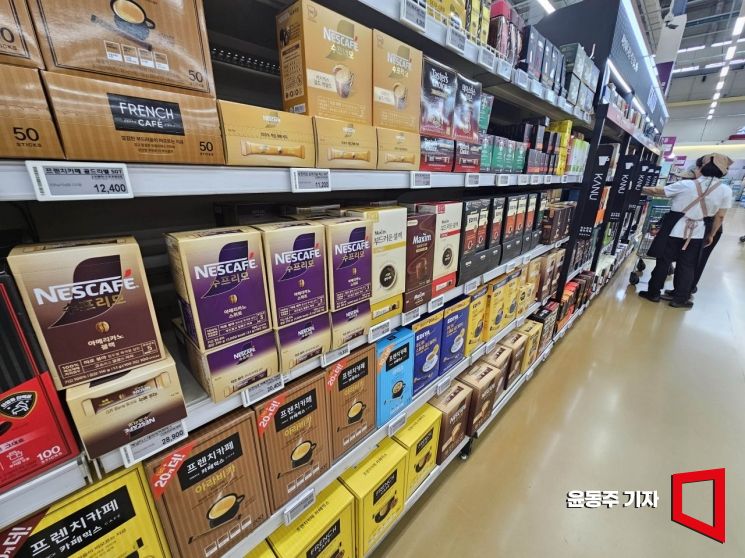
The report identifies three major survival strategies for domestic and international offline retail companies: diversifying retail formats, exploring overseas markets, and expanding retail media businesses.
With consumer spending stagnating for an extended period, the offline retail sector is accelerating efforts to restructure retail formats and strengthen its core competitiveness. Notable trends include the expansion of hard discount stores (HDS) that employ ultra-low price strategies, off price stores designed for economic downturns, fixed-price stores, and small-format outlets.
Companies such as Aldi in Germany and Gyomu Super in Japan are enhancing price competitiveness by reducing distribution margins and focusing on private brand (PB) products. Muji in Japan has launched 500-yen fixed-price stores to target new consumer segments. In the United States, TJ Maxx under TJX, and in Korea, Hyundai Department Store and Shinsegae Department Store, are adopting off price store strategies to manage fashion industry inventory and meet the needs of value-oriented consumers. Additionally, companies like IKEA in the United States and AEON in Japan are improving consumer accessibility by offering customized shopping experiences through urban small-format stores.
As domestic market growth reaches its limits, retail companies are seeking new opportunities in emerging markets. Southeast Asia, Central Asia, the Middle East, and Africa are emerging as key target markets. AEON Group of Japan is directly developing and operating large shopping malls in Vietnam to secure supply chains and a consumer base. Carrefour of France has established a large-scale distribution network in Brazil through aggressive mergers and acquisitions (M&A). Costco in the United States is rapidly expanding its presence in Asia by leveraging its unique retail format and localization strategies tailored to regional consumer cultures.
Korean retail companies are also targeting Southeast Asian markets, focusing on convenience stores and hypermarkets, and are strengthening localization strategies through the introduction of Korean products, 24-hour operations, and mobile payment systems.
The report also highlights the rise of retail media business as another survival strategy for the retail industry. The concept of retail media was first introduced in 2012 when global e-commerce giant Amazon entered the digital advertising market. Recently, interest in retail media has grown within the offline retail sector, leading to the development of in-store retail media that generates advertising revenue using digital signage and consumer behavior data.
Walmart has launched an integrated on- and offline advertising business through "Walmart Connect," while FamilyMart in Japan is expanding its media business through Gate One, a digital signage company. In Korea, companies such as Lotte Shopping, Shinsegae, Hyundai Department Store Group, and the H&B store Olive Young are exploring entry into retail media to discover new revenue streams.
The report stresses that, for the offline retail industry to survive, it is essential to strengthen the core competitiveness of their main business, establish a sustainable low-cost structure, and innovate retail formats. In addition, it calls for a long-term approach to selecting overseas markets, building global capabilities, and increasing investment in technology to enable data-driven measurement of advertising performance.
Kim Siwoo, Executive Director of Samjong KPMG’s Retail and Consumer Goods Division, stated, "With the onset of the low-growth era, it is a critical time for the offline retail industry to pursue multifaceted survival strategies. Offline retail companies must strengthen their core competitiveness by rethinking various retail formats, pioneer new consumer markets through overseas expansion, and actively seek to diversify their revenue models by entering the media business."

© The Asia Business Daily(www.asiae.co.kr). All rights reserved.

![Clutching a Stolen Dior Bag, Saying "I Hate Being Poor but Real"... The Grotesque Con of a "Human Knockoff" [Slate]](https://cwcontent.asiae.co.kr/asiaresize/183/2026021902243444107_1771435474.jpg)















