U.S. Launches Attack on Iran Without Prior Coordination
U.S. Airstrikes on Iran Condemned as "Violation of Sovereignty"
Europe and China Also Call for Diplomatic Resolution
In response to the United States' airstrikes on Iran, Gulf countries bordering the Persian Gulf are expressing serious concerns over regional economic and security threats, urging a peaceful resolution. These countries fear that if the war between the U.S. and Iran becomes prolonged and the Gulf region turns into a battlefield, not only will their oil-dependent economic foundations and energy dominance be shaken, but there could also be serious fractures in overall regional security. Europe and China have also called for both sides to ease tensions through diplomatic solutions, warning that unilateral U.S. military intervention could further destabilize the Middle East.
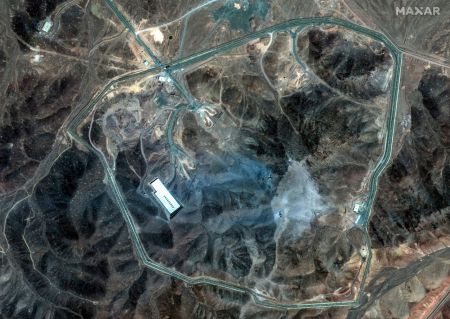
According to the Washington Post (WP), after the U.S. carried out overnight airstrikes on three Iranian nuclear facilities, Arab countries criticized U.S. involvement out of concern that escalating tensions between the U.S. and Iran could turn their own territories into war zones.
Saudi Arabia, which has recently improved relations with Iran, condemned the U.S. for violating Iran's sovereignty. The United Arab Emirates (UAE) expressed grave concern over the U.S. airstrikes on Iran. Bahrain warned of the risks of a full-scale war, while Oman, which has long played a mediating role between the U.S. and Iran, criticized the U.S. actions as escalating the conflict and seriously violating international law.
The Financial Times (FT) pointed out that President Donald Trump's decision was carried out abruptly without coordination with Gulf countries, leading to distrust in U.S. security commitments.
WP noted that these statements reflect a shift in sentiment compared to the first term of President Trump, when the U.S. and Iran were on the brink of war. Some interpret this as showing that Gulf countries' perspectives on the regional situation have changed as they have recently sought to improve relations with Iran.
In the past, Gulf countries preferred a hardline response to Iran's nuclear development and support for armed groups, but recently this trend has changed. They have shifted their focus toward easing tensions and economic growth, adopting a strategy of normalizing relations with Iran. In fact, Saudi Arabia restored diplomatic relations with Iran in 2023, the UAE resolved conflicts with Turkey and pursued normalization of relations with Israel. There is even a perspective that Israel, rather than Iran, poses a greater threat to Middle East stability.
Amid these developments, the U.S.'s sudden intervention has destabilized security in the Gulf region. Gulf countries are entirely within range of Iran's short-range missiles and host major U.S. military bases. If Iran retaliates against the U.S. airstrikes, U.S. bases in the UAE, Saudi Arabia, Qatar, Oman, as well as in Iraq and Jordan, could become targets. In particular, Bahrain, which hosts the U.S. Navy's Fifth Fleet and has no diplomatic relations with Iran, is being mentioned as a potential target for attack.
The broader the front and the longer the war drags on, the more negative the impact is expected to be on the economies of Gulf countries. Disruptions to oil production, which is the main source of revenue for these countries, and the closure of the Strait of Hormuz would block oil exports.
Hassan Al Hassan, Senior Fellow for Middle East Policy at the International Institute for Strategic Studies (IISS), told the Financial Times (FT), "Until now, the war has been contained to direct hostilities between Israel and Iran, but direct U.S. involvement marks a critical threshold that risks drawing Gulf countries?especially Bahrain, Kuwait, and Qatar, where large U.S. military facilities are located?into the conflict."
Abdulkhaleq Abdulla of Harvard University's Belfer Center for Science and International Affairs said, "We have been trying to build momentum for de-escalation in the region, but now a seventh war is unfolding. This is not what Gulf countries want."
The leaders of the United Kingdom, France, and Germany also issued a joint statement urging Iran to refrain from further destabilizing actions in the region, stating that Iran must never possess nuclear weapons and that the issue must be resolved through negotiations. UN Secretary-General Antonio Guterres called the airstrikes "a serious threat," emphasizing the need for an immediate ceasefire and diplomatic solutions, while China also called for "an immediate ceasefire and an end to hostilities."
© The Asia Business Daily(www.asiae.co.kr). All rights reserved.

















