Nonstop Flight from the U.S. Mainland to Iran for Bombing Mission
Largest Stealth Aircraft, Specialized for Bombing
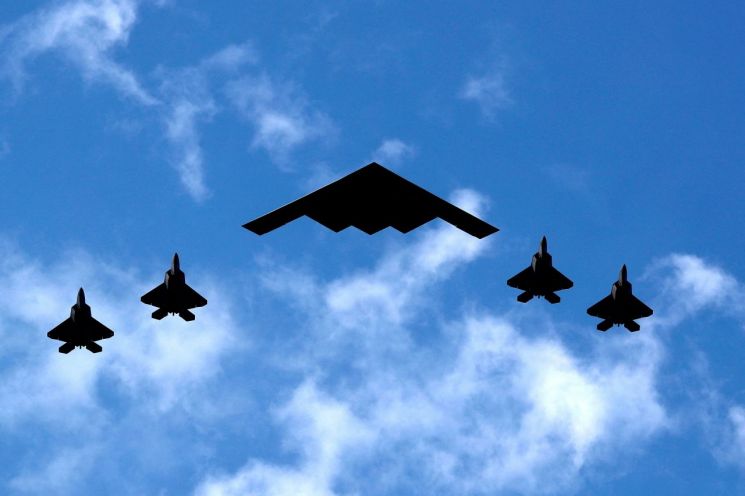
The B-2 bomber, the main asset in the U.S. military’s operation to strike Iranian nuclear facilities known as "Midnight Hammer," is drawing attention for its high cost. As the largest stealth aircraft and the only one capable of carrying bunker-buster bombs, the B-2 bomber is the most expensive bomber in the world, with a unit price exceeding 2 trillion won. Its maintenance cost is also high, at 200 million won per flight hour. However, the bomber is being credited with proving its worth by successfully executing the recent strike on Iranian nuclear facilities.
B-2 deployed in Iran nuclear facility strike 'Midnight Hammer'... Flew from the U.S. mainland
On June 22 (local time), the U.S. military used B-2 bombers to strike three Iranian nuclear facilities, including Fordow. This operation was conducted in extreme secrecy, with the codename "Midnight Hammer"?a name that underscores the months-long effort to maintain operational confidentiality. Secretary of Defense Pete Hegseth stated at a press briefing following the bombing, "We have completely destroyed Iran’s nuclear program," and emphasized, "We sincerely hope Iran will abandon its nuclear ambitions and return to the negotiating table."
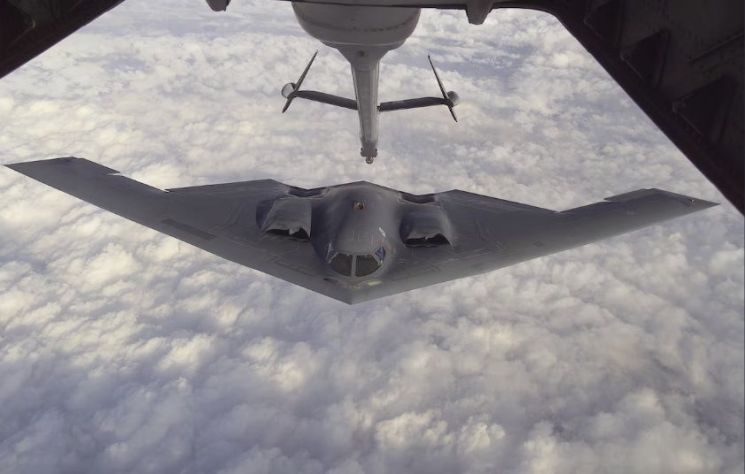
According to the U.S. Department of Defense, the military deployed a squadron of seven B-2 bombers for the strike on Iranian nuclear facilities. The squadron, loaded with GBU-57 bunker-buster bombs, flew to Iran and dropped bombs on three nuclear sites. It is reported that the squadron flew from Missouri in the central United States to Iran, covering a distance of about 12,000 km, maintaining only minimal communications during the 18-hour flight. The B-2 bomber can fly approximately 11,000 km on a single refueling, and with aerial refueling en route, it can reach virtually any location on the globe nonstop.
Chairman of the Joint Chiefs of Staff Dan Kane explained, "This operation marked the first combat use of the GBU-57 bomb delivered by B-2 bombers," and added, "During the bombing of Iran’s nuclear facilities, Iranian fighter jets did not respond, and Iran’s surface-to-air missile systems appeared unable to detect our bombers throughout the operation."
To ensure the stable operation of the B-2 bombers, the U.S. military reportedly conducted various supporting operations involving approximately 125 fighter jets and submarines stationed in the Arabian Sea. Defense expert Dr. Stacie Pettyjohn of the Center for a New American Security (CNAS) told the BBC, "Alongside the B-2 bomber sortie, the U.S. military launched more than 24 Tomahawk cruise missiles to divert Iran’s attention," and evaluated, "The United States is likely the only country capable of executing such a complex, surprise bombing operation using stealth bombers."
Unit price reaches 2.762 trillion won... 200 million won per hour of flight
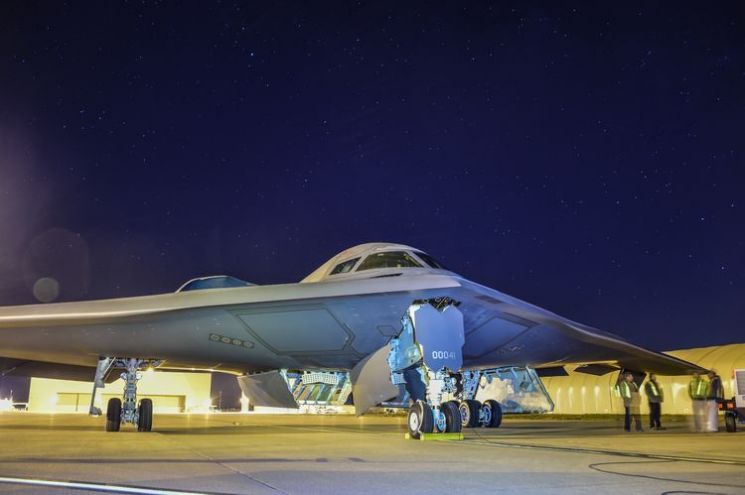
The main reason for the extremely high price of the B-2 bomber is the expensive stealth coating applied to its entire large airframe. This coating absorbs enemy radar waves and suppresses heat emissions from the aircraft. For the B-2 bomber, the cost of the stealth coating alone is reported to be 700 million dollars (about 966 billion won), accounting for more than 30% of the total price of the bomber.
The high maintenance cost of the B-2, at over 150,000 dollars (about 200 million won) per flight hour, also has specific reasons. After each flight, the stealth coating, which becomes overheated due to the heat generated by the aircraft, must be cooled for more than 47 hours to stabilize it. Maintenance costs are also incurred to reapply the coating to any areas where it has peeled off.
The B-2 bomber used in the Midnight Hammer operation is a stealth bomber developed by the American defense contractor Northrop Grumman and introduced to the U.S. military in 1997. The aircraft is 21 meters long, has a wingspan of 52.4 meters, a height of 5.18 meters, and weighs 71 tons, making it the largest stealth aircraft in existence. It is about four times larger than the F-22 fighter jet. The B-2 can carry up to 18 tons of missiles and bombs. The GBU-57 bomb, which weighs 13.6 tons per unit, can only be mounted on the B-2 among stealth aircraft.
Originally, after Northrop Grumman’s successful first test flight of the B-2 bomber in 1987, the U.S. military planned to acquire more than 130 units. However, due to budget constraints, only 20 were actually procured. The New York Times (NYT) explained that, with a unit price of 2 billion dollars (about 2.762 trillion won), the B-2 is the most expensive combat aircraft in existence, and even the U.S. Department of Defense could only acquire a limited number. Due to its enormous cost, the B-2 bomber is currently operated exclusively by the U.S. military worldwide.
© The Asia Business Daily(www.asiae.co.kr). All rights reserved.



















