Egg Prices Surpass 7,000 Won for First Time in Four Years, but Supply Remains Stable
Major Supermarkets Vow to Keep Prices Below 8,000 Won
The price of eggs has once again surpassed 7,000 won for the first time in four years. In response, major supermarket chains are working to curb price increases by reducing their profit margins.
According to Yonhap News Agency, citing sources in the retail industry and the Livestock Products Quality Evaluation Institute on June 22, the average consumer price for a tray of 30 premium eggs last month was 7,026 won. This marks the first time since July 2021 that the price has exceeded 7,000 won.
Emart recently adjusted the price of a tray of premium eggs to 7,980 won, up from 7,580 won in June of last year. However, despite a supplier price increase of over 10%, the retail price was raised by only 5.3%. Lotte Mart is also focusing on selling premium eggs, with the price per tray rising by 6.7% from 7,490 won in June last year to 7,990 won currently.
Homeplus has maintained its price for a tray of premium eggs at 7,990 won for the past two years, in line with its policy of keeping prices below 8,000 won. A Homeplus representative stated, "Although the supplier price for eggs has increased by nearly 20% compared to last year, we are freezing prices and reducing our profit margins to help stabilize consumer prices. Unless there are any special circumstances, we plan to maintain the current price."
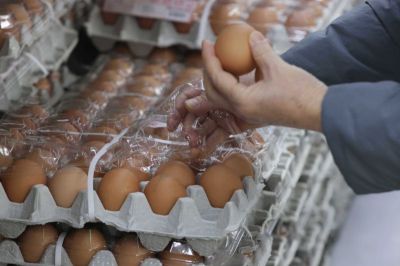
In fact, despite the sharp rise in egg prices, the supply itself is considered relatively stable. Yonhap News Agency quoted an industry insider as saying, "The supply volume of eggs for sale is at about 80-90% of last year's level, so there is no shortage of eggs." The insider added, "There is a tendency to refrain from promotional events to boost sales."
The Ministry of Agriculture, Food and Rural Affairs expects that conditions will improve due to decreased egg consumption in the summer, an extension of the average laying hen production cycle (from 84 weeks to 87 weeks), and an increase in chick placements. Large supermarket chains also anticipate a temporary stabilization in prices due to a seasonal decline in demand during the summer.
However, there are concerns that a decrease in the egg-laying rate due to rising temperatures, as well as an expansion of the minimum space requirement for laying hens (from 0.05㎡ to 0.075㎡) starting in September, could act as mid- to long-term factors driving prices higher. In particular, as more farms are expected to cull older hens and introduce new chicks by August, a short-term decrease in egg production seems inevitable.
Since eggs are a key item in household grocery expenses and consumers are highly sensitive to price increases, some observers predict that if supply becomes unstable, a competitive race among large supermarkets to see who raises prices first could unfold.
Meanwhile, large supermarket chains are reportedly working to defend prices and stabilize supply by actively seeking new suppliers, expanding their product range beyond the standard 30-egg tray to include animal welfare eggs and graded eggs, and thereby broadening consumer choices and diversifying supply risks.
© The Asia Business Daily(www.asiae.co.kr). All rights reserved.

















