Demand for Closure of Yeongpoong Smelter
"Water Sovereignty Violated, Beyond Local Capacity"
The Andong City Council in Gyeongbuk has classified the heavy metal pollution accumulated in the upper reaches of the Nakdong River and Andong Dam as a 'national disaster,' and has called for a comprehensive government-led cleanup project and a responsible response from the authorities.
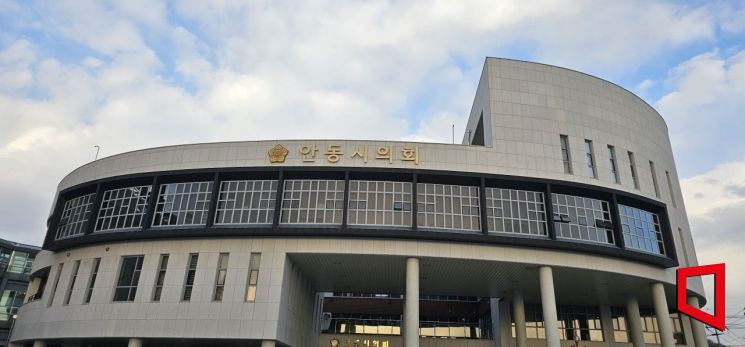
On June 19, during its 259th regular session, the Andong City Council adopted a proposal urging government action for the remediation of heavy metal sediments in the upper Nakdong River and Andong Dam. The council strongly demanded effective measures from relevant agencies, including the Ministry of Environment, the Nakdong River Basin Environmental Office, and Korea Water Resources Corporation.
◆ Upper Nakdong River: The 'silent killer' of heavy metals
The Nakdong River is the source of drinking water for 13 million residents in the Yeongnam region. Andong Dam, located in the river’s upper reaches, serves as a lifeline for northern Gyeongbuk and functions as an ecological hub for the nation’s water resources. However, this area has become a 'blind spot of pollution' over several decades, with various heavy metals such as cadmium, mercury, lead, and zinc accumulating in the sediments.
According to a 2021 detailed investigation by the Ministry of Environment, more than 8 tons of cadmium enter the upper Nakdong River annually, and most of the sediments in Andong Dam were rated as 'very poor.' In particular, during the rainy and dry seasons, heavy metals leach from the sediments, posing a threat to both agricultural and drinking water supplies.
In its proposal, the city council warned, "Heavy metals that cause Itai-itai disease, neurological damage, and chronic kidney disease are not merely an environmental issue but a violation of the right to life," adding, "The limits of what humans and ecosystems can endure have already been exceeded."
◆ Repeated environmental crimes, powerless administration... "Closure of the smelter is the only answer"
The council strongly urged the closure of the Yeongpoong Seokpo Smelter, which has been identified as the core of the problem. Since 2014 alone, the smelter has faced more than 80 administrative and criminal penalties, and there are no statistical records for violations prior to 2014, leading to claims that it was effectively a 'lawless zone.'
The city council stated, "Yeongpoong Smelter is an anti-social company that has repeatedly committed serious environmental crimes incompatible with the local community," and insisted, "There is no solution other than closure and demolition."
The proposal also included suspicions that some domestic research institutions have downplayed or distorted the extent of the pollution, based on findings by Professor Watanabe’s team at Tokyo University of Agriculture and Technology in Japan. The council demanded a comprehensive reinvestigation by the Ministry of Environment, citing the loss of international trust in domestic investigations.
◆ Responsibility of Korea Water Resources Corporation... "Supplying water but neglecting purification"
The passive stance of Korea Water Resources Corporation, which is practically responsible for water resource management, was also criticized. The council argued, "The corporation continues to supply contaminated water resources while evading responsibility for purification," and urged, "As a public institution, it must actively participate in water quality improvement and sediment remediation projects."
◆ "This is no longer a local issue" ... Urging government responsibility
This proposal goes beyond a simple recommendation, conveying the urgent message that the national government must directly address this structural disaster, which local governments cannot resolve on their own.
In the proposal, the Andong City Council called on the government to: ▲reinvestigate and disclose the status of heavy metal pollution ▲establish a national-level remediation roadmap ▲form a joint government-local council ▲allocate national funds for the cleanup project ▲take strong legal and administrative action against Yeongpoong Smelter ▲design an ecological New Deal model with participation from local residents.
In particular, the council emphasized, "The cleanup project is not simply about restoring pollution, but is a critical task directly linked to regional economic revitalization," adding, "The remediation project should follow a New Deal model that enables both ecological restoration and the creation of jobs and income for local residents."
© The Asia Business Daily(www.asiae.co.kr). All rights reserved.

















