Record-High Surplus with the US... China Deficit Second-Largest Ever, but Slightly Reduced from Last Year
Overseas Securities Investment by Koreans Expands, Centered on the US... US Accounts for 88% of Stock Investments
Last year, South Korea's current account surplus with the United States broke records once again, surpassing the previous high set in 2023. This was due to a significant increase in the goods surplus, driven by robust exports of semiconductors, automobiles, and computers, as well as an expanded surplus in primary income.In contrast, with China, exports of chemical products and petroleum products declined, and imports of items such as secondary batteries also decreased, resulting in a current account deficit for the third consecutive year.
According to the "2024 Regional Balance of Payments (Provisional)" released by the Bank of Korea on June 20, South Korea recorded a current account surplus of $99.04 billion last year. This marked a substantial increase compared to the previous year's $32.82 billion. The largest surpluses were posted with the United States, Southeast Asia, and the European Union (EU), while the largest deficits were with the Middle East, China, and Japan, in that order.

Record-High Surplus with the US... China Deficit Second-Largest on Record, but Slightly Reduced from Previous Year
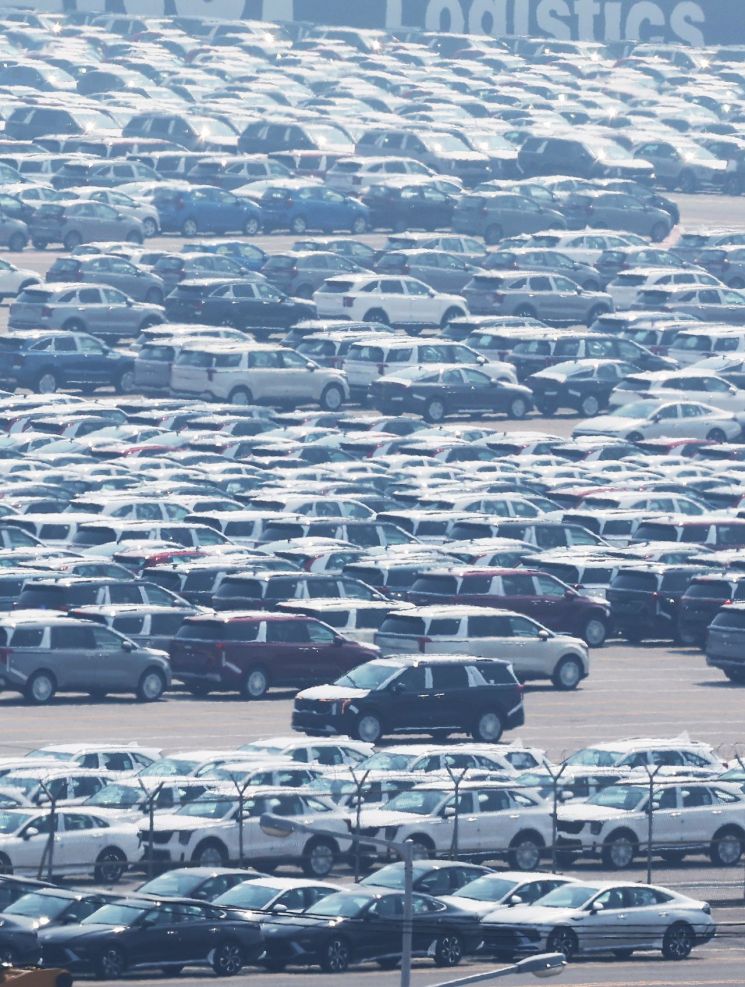
The surplus with the United States reached a new all-time high for the fourth consecutive year. Last year, the current account surplus with the US was $118.23 billion, a significant increase from the previous year's $87.76 billion. The goods balance ($108.99 billion surplus) expanded due to increased exports of semiconductors and information and communication devices, while the primary income balance ($18.4 billion surplus) grew thanks to higher dividend income from direct securities investments.On the other hand, the services balance posted a deficit of $7.18 billion,with the deficit widening further.
Kim Sungjun, head of the International Balance of Payments Team at the Bank of Korea's Economic Statistics Department, explained, "Robust US consumer demand led to increased exports of consumer goods such as automobiles. Since the previous Joe Biden administration, investments in new growth sectors have expanded, resulting in more exports of machinery and semiconductor manufacturing equipment for local production." He added, "There was also a significant increase in securities investments such as stocks and bonds, which boosted dividend and interest income." However, there are expectations that the current account surplus with the US will decrease this year, mainly due to the imposition of tariffs on specific items such as steel and automobiles. Kim noted, "The impact of tariffs is already being seen, and this effect is expected to intensify in the second half of the year. As a result, the surplus is projected to decrease this year compared to last year, and to shrink further next year compared to this year."
The deficit with China continued for the third consecutive year. The current account deficit with China was $29.04 billion, similar to the previous year's record of $29.25 billion, making it the second-largest deficit on record. The goods balance (-$32.53 billion) improved due to increased exports of semiconductors and decreased imports of chemical products, but the primary income balance saw its surplus shrink due to lower dividend income.
Kim explained, "The deficit with China is due to China's increased self-sufficiency in intermediate goods, which it previously relied on imports for, combined with continued economic sluggishness in China." He predicted that a similar trend would continue this year. He said, "This year, the ongoing US-China trade conflict may lead to a further decline in intermediate goods exports, but there is also potential for an economic recovery due to strong domestic stimulus policies. The customs trade balance with China from January to May has not differed significantly from last year."
The current account surplus with the EU was $17.09 billion, a substantial increase from the previous year's $5.85 billion. This was largely due to increased exports of ships, information and communication devices, and pharmaceuticals. The reduction in the services deficit, thanks to increased transportation income, also contributed. The current account surplus with Southeast Asia was $56.52 billion, up from $46.81 billion the previous year. This was driven by an expanded goods surplus from increased semiconductor exports and a shift to a services surplus due to higher transportation income. However, the primary income surplus decreased due to lower dividend income.
The current account deficit with Japan was $12.72 billion, down from the previous year's $15.77 billion. The goods deficit narrowed due to increased exports of petroleum products, but the services deficit widened as travel payments increased. The travel balance deficit with Japan rose from $3.49 billion in 2023 to $3.79 billion last year, reflecting the impact of the weak yen and increased demand for overseas travel. The current account deficit with the Middle East was $69.02 billion, down from $73.5 billion the previous year. This improvement was due to increased exports of machinery and decreased imports of raw materials such as crude oil and gas, as international oil and gas prices fell.

Overseas Securities Investment by Koreans Expands, Centered on the US... US Accounts for 88% of Stock Investments
Last year, Koreans' overseas direct investment increased in most regions except China. It reached $48.59 billion, up significantly from $32.17 billion the previous year.This was due to continued strong investment in the US, a turnaround to increased investment in the EU, and expanded investment in Southeast Asia and other regions.Foreign direct investment into Korea was $15.23 billion, down from $19.04 billion the previous year. Investment from Southeast Asia increased, and investment from China also turned to growth, but investments from the US and EU declined.
Koreans' overseas securities investment reached $72.25 billion, a sharp increase from the previous year's $4.542 billion. Both stock and bond investments grew, mainly centered on the US. Overseas stock investment ($42.2 billion) rose significantly, driven by investments in the US, ranking fifth all-time. Stock investment in the US reached $37.14 billion last year, the third-highest on record, accounting for 88% of all overseas stock investments. Overseas bond investment ($30.05 billion) also saw a larger increase, with more investments in the US and EU.
Foreigners' investment in Korean securities was $21.96 billion, down from $37.14 billion the previous year. Domestic stock investment ($2.44 billion) saw a sharp decrease as investments from the EU and Southeast Asia turned to decline, affected by concerns over the performance of Korean companies such as semiconductor firms. Domestic bond investment ($19.52 billion) also saw a reduced increase, mainly due to decreased investment from the US and Southeast Asia.Other investment assets turned to an increase of $11.4 billion.Other investment liabilities also turned to an increase of $6.71 billion.
© The Asia Business Daily(www.asiae.co.kr). All rights reserved.



















