Canada Responds to Trump's '50% Tariff'
Measures to Block Influx of Low-Priced Steel
Canadian Prime Minister Mark Carney announced on June 19 (local time) that if a trade agreement with the United States is not reached within a month, Canada will adjust the 25% retaliatory tariffs currently imposed on U.S. steel and aluminum.
At a press conference that day, Prime Minister Carney stated, "Canada will adjust the existing retaliatory tariffs imposed on U.S. steel and aluminum products on July 21, when the 30-day deadline expires." However, he did not specify how much the tariff rates would be adjusted.
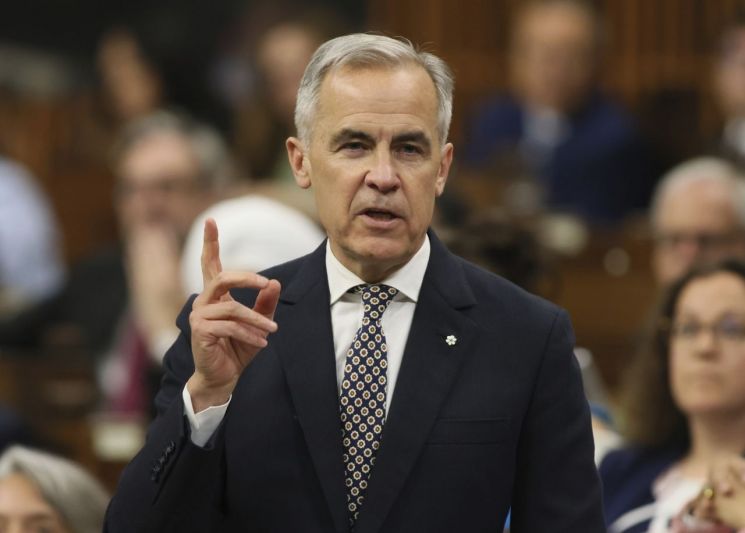
Following Prime Minister Carney's press conference, the Canadian government released a statement saying, "On July 21, the existing retaliatory tariffs on steel and aluminum products will be adjusted in accordance with the level of progress made in comprehensive trade negotiations with the United States."
The Donald Trump administration imposed a 25% tariff on foreign steel and aluminum in March. Starting from the 4th of this month, the tariff rate was increased to 50%.
Canada is the largest exporter of steel and aluminum to the United States. According to statistics from the U.S. Department of Commerce's International Trade Administration (ITA), last year Canada's steel exports to the U.S. amounted to $7.14 billion, accounting for 23%, the highest among all countries. Canada's aluminum exports to the U.S. last year totaled $9.42 billion, representing 54%, which is more than half of the United States' total aluminum imports.
Prime Minister Carney said, "Of course, we will continue these negotiations in good faith," but also emphasized, "At the same time, we must strengthen our domestic capabilities and protect Canadian workers and businesses from the current unjust U.S. tariffs." Previously, on June 16, Prime Minister Carney announced after a meeting with President Trump that the two countries had agreed to work toward finalizing a new economic and security agreement within 30 days.
Additionally, Prime Minister Carney stated that Canada plans to introduce a tariff-rate quota based on 2024 import volumes. This measure is intended to protect domestic industries in anticipation of low-priced steel, displaced by U.S. tariffs, being redirected to Canada. However, countries with which Canada has a free trade agreement (FTA) will be exempt from this measure. South Korea signed the Korea-Canada FTA in 2014.
The Canadian government also announced that by the end of this month, it will implement a plan to limit federal government procurement contracts to Canadian suppliers and those from trusted trade partner countries.
© The Asia Business Daily(www.asiae.co.kr). All rights reserved.

















