Korea Leads Both De Jure and De Facto Standardization Efforts in Quantum Information Technology
As the commercialization of Quantum Information Technology accelerates, global competition over standardization in this field is intensifying.
Quantum Information Technology is emerging as a next-generation foundation in key areas such as quantum communication, quantum sensors, and quantum computing. In particular, due to the essential need for precise hardware and system integration between companies, standardization is virtually a prerequisite for survival.
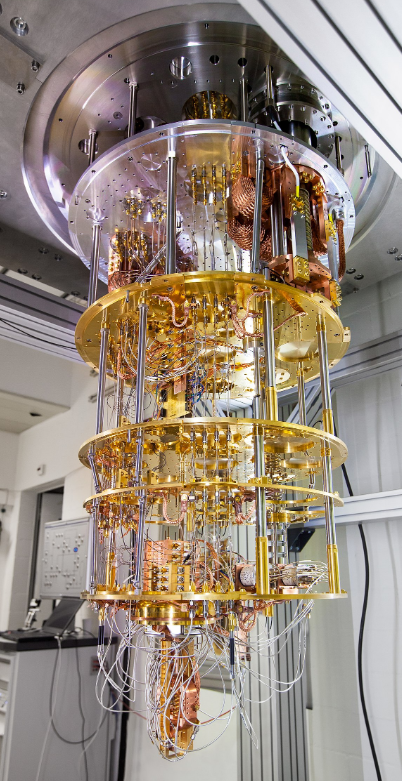
For the industrial ecosystem to function smoothly, common rules and compatibility must be ensured at every stage, including technology development, production, distribution, and service. This is the role of 'standardization.' Standards guarantee the reliability and scalability of technology, and provide the foundation for collaboration among diverse companies and for market entry.
Quantum Computers Open Early Market, Standardization Accelerates
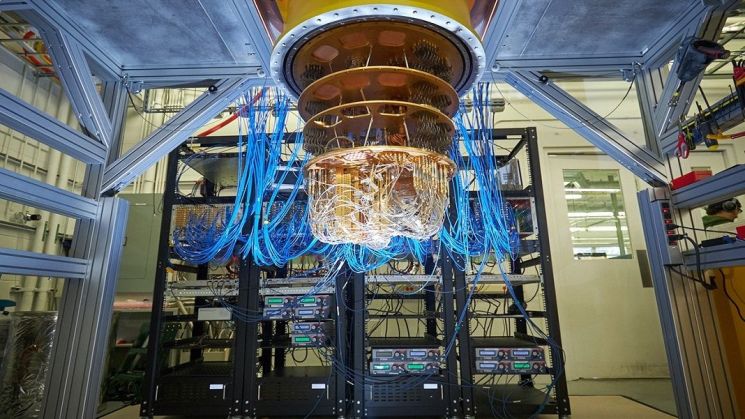
In quantum communication, the standardization of Quantum Key Distribution (QKD) has been underway since 2008 and is currently the most actively progressing area in standardization. For quantum computers, companies such as IBM, IQM, and RIKEN have developed systems with 100 qubits, and with the emergence of an early market where both cloud services and direct device sales are possible, the pace of standardization is accelerating. In the case of quantum sensors, standardization discussions are also taking place for commercially viable devices such as quantum gravimeters.
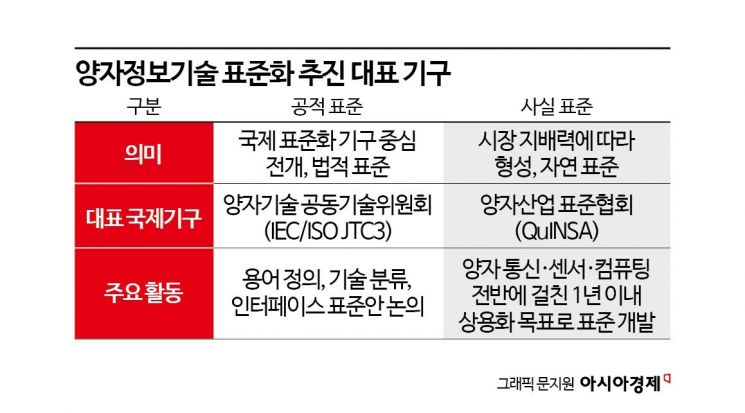
Standardization in quantum information technology is divided into 'de jure standards,' which are established by national, regional, or international bodies, and 'de facto standards,' which are determined by the dominant position of certain players in the market.
De jure standards are mainly developed by organizations such as the International Organization for Standardization (ISO), International Electrotechnical Commission (IEC), International Telecommunication Union (ITU), and the European Telecommunications Standards Institute (ETSI). These organizations create and approve 'legal standards' through official procedures and consensus, making them enforceable.

In contrast, de facto standards are established when companies or other entities publicly release specific technologies or interfaces, and subsequent companies and component suppliers adopt them as standards without formal approval from standardization bodies. These are often referred to as consortium standards, as they are typically set by industry groups.
Standardization Discussions on Terminology, Technology, Architecture, and Interfaces in Quantum Technology
National-level standardization is often pursued to secure technological leadership and for security strategies. The United States is a representative example of this approach. The National Institute of Standards and Technology (NIST) plays a leading role in the field of Post-Quantum Cryptography (PQC), and in preparation for the potential breakdown of existing cryptographic systems by quantum computers, NIST has held competitions and evaluations for PQC algorithms, ultimately selecting the final standards in January 2025.
The 'Joint Technical Committee on Quantum Technologies (IEC/ISO JTC3),' jointly established by ISO and IEC with Korea serving as the chair country, is discussing standards for terminology, technology classification, and the architecture and interfaces in each field, which are all essential for ensuring interoperability in the quantum technology ecosystem.
Regional standardization is based on technological cooperation within economic communities. A representative example is the 'Industry Specification Group (ISG) QKD' of ETSI, which emphasizes pan-European coordination and industrial linkage. This group is developing technical standards for the practical implementation and interoperability of QKD systems, with Korean company SKT also participating in this effort.
International standardization focuses on ensuring the global unification and compatibility of technologies based on agreements between countries. The Telecommunication Standardization Sector (ITU-T) of the ITU is developing standards for the interoperability, security requirements, and network architecture of QKD systems, and is also working on preliminary standardization for technologies such as routing and resource allocation needed for the future quantum internet.
Korea Takes Leading Role in International Standardization Organizations
Unlike the standardization efforts led by governments and international organizations, the industry is forming 'de facto standards' through faster and more practical approaches. While de jure standards require lengthy and complex procedures, the industry is able to respond immediately to market demands and lead technological development.
Industry consortia such as QED-C in the United States, QUIC in Europe, QIC in Canada, and Q-Star in Japan are being formed, focusing on their respective domestic industrial ecosystems to develop technologies and establish de facto standards, thereby enhancing competitiveness.
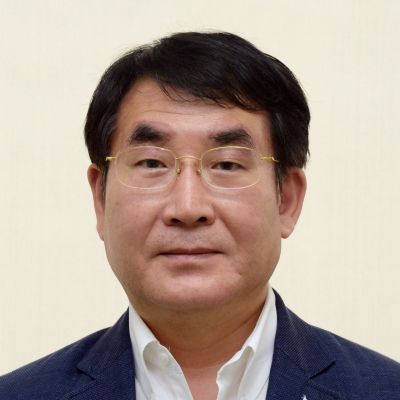
Korea is playing a leading role in both international de jure standards and industry-driven de facto standards. Sungsoo Park, Professor at Yonsei University Institute of Convergence Science and Technology, stated, "At the inaugural general meeting held in Seoul in May 2024, Korea took the lead in standardization for two fields: quantum sensors and quantum communication. Australia and France are jointly leading quantum computing, China is leading quantum random numbers, and Denmark is leading quantum-enabled technologies. Korea has secured a certain degree of leadership and can play a significant role."
In the area of de facto standards, the 'Quantum Industrial Standard Association (QuINSA),' an industry-driven standardization body led by Korea, includes more than 180 companies such as IBM, IQM, SKT, KT, and LG Electronics, and is developing standards aimed at commercialization across quantum communication, sensors, and computing.
QuINSA recognizes that it takes three to four years to develop JTC3 standards, which is a significant time constraint, and instead proposes practical technology standards with a much faster development cycle of about six months to one year, focusing on the applicability of technology in industry.
"Urgent Need to Train 'Standardization Experts' Who Can Propose and Discuss Agenda at Standardization Meetings"
Experts point out that while Korea is expanding its influence by actively participating in international standardization activities, there is still a lack of organic linkage between R&D, standardization, and industrialization. In addition to investing in core technologies such as quantum devices, qubit control, and algorithms, efforts must be made in convergence with existing ICT technologies such as AI, cloud, and 6G, training specialized personnel in quantum information technology, and expanding pilot projects to create private sector demand.
It is also necessary to increase the dispatch of experts to major international standardization organizations such as JTC3, NIST PQC, ITU-T, and ETSI, and to actively propose so that Korean technologies are reflected in international standards.
In particular, there is an urgent need to train standardization experts. Professor Park emphasized, "We need two types of experts: technology specialists who have technologies to standardize, and standardization experts who can propose and discuss agenda items at standardization meetings. While there are many technology specialists in Korea, there are not many who are interested in standardization. The government should significantly increase support for standardization development projects to increase the number of experts involved in standardization."
© The Asia Business Daily(www.asiae.co.kr). All rights reserved.



















