Short-Term Effects Expected Within One Month
Domestic Demand Boost May Surpass COVID-19 Era
Concerns Over "Targeted Support" for Small Businesses and Sectoral Concentration
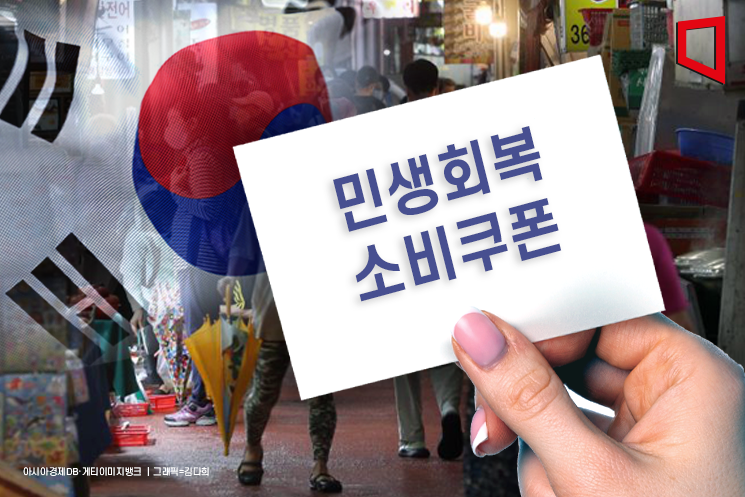
As the outline of the Lee Jae Myung administration's economic stimulus measure, the "Livelihood Recovery Consumption Coupon," has been revealed, there are sharply divided opinions across various sectors regarding the effectiveness of this support policy. The differing views stem from questions about whether its impact will sufficiently reach small business owners and micro-enterprises, beyond the overall economic stimulus effect. Experts generally agree that there will be a short-term boost to the economy. However, they expressed concerns that the benefits for small business owners and micro-enterprises may be limited, or that there could be a concentration of benefits in certain sectors.
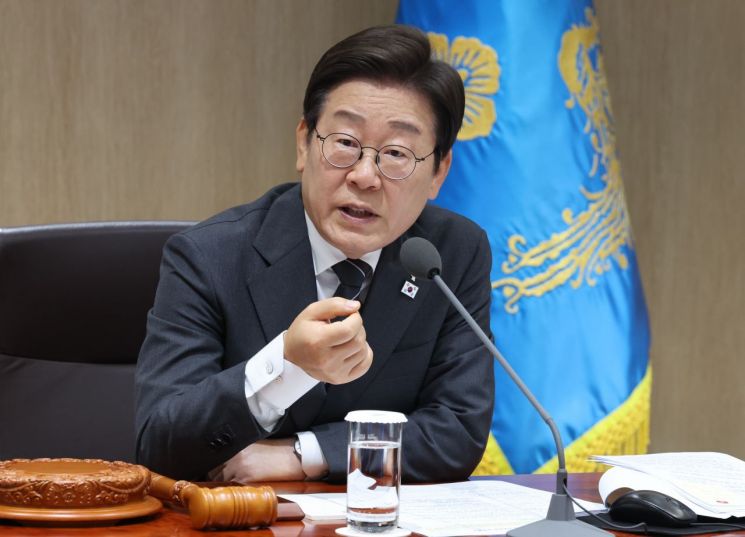 President Lee Jae Myung is speaking at the Cabinet meeting held at the Yongsan Presidential Office on the 19th.
According to related academic sources on June 20, experts predict that the consumption coupon plan for all citizens, which was approved at the Cabinet meeting the previous day, will have a concentrated effect on boosting domestic demand within one month. They believe the trend will be similar to the first round of emergency disaster relief funds implemented by the Moon Jae In administration during the COVID-19 pandemic, most of which were spent within a month. According to reports published by the Korea Fiscal Information Service (FIS) on COVID-19 income support, household trend surveys, and credit card sales data, the consumption-boosting effect of the first emergency disaster relief funds surged in May, immediately after distribution, and was exhausted by July.
However, there are differing opinions on how substantial and long-lasting the effect will be. Unlike the first disaster relief funds, which were distributed universally to all citizens, the Livelihood Recovery Consumption Coupon will use a "universal plus targeted hybrid" approach, providing greater support to vulnerable groups such as those just above the poverty line and single-parent families. This results in differences in the details of the distribution method and scale. Some also noted that the current social atmosphere is different from the COVID-19 era, when consumption patterns were restricted due to quarantine measures, and this should be taken into account.
Suh Ji Yong, professor at the Department of Business Administration at Sangmyung University, stated, "During the first round of emergency disaster relief funds, about 30% of the total budget actually translated into consumption, and the quarterly private consumption growth rate was around 1.5%. I expect a similar effect this time in broad terms," adding, "However, since the current plan uses a differentiated distribution method that provides more support to low-income groups with a relatively high marginal propensity to consume (the proportion of additional income spent rather than saved), the expected private consumption growth rate could be higher than before."
A representative from the Korea Development Institute (KDI) explained, "During the distribution of emergency disaster relief funds, the recovery in sales for face-to-face service sectors such as dining, travel, and beauty was limited due to quarantine measures, and consumption patterns were rigid. Now, with a relatively freer social atmosphere, additional positive effects can be expected."
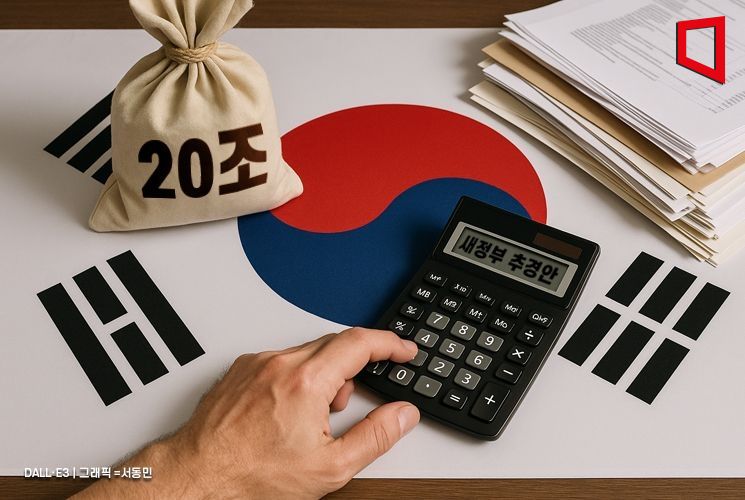
The key issue is how effectively the policy can provide targeted support for small business owners and micro-enterprises, beyond the overall boost to domestic demand. Experts believe that the effectiveness will depend on how the government restricts and designs the "places of use" and "distribution methods" for the support funds. The Ministry of the Interior and Safety plans to finalize the specific timing, eligible places, and distribution methods for the Livelihood Recovery Consumption Coupon through discussions with a task force involving relevant ministries.
Lee Junghwan, professor at the Department of Economics and Finance at Hanyang University, advised, "During COVID-19, department stores and large discount stores were excluded from eligible places, but local supermarkets were included, which led to a concentration of spending at some medium-to-large local supermarkets. As a result, some very small businesses and certain sectors such as restaurants did not see as much of an increase in sales as expected. To prevent concentration by size or sector, the government needs to design the eligible places and distribution methods with precision."
Jung Kyuchul, director of economic outlook at KDI, said, "Based on the government's announcement, it appears that the policy is focused more on overall economic stimulus than on supporting vulnerable groups. Structurally, it is a difficult policy to provide concentrated support to specific micro-enterprises."
Kim Jinil, professor at the Department of Economics at Korea University, commented, "If the eligible places for use are narrowly restricted to some micro-enterprises, the benefits for local businesses can be maximized. However, this could also result in many consumers being unable to use the full amount within the designated period. How the government addresses this dilemma will depend on how it designs the detailed eligible places and distribution methods."
Regarding concerns about fiscal soundness deterioration and inflation due to expansionary fiscal policy, most experts considered these concerns to be excessive. The first and second supplementary budgets finalized this year amount to 30.5 trillion won, of which 13.2 trillion won has been allocated to the Livelihood Recovery Consumption Coupon.
Jung, the director of economic outlook, stated, "Fiscal soundness is a medium- to long-term issue. National finances do not deteriorate overnight just because a large amount is spent once. Currently, domestic demand has lost so much vitality that the current level of fiscal spending is only supplementing it. Therefore, I am not greatly concerned about fiscal soundness pressure or inflation after the distribution."
Professor Suh added, "If the government raises funds by issuing large amounts of government bonds, it could drive up market interest rates and increase the burden on households. It is necessary to simultaneously consider how to maintain fiscal soundness in the medium to long term by reducing unnecessary expenditures through spending restructuring."
© The Asia Business Daily(www.asiae.co.kr). All rights reserved.



















