A group involved in distributing counterfeit versions (commonly known as "fakes") of well-known cosmetic brands such as Est?e Lauder has been caught in a government crackdown. The counterfeit products distributed by the group were found to be little more than plain water, lacking any of the original cosmetics' intended effects.
The Trademark Special Judicial Police of the Korean Intellectual Property Office (hereinafter referred to as "trademark police") announced on June 19 that four individuals, including a wholesaler identified as Mr. A (age 42), have been referred to the prosecution on charges of violating the Trademark Act.
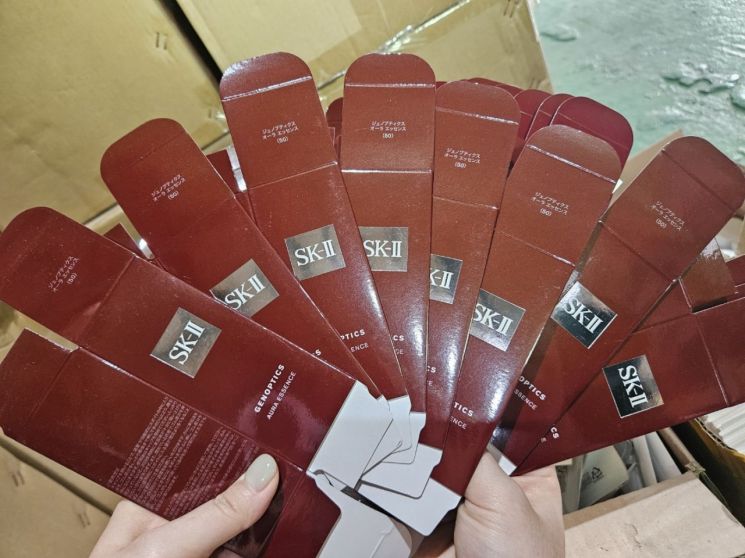 Counterfeit cosmetic packaging seized by trademark police. Provided by the Korean Intellectual Property Office
According to the trademark police, from April 2023 to March of the previous year, Mr. A and others are suspected of disguising counterfeit cosmetics from well-known brands such as Est?e Lauder, SK-II, and Kiehl's as parallel imports and distributing them domestically. The group distributed approximately 87,000 counterfeit items, with an estimated genuine retail value of 7.9 billion KRW.
During the course of the crime, Mr. A was responsible for overseas business operations and overall imports, Mr. B (age 40) handled import-related documentation, while Mr. C (age 43) and Mr. D (age 38) were in charge of domestic distribution. The group operated in an organized manner, dividing their roles accordingly.
The trademark police explained that the counterfeit products distributed in the market were so meticulously crafted in terms of containers, labels, and packaging that even professional distributors specializing in cosmetics found it difficult to distinguish them from genuine products.
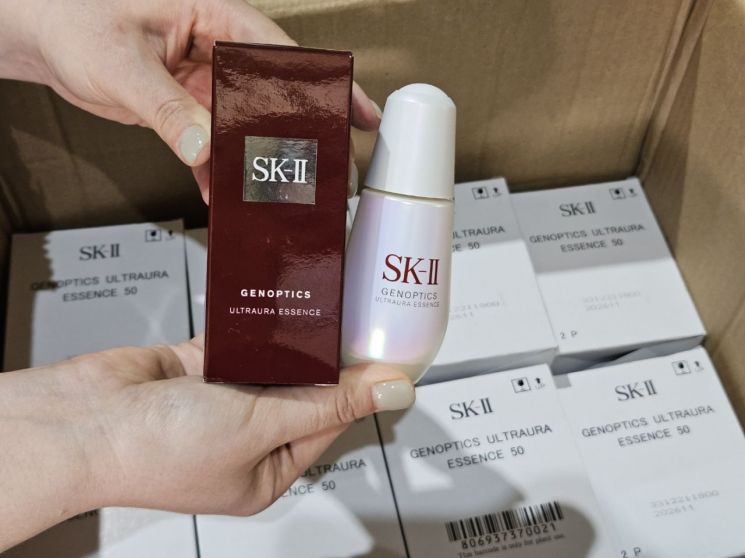 Counterfeit cosmetic packaging boxes and cosmetics seized by trademark police. Provided by the Korean Intellectual Property Office.
Although the counterfeits appeared similar to genuine products on the outside, their contents were different. When the trademark police commissioned a professional institution to analyze the ingredients of the counterfeit products, no harmful substances were detected in the cosmetics distributed by Mr. A and his associates. However, the products were found to fall short of standards for key ingredients and contents, essentially amounting to "plain water" with no real efficacy.
For example, the counterfeit SK-II essence contained none of the key functional ingredient for whitening, niacinamide, and the counterfeit Est?e Lauder serum was found to have an average content volume below the labeled standard of 50 mL.
Mr. A and others supplied the counterfeit products to cosmetics distributors and home shopping partners at about one-third of the regular price, generating a total criminal profit of approximately 2.1 billion KRW.
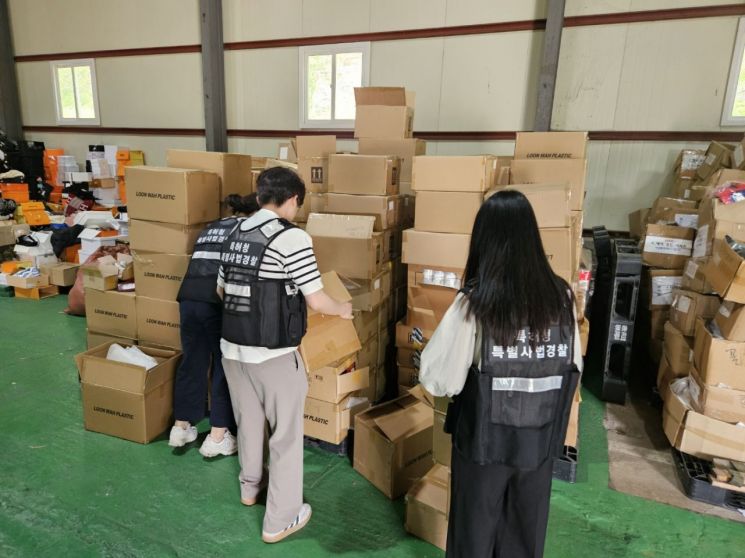 Trademark police are conducting a crackdown operation at a warehouse storing counterfeit cosmetics. Photo by the Korean Intellectual Property Office
The trademark police became aware of the crime (upon receiving a report) when a distributor who had purchased the counterfeit products attempted to re-export them overseas. As a result, they seized all 6,000 counterfeit items (with a genuine retail value of 560 million KRW) that were awaiting export.
Additionally, the police seized about 40,000 counterfeit items (with a genuine retail value of 1.4 billion KRW) stored in a warehouse in Gyeonggi Province that had been prepared for home shopping supply, and secured sales records for 41,000 counterfeit items distributed by Mr. A and his associates through digital forensics.
Shin Sangon, Director General of the Industrial Property Protection and Cooperation Bureau at the Korean Intellectual Property Office, stated, "General consumers may find it difficult to distinguish between genuine and counterfeit versions of everyday products such as cosmetics. Therefore, caution is advised when purchasing products priced significantly below the regular retail price." He added, "Because counterfeit products (cosmetics) are not subject to quality inspections during manufacturing and distribution, consumer safety cannot be guaranteed. We strongly recommend purchasing products from official retailers whenever possible."
He further stated, "The Korean Intellectual Property Office plans to further strengthen planned investigations to eradicate the distribution of counterfeit products, which cause significant consumer harm and pose risks to public safety and health."
© The Asia Business Daily(www.asiae.co.kr). All rights reserved.



















