On June 18 (local time), U.S. President Donald Trump stated that he has not yet made a final decision on whether the United States will join Israel in its attack on Iran. President Trump explained that "war is subject to change," indicating he intends to delay the timing of his final decision. This has prolonged uncertainty about the direction of the U.S. response. With the U.S. involvement in a potential war with Iran remaining unclear, the international community is also finding it difficult to predict the future situation in the Middle East.
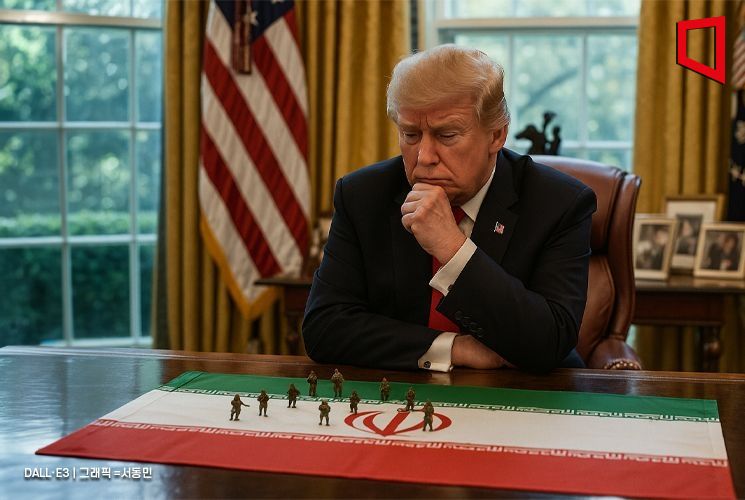
President Trump made these remarks when asked by reporters at the White House, where he was meeting with players from the renowned Italian soccer team Juventus, about whether the United States would participate in Israel's attack on Iran.
He commented, "I have thoughts about what to do," and added, "I want to make the final decision one second before the deadline, because situations change. This is especially true in war." This is interpreted as President Trump intentionally maintaining an ambiguous stance, in line with his earlier statement that morning that the United States "may or may not" attack Iran.
The Financial Times (FT) of the United Kingdom commented on President Trump's remarks, stating, "His previously mentioned demands for 'unconditional surrender' and the buildup of U.S. troops may be intended as threats to force Iran to limit its nuclear activities," and added, "However, the risks of Trump actually joining Israel's military gamble could be far greater than those of not intervening."
He went on to say, "I do not seek to fight," but added, "However, if the choice is between fighting and (Iran) possessing nuclear weapons, I will do what needs to be done."
When asked about the possibility of the collapse of the regime led by Ayatollah Ali Khamenei, who has led Iran's theocratic system, he replied, "Of course. Anything can happen." He also emphasized the urgency of resolving the nuclear issue by stating, "I have long said that Iran cannot have nuclear weapons," and, "I believe they are only weeks away from having nuclear weapons."
Additionally, President Trump stated, "They should have signed the document (the nuclear agreement with the United States)," and added, "I think they are now thinking, 'If only we had signed (the document).' "
He further assessed that the draft nuclear agreement proposed by the United States was fair, but that it has now become difficult to reach an agreement. Nevertheless, when asked if the "door to diplomacy" was closed, he replied, "No," leaving room for further negotiations.
President Trump also revealed that Iran wishes to visit the United States, and that the United States is willing to respond to such a request. He added that destroying Iran's underground uranium enrichment facility in Fordow is not a precondition for an agreement.
Meanwhile, he announced that, following the previous day, he would also hold an additional meeting in the White House Situation Room regarding the Middle East crisis.
The Washington Post (WP) commented, "An unpredictable president has shown unpredictable behavior," and pointed out that it remains unclear whether President Trump's ambiguous yet firm warnings are a prelude to actual military action or part of a strategic maneuver to secure a diplomatic deal.
WP also analyzed that President Trump tends to demonstrate strategic flexibility by mentioning the possibility of both military action and negotiations, and assessed that this approach is further amplifying confusion and uncertainty not only among U.S. allies but also within American political circles.
© The Asia Business Daily(www.asiae.co.kr). All rights reserved.

















