Registered as an Individual Seller on Four Major E-commerce Platforms:
Seller Information Disclosure Varies by Platform
Naver Reveals Seller’s Date of Birth and Contact Details Even Before Purchase
Fair Trade Commission: "We Will Investigate Seller Damages and Current Disclosure Practices"
Naver has been found to be the only major e-commerce platform that allows users to view personal information such as contact details and date of birth of individual sellers even before making a purchase. This was intended to maximize the provision of seller information for consumer protection, but it has ultimately created opportunities for misuse. Analysts attribute this to ambiguous regulations under the current Electronic Commerce Act.
On June 19, Asia Economy compared the scope of seller information disclosure after signing up as individual sellers on four major e-commerce platforms?Naver (NAVER) Smart Store, 11st, Gmarket, and Auction. The results showed that only Naver Smart Store allowed users to view all seller information containing sensitive data?including name, date of birth, address, contact details, and email?even before a purchase. By contrast, 11st only allows users to check the name and email before purchase, with additional information accessible after payment is made. Gmarket and Auction only provide seller information after the purchase is completed.
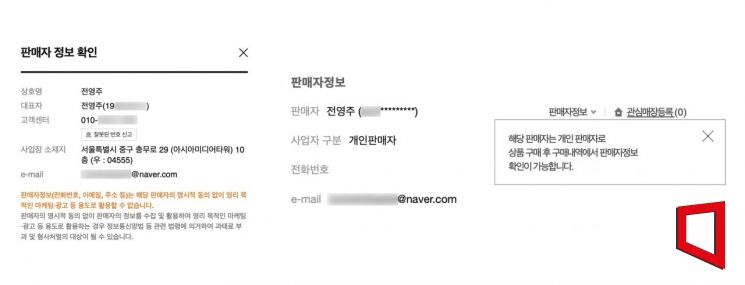 From the left, the personal seller information screens of Naver Smart Store, 11st, and Gmarket·Auction. Among major e-commerce platforms, Naver was the only one that exposed sensitive personal information such as date of birth, address, and contact details before purchase.
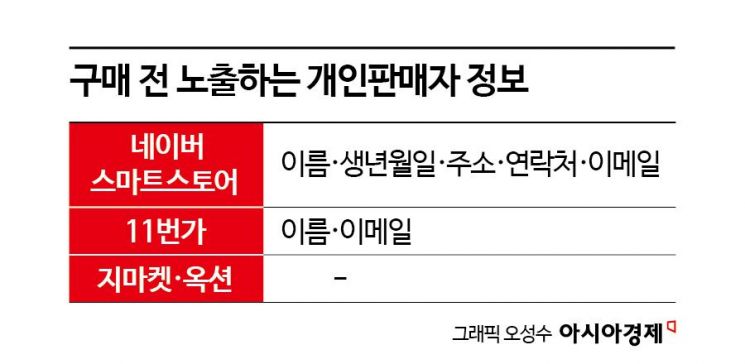
The difference in information disclosure among platforms stems from the current "Act on the Consumer Protection in Electronic Commerce, etc." (Electronic Commerce Act), which only stipulates that platforms must "provide a way for transaction parties to access" individual seller information. Because there are no specific provisions regarding the timing or items to be disclosed, each platform interprets and operates this rule autonomously according to its internal policies.
Naver stated, "Since there is no authoritative interpretation regarding the scope of transaction parties or the timing of information provision, we believe we have faithfully complied with the law internally," adding, "If the Korea Fair Trade Commission provides specific guidelines in the future, we will adjust accordingly." The Korea Fair Trade Commission is the competent authority for the Electronic Commerce Act.
Some experts are concerned that if individual seller information is widely exposed before purchase, there is a risk that personal data could be collected or misused through crawling (automated website data collection technology). Previously, there were indications that the information of 732,000 Naver Smart Store sellers was being distributed in file form on the dark web.
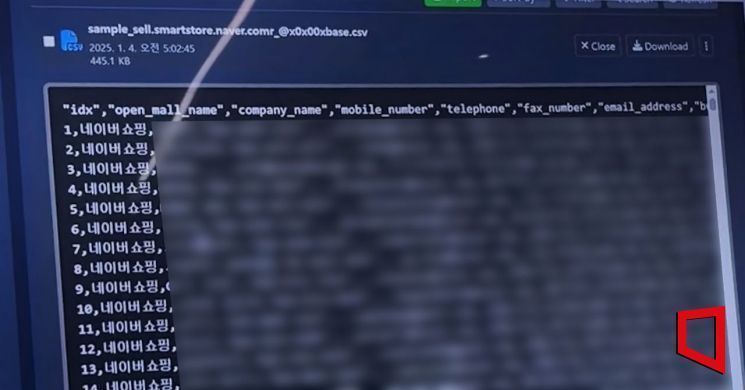 Sample file of personal information of former Naver Smart Store sellers uploaded to the dark web market in January this year. It contains their store names, mobile phone numbers, email addresses, dates of birth, and more. Dark web screen capture
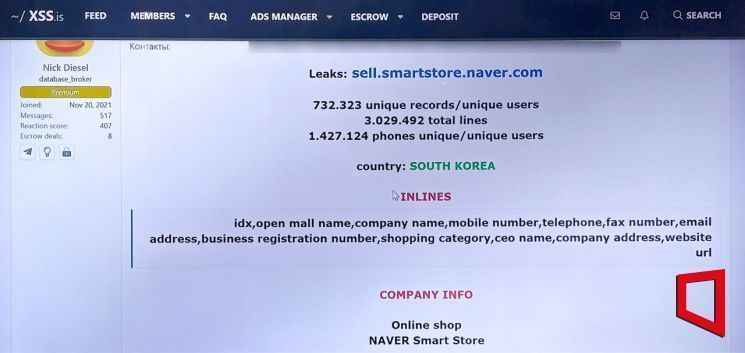 Screenshot of a post on the dark web market showing past seller information from Naver Smart Store. Information of 732,323 individuals is posted. Dark web screen capture.
Attorney Jeon Sangbeom of Law Firm Logos stated, "Under current law, businesses must disclose seller information before purchase, but for individual sellers, the law only requires providing a way for transaction parties to access the information," adding, "A structure like Naver's, which discloses all information including date of birth and contact details before purchase, could be problematic from a legal interpretation standpoint."
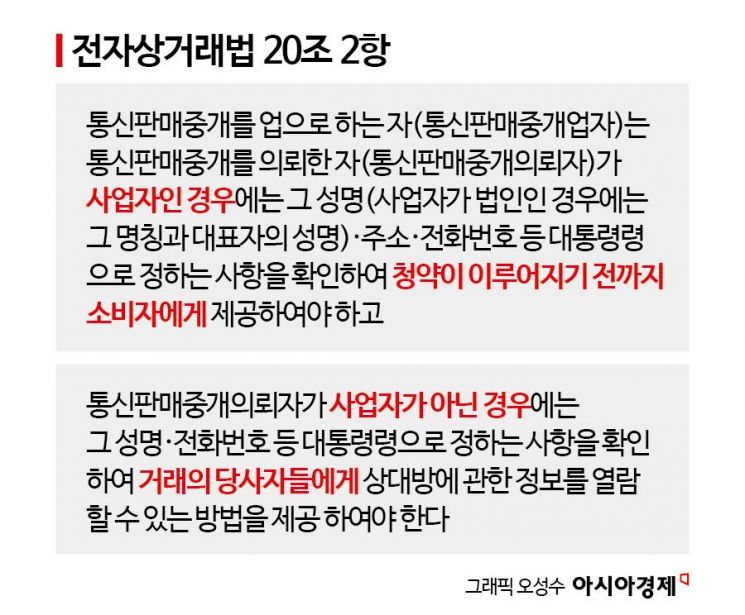
Compared to other countries, the scope of seller information disclosure in Korea is relatively broad. The European Union (EU), through the Digital Services Act (DSA) implemented last year, requires the disclosure of seller name, address, email, and contact details, but excludes date of birth from the items to be disclosed. In the United States, most platforms only provide indirect contact methods, such as email or customer service, after a purchase is completed, and do not disclose sensitive personal information. Lim Jongin, a professor at Korea University’s Graduate School of Information Security, said, "Overseas, the scope of information disclosure is minimized in consideration of the balance of rights and interests between sellers and consumers, and it is common practice not to disclose sensitive information."
A Korea Fair Trade Commission official stated, "For individual sellers, it is not absolutely necessary to disclose seller information in advance, considering risks such as stalking." However, regarding the issue of varying disclosure practices across platforms, the official added, "We will investigate the current state of information disclosure differences by platform and review potential damages to sellers or institutional shortcomings." An official from the Personal Information Protection Commission also commented, "It is time to consider revising the law to suit the changing environment."
© The Asia Business Daily(www.asiae.co.kr). All rights reserved.



















