Cooperation Between Fiscal Expansion and Monetary Policy...
A Signal for Corporate Revival
The Power of Japanese Corporate Finance...
From Stimulating Construction to Urban Redesign
Transition to Transition Finance...
The Rise of Mega-Banks

Woori Financial Management Research Institute has published "Japan's Great Economic Transformation," a comprehensive analysis of the Japanese economy. The book aims to provide practical policy insights for the Korean economy, which is facing demographic changes.
According to Woori Financial Management Research Institute, three major factors enabled Japan, now a super-aged society, to escape deflation: Abenomics (fiscal policy), regulatory reform, and monetary policy. The report explains that fiscal policies aimed at economic growth led to a weaker yen, which in turn boosted corporate profits. Meanwhile, monetary policy supported corporate investment, encouraging private asset accumulation.
On June 18, Park Junghoon, CEO of Woori Financial Management Research Institute, attended a press conference for the release of "Japan's Great Economic Transformation." He stated, "This is not simply a collection of Japanese case studies, but rather a compass that offers answers all economic agents in Korea should consider together."
Cooperation Between Fiscal Expansion and Monetary Policy... A Signal for Corporate Revival
The book consists of two parts, seven chapters, and 302 pages. Part 1, "The Country of the Elderly: How They Live," covers topics such as the paradigm shift in asset management caused by Japan's aging population, the resurgence of the Japanese economy, and innovations in corporate culture driven by demographic changes. It discusses changes in asset management and corporate culture, as well as the driving forces behind Japan's economic revival.
Since 2013, Japan has implemented an aggressive monetary policy. Whereas fiscal spending was previously limited due to concerns over fiscal deficits, the government expanded fiscal policy alongside growth strategies. This marked the beginning of what is known as "Abenomics."
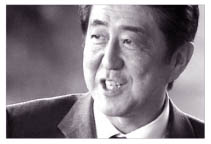 Shinzo Abe, Prime Minister of Japan.
Park emphasized, "Growth was supported by the coordination of fiscal and monetary policies, and it is important that this approach continued even after changes in prime minister." He added, "At that time, the strong yen caused by deflation was a problem for Japan, but the subsequent weakening of the yen benefited not only corporate exports but also the tourism and service sectors."
He continued, "To cope with deflation, Japanese companies could not reduce employment, so they responded by cutting wages. However, after Abenomics, the weaker yen allowed companies to pass on costs to prices, and both sales and ordinary profits reached record highs."
This naturally led to reforms in Japanese corporate culture. Ironically, a critical factor was the labor shortage. As hiring became more difficult in a society marked by low birth rates and super-aging, companies began actively recruiting retirees, women, and foreign workers into the labor market.
The Power of Japanese Corporate Finance... From Stimulating Construction to Urban Redesign
Part 2, "A Changed Japan, a Stagnant Korea," explores topics such as the lifeblood of the Japanese economy, the remarkable revival of financial companies, the strength of corporate finance overcoming long-term stagnation, new agendas proposed by Japan, transition finance, and the digital counterattack of mega-banks.
Noteworthy developments include the resurgence of Japan's mega-banks through global business expansion, the transformation of the real estate market toward investment, and Japan's efforts to seek new opportunities in transition finance.

After the collapse of the bubble economy in the 1980s, Japan shifted from stimulating the construction sector to "urban space redesign" as a solution. To address issues such as declining asset values and the deterioration of urban functions, Japan actively promoted real estate market revitalization and urban redevelopment to secure new growth engines. The most representative example of this is the "Hills Project."
While there are growing concerns about a real estate bubble in Korea, Park explains that the current Korean real estate situation is significantly different from that of Japan in the 1980s. He noted, "Although both countries share the commonality of falling interest rates, there are far more differences." He explained, "At that time, Japan allowed banks to count 40% of their unrealized gains from stock holdings as capital, and since loans were made based on a certain ratio of capital, rising stock and real estate prices led to credit expansion."
He added, "In fact, Korea's loan growth rate is only at the level of nominal economic growth, which is the biggest difference. In addition, in Korea, the proportion of taxes such as comprehensive real estate tax and property tax is high, so in conclusion, the current Korean real estate market is very different from the Japanese bubble era of the 1980s."
Transition to Transition Finance... The Rise of Mega-Banks
Monetary policy also played a significant role in driving the Japanese economy. Like Korea, Japan has a manufacturing-centered economy that relies heavily on carbon energy. The government, recognizing that an immediate switch to renewable energy was not feasible, proposed a transition finance project to gradually reduce carbon energy use.
In this process, financial institutions emerged as partners in energy transition investments, providing corporate finance. This allowed companies to improve their energy structures, while financial institutions benefited by expanding into new business areas, creating a win-win effect. In particular, mega-banks (large financial groups) played a key role in transition finance, which requires large-scale funding.
In addition, Japanese financial institutions actively expanded their overseas operations and devised strategies to increase non-interest income. Park stated, "Japan's prolonged low interest rate policy made it difficult for banks to survive on domestic interest income alone. The loan-to-deposit ratio, which was 140% in 1992, fell to 61% last year, prompting Japan to strengthen non-interest income and actively expand global business. This is something Korea should consider applying to its own situation."
© The Asia Business Daily(www.asiae.co.kr). All rights reserved.


















