Additional Support for Vulnerable Groups to Be Provided
Total Supplementary Budget Expected to Approach 20 Trillion Won
Debt Relief for Self-Employed Also Included
The Livelihood Recovery Support Fund has ultimately been decided as a universal payment. On June 18, the Democratic Party and the government confirmed a plan to provide the support fund to all citizens, with additional assistance for vulnerable groups. The supplementary budget to be arranged this time is expected to exceed 20 trillion won.
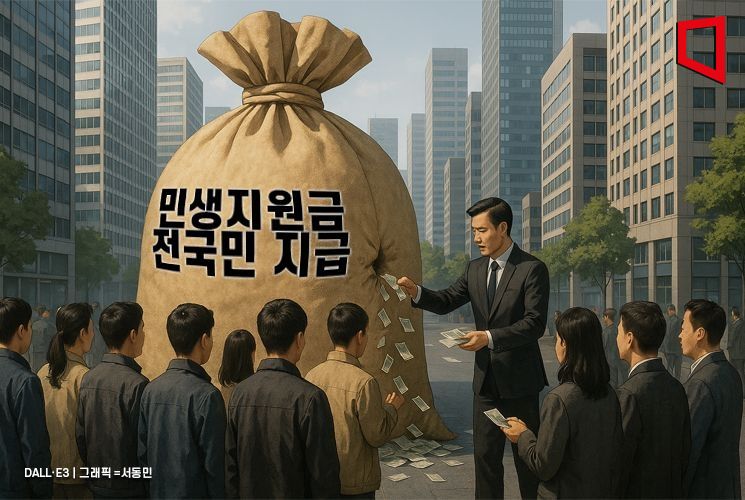
The Democratic Party, the Presidential Office, the Ministry of Economy and Finance, and other government agencies held a working-level party-government meeting at the National Assembly on the same day to discuss the supplementary budget bill. After the meeting, Jinseong Jun, Policy Committee Chair of the Democratic Party, explained, "At the beginning of this year, the Democratic Party insisted that the supplementary budget for minimum economic defense should be 35 trillion won. If you combine the first supplementary budget (13.8 trillion won) and the second supplementary budget (scheduled for approval at the Cabinet meeting on the 19th), the total is close to the scale the party had in mind."
The Livelihood Recovery Support Fund, which had been a subject of debate between universal and targeted payments, will be provided on a universal basis in principle, with additional support for vulnerable groups and areas facing population extinction. Jinseong Jun said, "The Democratic Party emphasized that livelihood recovery support should be provided universally to all citizens, and the government accepted this position and designed the program based on the principle of universal payment. Additional support will be provided to recipients of basic livelihood security, the near-poor, and other vulnerable groups." Heoyeong, the Democratic Party's Senior Deputy Floor Leader, described the support method as "customized support based on universality" and "additional support for disadvantaged groups." While additional support for areas facing population extinction was also planned, the specific details will be reflected during the National Assembly's budget review process.
The budget for local gift certificates, also known as local currency or regional love gift certificates, will also be increased. Initially, the Democratic Party requested a budget of 2 trillion won, but only 400 billion won was included in the first supplementary budget. Through this supplementary budget, the related budget will be significantly expanded.
Debt relief for self-employed individuals struggling due to COVID-19 and emergency measures such as martial law will also be implemented. Jinseong Jun stated, "The debt burden on self-employed small business owners that has accumulated from COVID-19 until now is extremely high, so we believe active adjustment of this debt is necessary, and a large budget has been allocated for debt adjustment." He added, "To help vulnerable borrowers recover, the government will purchase and write off a certain amount of their debt." In addition, emergency welfare, medical benefits, and job-seeking allowances for vulnerable groups have also been included in the supplementary budget.
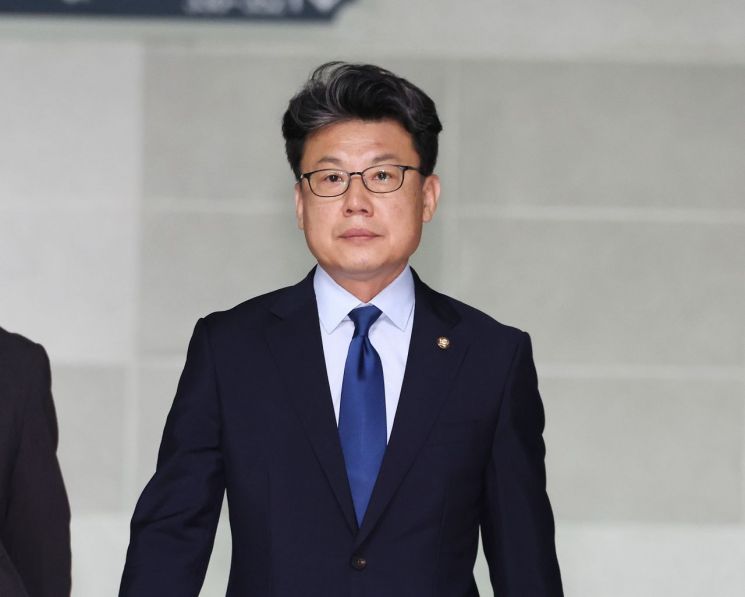 Jinseong Jun, the Policy Committee Chair of the Democratic Party, is moving to attend a meeting related to the supplementary budget bill involving the Presidential Office, government, and ruling party at the National Assembly Members' Office Building in Yeouido, Seoul on the 18th. Photo by Yonhap News
A notable aspect of this supplementary budget is that the government has decided to revise its revenue estimates to reflect this year's tax revenue shortfall. Jinseong Jun remarked, "The government is effectively admitting there are problems with its fiscal policy and is reporting the tax revenue shortfall to the public." However, despite the reduction in domestic tax revenue due to the shortfall, the government has decided not to reduce local allocation tax and local grants. Additionally, the budget will include measures to reduce the burden on local governments when distributing the Livelihood Recovery Support Fund or issuing regional love gift certificates.
Immediately, the Democratic Party plans to normalize the formation of key parliamentary committees, such as the Special Committee on Budget and Accounts and the Strategy and Finance Committee, to ensure the supplementary budget bill can be processed quickly in the National Assembly.
Although supplementary budgets are usually discussed through high-level party-government meetings between the ruling party and the government, this time the discussions took the form of a policy meeting, as the Prime Minister and the Minister of Economy and Finance have not yet been appointed.
© The Asia Business Daily(www.asiae.co.kr). All rights reserved.
![Clutching a Stolen Dior Bag, Saying "I Hate Being Poor but Real"... The Grotesque Con of a "Human Knockoff" [Slate]](https://cwcontent.asiae.co.kr/asiaresize/183/2026021902243444107_1771435474.jpg)

















