Private Academy Instructors Also Face 'Infringement of Teaching Authority'
Forced to Suffer in Silence for Fear of Hurting Academy Business
Are There No Protections for Instructors?
A young English instructor in her twenties recently experienced an unexpected incident while teaching a middle school class at a private academy. After being corrected for a mistake in solving a problem, a student packed up his bag, pushed the instructor, and stormed out of the classroom. That was not the end of it. The student's mother strongly protested, demanding an apology from the instructor, saying, "Why did you humiliate my child in front of the other students?"
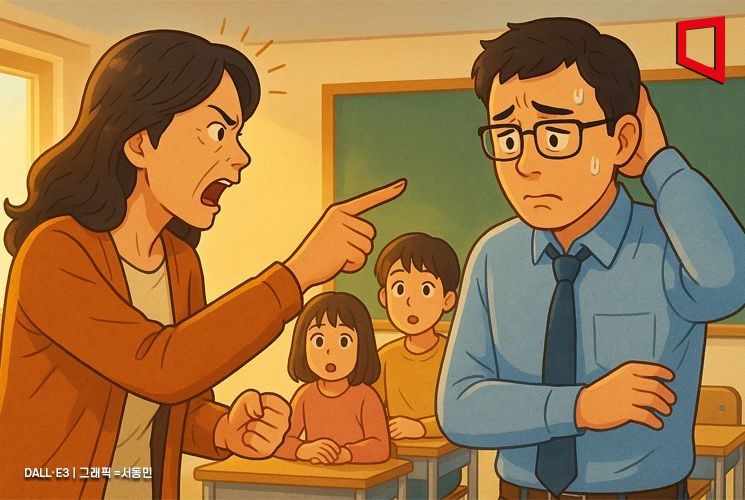
Another instructor who had a similar experience now records her own lectures as a precaution. She started doing this after hearing that a student's parent had complained to the academy, claiming, "I heard that the teacher cursed in front of my child during class." The instructor protested, saying, "How could I possibly have used profanity in a group lesson?" but the parent insisted, "My child said he heard it." In the end, the instructor had no choice but to apologize.
It is not only schools that are sighing over the excessive behavior of so-called 'Geumjjoki' children and their parents. Private academy instructors are also suffering from emotional labor.
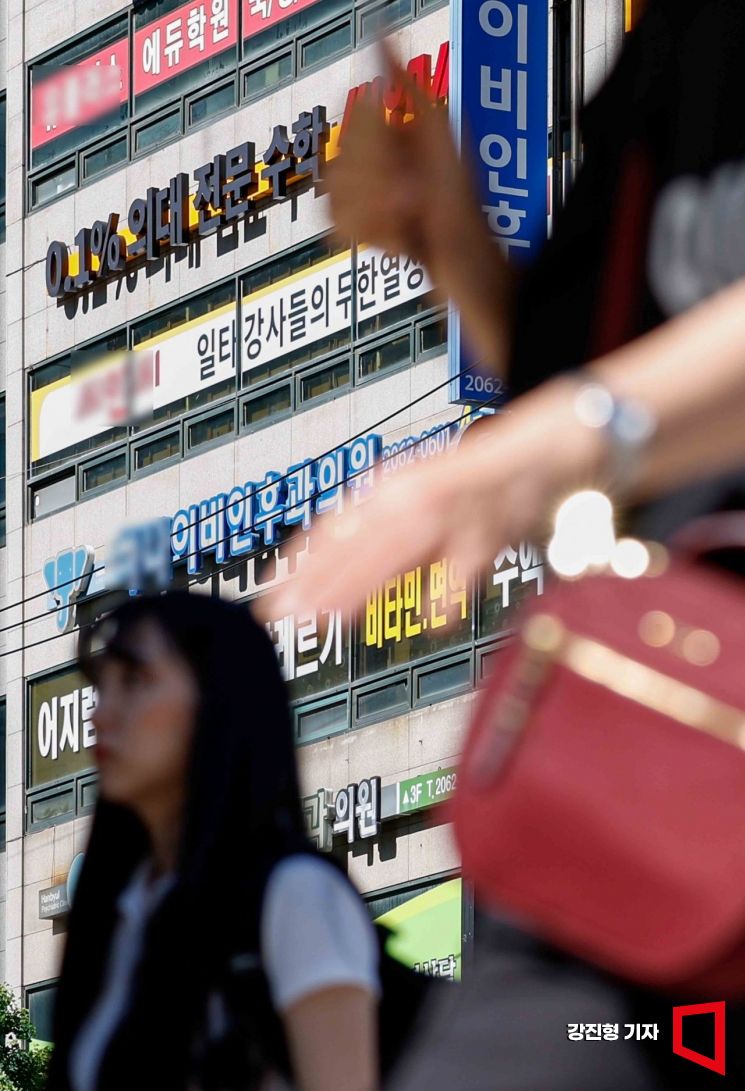 Entrance signs and informational notices for private academies are posted on a building in the Hagwon district of Mokdong, Yangcheon-gu, Seoul. Photo by Kang Jinhyung
Seo, a 28-year-old high school English instructor in Seoul, said, "I am responsible for 30 students, and every day I am overwhelmed not only with academic counseling but also with consultations about the students' personal lives." She added, "Parents request counseling at any time and place, and they even ask me to stop their children from playing games late at night at home, passing on every problem to me." Seo also said, "Sometimes I miss calls from parents, and I have even been verbally abused by parents because of it."
Many private academy instructors say they endure unfair treatment from parents. If they raise an issue and the student quits the academy, it impacts the academy's revenue, making it difficult for instructors to receive support from the management. Kim, a 31-year-old math instructor, said, "I work under a commission system where the more students I have, the higher my pay. If a student leaves, my income decreases accordingly." He added, "Because of this, it is hard to confront abusive language or power abuse directly, and I end up having to yield to students and parents."
While school teachers can request preventive measures or dispute mediation for infringements on their educational activities through the Teacher Status Act and the Teacher Rights Protection Committee, there are no legal protections for private academy instructors. As a result, such damages are neither properly identified nor counted.
Yoon Injin, a professor of sociology at Korea University, said, "Private academy instructors often suffer in even worse conditions than school teachers. Both students and parents are considered customers, so instructors cannot easily respond, and academy owners prioritize the revenue structure, making it difficult to protect instructors."
Professor Yoon also said, "Even when damages occur, they are often dismissed as individual problems within each business. As the private education market has grown, organizations representing instructors' interests should speak out, and the government should also prepare some measures for their protection."
© The Asia Business Daily(www.asiae.co.kr). All rights reserved.
![Clutching a Stolen Dior Bag, Saying "I Hate Being Poor but Real"... The Grotesque Con of a "Human Knockoff" [Slate]](https://cwcontent.asiae.co.kr/asiaresize/183/2026021902243444107_1771435474.jpg)

















