Eco-friendly Vehicle Exports Reach All-time High
Exports to the U.S. Plunge by 27 Percent
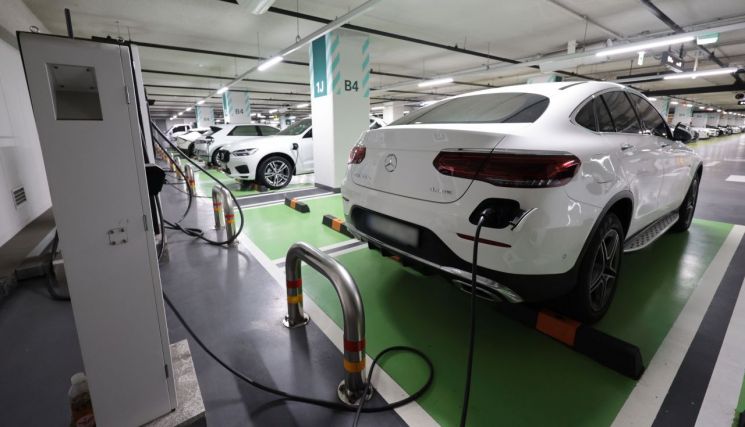
For the first time, eco-friendly vehicles have surpassed internal combustion engine vehicles in the domestic automobile market.
According to the "Automotive Industry Trends for May 2025" released by the Ministry of Trade, Industry and Energy on June 17, out of the 141,865 automobiles sold domestically in May, 73,511 were eco-friendly vehicles, accounting for 52% of the total. This is the first time that the monthly share of eco-friendly vehicles in the domestic market has exceeded 50%.
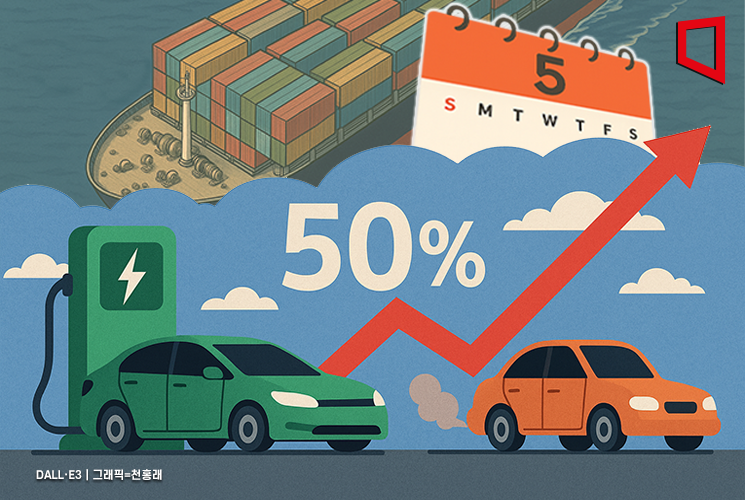
Sales of electric vehicles reached 21,445 units, a sharp increase of 60.3% compared to the same period last year. Sales of domestically produced electric vehicles rose by 58.8%. The ministry analyzed that this was due to the recent launch of a variety of domestic electric vehicle models across different vehicle segments, which has expanded consumer choice. In fact, the introduction of new models such as Casper EV, Musso EV, and EV4 has led to a wider adoption of electric vehicles.
Total automobile sales in May increased by 0.4% year-on-year. Imported car sales (29,665 units) rose by 13.1%, while domestic car sales (112,200 units) declined by 2.5%.
In the export sector, eco-friendly vehicles also achieved record-high performance. In May, exports of eco-friendly vehicles totaled 75,184 units, up 10.2% from a year earlier, marking the highest monthly figure ever. Exports of hybrid vehicles increased by 25% to 48,758 units, driving the overall growth. However, exports of electric vehicles decreased by 11.7% to 21,065 units.
On the other hand, the total automobile export value was $6.2 billion, down 4.4% from a year ago. Exports to the United States fell by 27.1%, leading the overall decline. The ministry explained that the decrease in exports to the U.S. was largely due to the imposition of tariffs and a base effect from strong performance last year.
Production volume also declined by 3.7% year-on-year to 358,969 units. By manufacturer, Hyundai Motor and Kia saw decreases of 6.0% and 3.8%, respectively. Renault Korea's production increased by 12.6%, but dropped sharply by 29% compared to the previous month.
In terms of domestic sales by manufacturer, Hyundai Motor (58,966 units) and Kia (45,125 units) posted decreases of 5.2% and 2.4%, respectively. Tesla, benefiting from increased demand for electric vehicles, recorded 6,570 units, a 57.7% increase from the same month last year.
An official from the ministry stated, "Eco-friendly vehicles surpassing half of the domestic market is a signal of structural transformation in the automotive industry," and predicted, "The continued expansion of electric and hybrid vehicle lineups will lead to an overall increase in demand."
© The Asia Business Daily(www.asiae.co.kr). All rights reserved.


















