Former Ministry of Science and ICT AI Policy Expert and Younger Sister of Song Younggil
Serving as Subcommittee Member of the National Policy Planning Committee
Tasked with Outlining the Blueprint for the First Pledge: The 100 Trillion Won AI Era
Publishes Book on How Korea Can Become the Leading Nation in AI Utilization
Also Argues, "Basic Income Is Necessary in the AI Era"
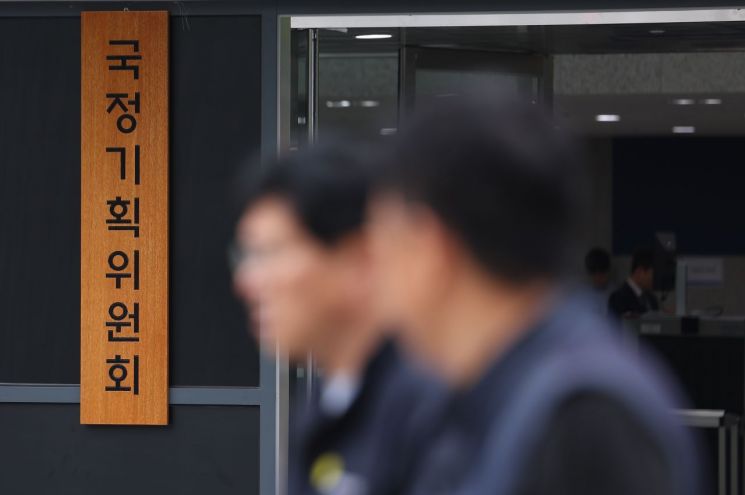
Song Kyunghee, former head of the 4th Industrial Revolution Committee Support Team at the Ministry of Science and ICT, is participating as a planning committee member of the National Policy Planning Committee, which serves as the transition committee for the Lee Jaemyung administration. She is leading the blueprint for artificial intelligence (AI) policy. The "100 trillion won era of AI investment" was President Lee's first campaign pledge.
Song is assigned to the second economic subcommittee, which is responsible for industrial policy. Among the planning committee members in this subcommittee, Song is the only AI expert. Until 2021, she served as Director General of the AI-Based Policy Bureau at the Ministry of Science and ICT. She is currently a professor at the Artificial Intelligence Convergence Institute at Sungkyunkwan University. She is also the younger sister of Song Younggil, leader of the Sonamudang Party.
Last month, Song published a book titled "AI Revolution," which discusses how Korea can become the country that utilizes AI most effectively. In this book, she proposed the "FACE Strategy (3F, 3A, 3C, 3E)" as a roadmap for Korea to become a global AI powerhouse.
The first strategy is to become a leading nation in AI technology based on securing fundamental technologies (Fundamentals), innovating industrial sites (Field), and expanding infrastructure (Facility). The second strategy calls for advancing toward a "sustainable AI society" by focusing on accessibility (Access), accountability (Accountability), and adaptability (Adaptability).
The third strategy emphasizes the need to win the "global talent competition." To achieve this, Song stressed the importance of creativity, attracting talent (Catch), and talent circulation (Circulation). Lastly, she stated that Korea should help establish a "new global AI order" centered on ethics (Ethics), engagement (Engagement), and enrichment (Enrichment).
In her book, Song also proposed the introduction of a "basic income" policy as a means of survival in the AI era. Referring to the "Youth Basic Income" introduced in April 2019 when President Lee served as Governor of Gyeonggi Province, she pointed out, "Currently, the ability to generate returns from massive investments in AI technology falls short of expectations, but as automation and changes in industrial structure accelerate in the future, issues such as job displacement and income inequality may become more pronounced."
She added, "If some leading countries introduce a basic income system at that time, discussions on basic income are likely to gain momentum domestically," and emphasized, "Basic income must be reviewed in the context of Korea's overall system, particularly its fiscal situation and welfare system."
Song's vision is expected to be reflected in the process of translating the president's campaign pledges into policy. President Lee has already presented a blueprint for mobilizing a total of 100 trillion won in private sector investment. The "AI for All" project has also been announced, which aims to secure more than 50,000 high-performance GPUs, build high-performance AI data centers, and develop a Korean-style generative AI that is freely available to all citizens. The government will also foster AI talent by establishing regional AI colleges, introducing military service exemptions, and devising measures to attract overseas talent.
Reorganizing the Ministry of Science and ICT is another task. In April, Choi Minhee, chair of the National Assembly's Science, ICT, Broadcasting and Communications Committee, proposed a government reorganization bill to elevate the ministry to a "deputy prime minister-level" department and to reorganize it as a dedicated ministry overseeing AI policy.
Meanwhile, from June 18 to 20, the heads and committee members of the seven subcommittees of the National Policy Planning Committee will receive in-person briefings from each government ministry in Sejong.
© The Asia Business Daily(www.asiae.co.kr). All rights reserved.

















