National Agricultural Museum, Opened in December 2022
Achieves 1.4 Million Cumulative Visitors
Special Exhibition on "Angbuilgu" to Be Held Until September
"Interest in Korean agriculture is the driving force that protects our agriculture. Through the National Agricultural Museum, a specialized exhibition space that encompasses both the history and future of agriculture, we will strive to promote the value of agriculture." (Kyungtae Oh, Director of the National Agricultural Museum)
On June 17, at the National Agricultural Museum located in Suwon, Director Kyungtae Oh held a press conference and stated, "Securing food security and the future competitiveness of agriculture are global issues," as he made these remarks.
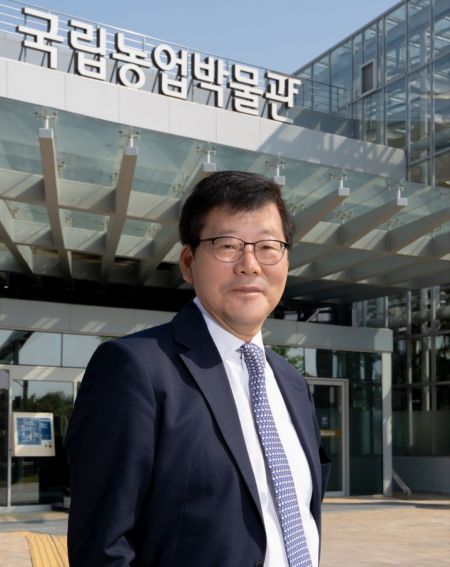
He emphasized, "The National Agricultural Museum introduces to the public the direction in which agriculture should move forward, including the advancement of agriculture as a cutting-edge industry and the creation of a sustainable agricultural ecosystem in the face of climate change, through both permanent and special exhibitions. We will continue to make various efforts to spread the value of agriculture and improve public awareness."
The Agricultural Museum opened in December 2022 on the former site of the Rural Development Administration in Suwon. The 64,000-square-meter site includes an exhibition hall, a botanical garden, an education building, and an experience center. Outdoors, gardens, terraced rice paddies and fields, and orchards provide spaces where visitors can experience and relax.
Since its opening, the number of visitors has steadily increased. In December 2022, the first month after opening, 46,582 people visited. In 2023, the number reached 511,187, and in 2024, 565,917 people visited the Agricultural Museum. As of May this year, 284,898 people have already visited, bringing the total cumulative number of visitors to over 1.4 million.
The Agricultural Museum is mainly composed of two exhibition halls: Agriculture Hall 1 and Agriculture Hall 2. Agriculture Hall 1 displays the history of crop cultivation, the importance of seed management and the development of storage technology, the main cultivation processes centered on rice farming, agricultural tools (machines) used for harvesting, and paintings depicting the harvesting process. Agriculture Hall 2 exhibits the methods of storage and processing by era, the cultivation and utilization of horticultural crops linked to clothing and housing, the development of advanced agricultural technologies in the near future, and sustainable agriculture.
A special exhibition on the Angbuilgu is also underway. The Angbuilgu, a sundial, is an astronomical instrument from the Joseon Dynasty owned by the Agricultural Museum. Yoonhee Lee, a curator at the Agricultural Museum, explained, "The Angbuilgu is a relic that served as the foundation for establishing agricultural timing and systems suited to Korea's unique climate conditions. Especially from an economic perspective, it enabled precise time management, allowing annual farming to be planned and executed efficiently by season, thereby increasing productivity."
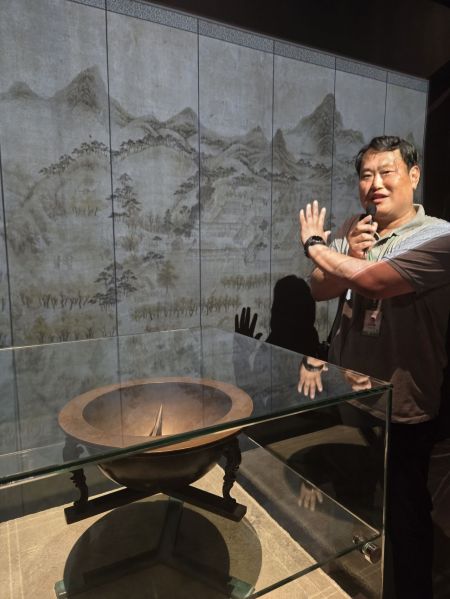 On the 16th, Yoonhee Lee, a curator at the Agricultural Museum, explained the Angbuilgu owned by the museum in the Angbuilgu special exhibition hall.
Curator Lee added, "The sundial helped move beyond the general agricultural timing commonly used in East Asian countries and contributed to the creation of a unique Korean agricultural system based on the solar altitude for each date, thus improving productivity. The purpose of this special exhibition is to examine how advances in science and technology have impacted the agricultural economy."
The Agricultural Museum is also working to have the Angbuilgu it owns registered as a national cultural heritage. Director Oh said, "Our ancestors observed and read the sky, created the sundial, and embedded our enduring sense of time within it. We hope that the Angbuilgu owned by the museum will be registered as a national cultural heritage. Through the Agricultural Museum, visitors can learn about the impact and value of scientific and technological advancements in the history of agriculture and confirm the role of agriculture as a future industry."
© The Asia Business Daily(www.asiae.co.kr). All rights reserved.


















