Trump Calls Russia's Expulsion "A Big Mistake"
Stance Clashes with Europe's Position on Sanctions Against Russia
Amid heightened geopolitical tensions, including military clashes between Israel and Iran and the prolonged war between Russia and Ukraine, the Group of Seven (G7) summit, which opened in Canada on the 16th (local time), has been marked by friction from the outset.
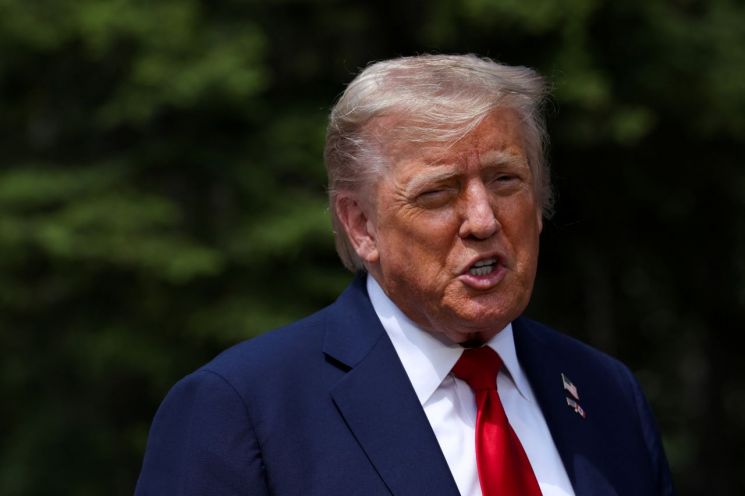
On this day, President Trump, during a bilateral meeting with Canadian Prime Minister Mark Carney, stated that "the G7 was the G8 until Russia left," and called Russia's exclusion from the group "a very big mistake." Russia was a member of the G8 but was excluded from the meetings after its forcible annexation of Ukraine's Crimean Peninsula in 2014. During his first term, President Trump consistently advocated for a return to the G8 format despite opposition from other member states, and a similar situation has arisen at his first G7 summit of his second term.
President Trump's stance stands in stark contrast to that of the European Union (EU), which is seeking to strengthen sanctions against Russia, including lowering the price cap on oil transactions, in response to Russia's invasion of Ukraine. Volodymyr Zelensky, President of Ukraine, who was invited to the G7 summit, has also expressed hope to discuss sanctions against Russia during the meeting.
There are also expectations that the summit will only confirm differences of opinion among member states regarding the Israel-Iran conflict, which has rapidly emerged as the most pressing issue. On this day, UK Prime Minister Keir Starmer said regarding the Israel-Iran dispute, "I think there is a consensus on de-escalation," adding, "What we clearly need to do today is bring that together and clarify how it will be implemented." In contrast, President Trump previously described Israel's attack on Iranian nuclear facilities as "excellent."
The New York Times (NYT), citing a White House official who requested anonymity, reported that President Trump has decided not to sign the G7 joint statement calling for de-escalation between Israel and Iran. Earlier, before departing for the G7 summit on the 15th, President Trump told White House reporters that while he urged both Israel and Iran to negotiate, "sometimes countries need to fight first to resolve things."
Meanwhile, following the meeting among the G7 member state leaders on this day, the official schedule including leaders from invited countries will begin on the 17th. Among non-G7 countries, a total of seven leaders have been invited to this summit, including President Lee Jaemyung of South Korea, as well as leaders from Australia, Brazil, India, Mexico, South Africa, and Ukraine.
© The Asia Business Daily(www.asiae.co.kr). All rights reserved.

















