Scheduled Middle East Projects Face Delays... Shipbuilding, Rail, and Construction Sectors on High Alert
LG and Samsung Evacuate, Hyundai Engineering & Construction Reviews Progress... "Middle East Risk" Becomes Reality
"Defense Industry Sees Opportunity, Plant Sector on Alert... Contrasting Prospects by Industry"
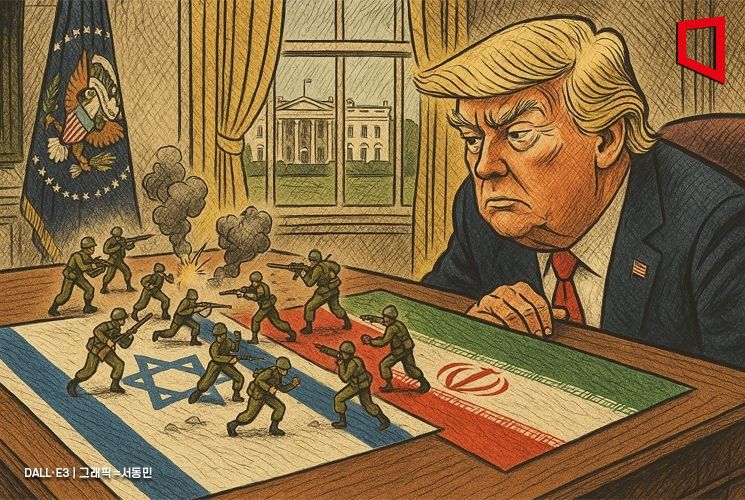
As the military conflict between Israel and Iran escalates into a full-scale war, Korean companies with business bases in the Middle East are responding in succession. Some companies have evacuated local personnel early, while concerns are growing over the medium- to long-term impact of instability in raw material supply and soaring energy prices.
On June 17, LG Electronics announced, "We have completed the evacuation of all Korean expatriates and their families who were working at sales branches in the Middle East over the weekend." Samsung Electronics is also known to be operating a system to protect expatriates and respond to various situations in accordance with its own emergency response manual. Ensuring employee safety amid the deteriorating local situation has emerged as the most urgent task.
The construction industry is no exception. Hyundai Engineering & Construction stated, "There was no direct damage to our company from the recent airstrikes," but added, "To prepare for any unforeseen circumstances, we are continuously monitoring trends and developments in each country through our branches in the Middle East," maintaining a high level of vigilance. In particular, the company predicted that "indirect and direct impacts will persist due to instability in raw material supply and concerns over rising international oil prices."
Construction and plant companies carrying out large-scale infrastructure projects in Saudi Arabia, the United Arab Emirates (UAE), and Iraq are wary that this conflict could lead to actual business disruptions. In particular, Hyundai Engineering & Construction is undertaking multiple large-scale projects, including the Neom City project in Saudi Arabia, so depending on the situation, there is a possibility of schedule delays or increased safety risks.
The oil refining and chemical industries are concerned about a direct hit from cost pressures that could materialize due to instability in the crude oil market. S-Oil, whose largest shareholder is Saudi Aramco, as well as SK Energy and GS Caltex, are highly dependent on Middle Eastern crude oil. If a surge in international oil prices and disruptions in maritime logistics occur simultaneously, a decline in profitability is considered inevitable. The ripple effects could also extend to the entire manufacturing sector that uses petroleum-based raw materials such as plastics and synthetic resins.
In the defense industry, there have been no confirmed cases of direct damage so far, but companies are strengthening monitoring in preparation for a prolonged scenario. A Hanwha official stated, "Currently, Iraq is the only country where we are actually conducting business, so there is no immediate impact from this situation." However, Hanwha Aerospace, Korea Aerospace Industries (KAI), and LIG Nex1 are closely monitoring the possibility of indirect impacts such as changes to delivery schedules or renegotiation of contract terms, as they have multiple export cooperation and equipment supply contracts underway with the UAE, Saudi Arabia, and others.
On the other hand, there is also speculation that the defense industry could benefit from increased demand for weapons. If Gulf countries move to strengthen their military capabilities, KAI's T-50 advanced trainer, Hanwha's self-propelled artillery and drones, and LIG Nex1's precision-guided weapon systems are evaluated as having a competitive edge in terms of price and performance, potentially securing real export opportunities. In fact, some Middle Eastern countries have regarded Korean-made weapons as an "alternative" to American and Israeli arms.
The impact of the war is spreading widely in other areas as well. Hyundai Rotem was preparing to participate in the Jerusalem tram project in Israel, but due to the intensifying conflict, there is a possibility that the schedule of the local ordering party will be delayed. In addition, Hyundai Rotem, which has a history of rail supply contracts with Iran, now faces uncertainty in resuming those projects due to sanctions and political instability.
HD Hyundai Heavy Industries is also participating in the King Salman Global Maritime Industries Complex (IMI) project in Saudi Arabia and has begun reviewing the schedules of special ship projects currently being bid for in the Middle East.
The government is checking for corporate damages, and the industry is concerned that shocks to energy, import-export logistics, and financial markets may have a combined effect. An official from a large corporation stated, "If the situation is prolonged, it may require not only a simple decrease in sales but also a complete overhaul of planned Middle Eastern projects," adding, "Comprehensive measures such as diversifying supply chains, reviewing contract clauses, and expanding insurance coverage are necessary."
Business delays and soaring costs are already becoming evident in industries highly dependent on the Middle East, such as construction, shipbuilding, oil refining, electronics, and defense. As a result, restructuring supply chain systems and revising export strategies linked to diplomacy and security in response to war risks are emerging as medium- to long-term tasks.
The government is reviewing the local response of companies and has begun preparing multi-layered countermeasures for import-export logistics, energy supply chains, and financial market instability. An industry official said, "If this situation does not remain a short-term conflict but becomes prolonged, companies that have used the Middle East as a key base will inevitably face increased burdens," adding, "It may become necessary to reassess the feasibility of local projects and supply chain strategies."
© The Asia Business Daily(www.asiae.co.kr). All rights reserved.
![Clutching a Stolen Dior Bag, Saying "I Hate Being Poor but Real"... The Grotesque Con of a "Human Knockoff" [Slate]](https://cwcontent.asiae.co.kr/asiaresize/183/2026021902243444107_1771435474.jpg)
















